
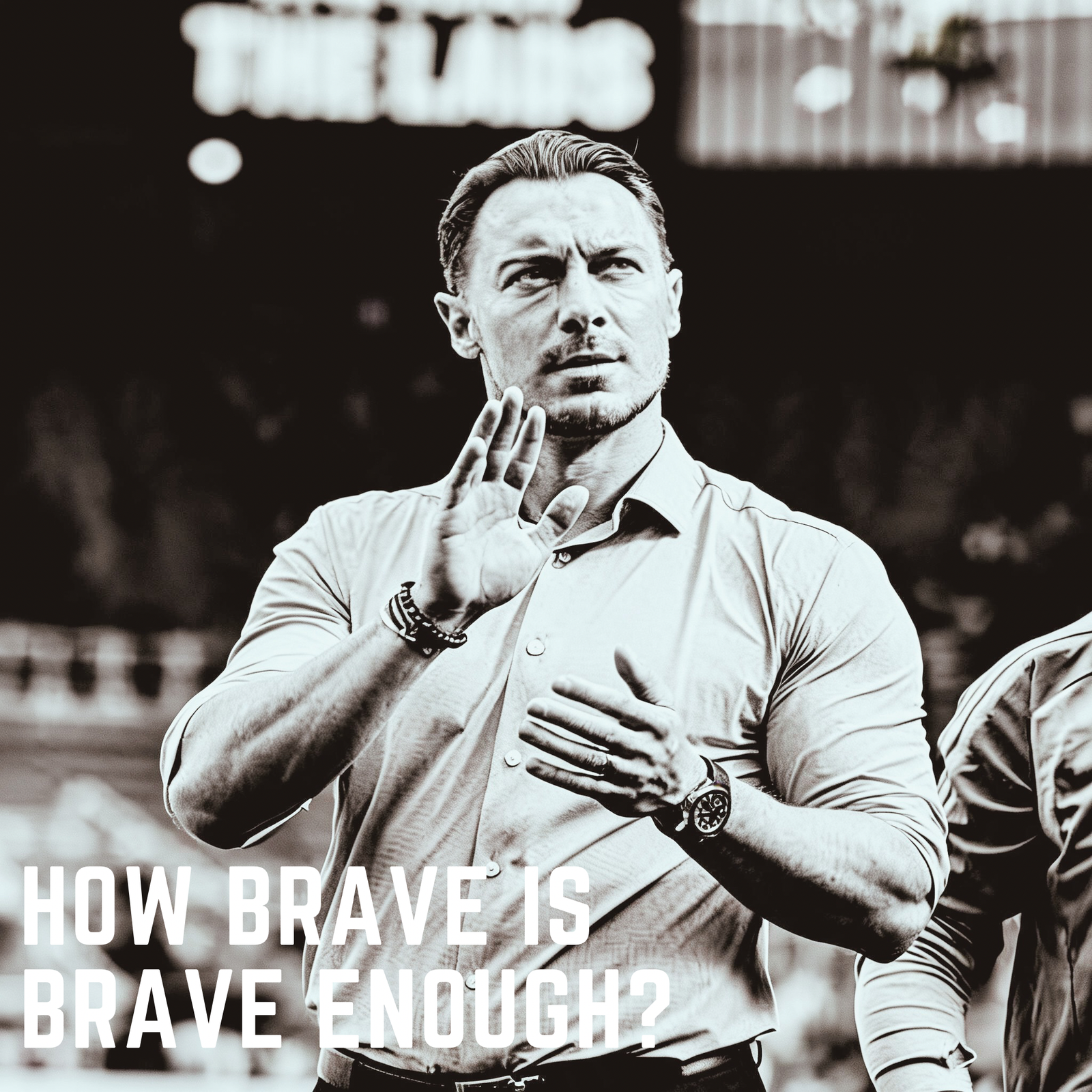
Watch the split-second after Newcastle lose the ball in midfield and you are watching Matthias Jaissle’s entire football philosophy compressed into one freeze-frame: full-backs already stepping past the halfway line, a front four pushing into spaces that haven’t been vacated yet, a defensive line inching up before the ball has even changed hands. Nobody drops off. Nobody manages the game. The instruction, evidently, is to go and get it back higher than you lost it.
It is thrilling to watch. It is also why fifty-eight shots have been fired at Newcastle’s goal in Jaissle’s first three Premier League matches — an average of just over nineteen a game, against Liverpool, Tottenham and Bournemouth. One win and two draws have Newcastle unbeaten through those three games. The record reads fine. The process behind it has not.
The Brave Way, Tactically Speaking
Jaissle has never pretended otherwise. Asked before the Bournemouth match whether he’d tighten up against a side built to counter, he said the approach stays “independent of the opponent, we have a clear way, clear identity.” That is not a throwaway line. It is a manager telling you, in advance, that he will not shape-shift to protect his defence no matter who’s coming the other way — the same conviction that has powered this summer’s recruitment strategy, which he has described, more than once, as simply “a brave way, but the way we want to go.”
Go back through his press conferences from the opening month and the phrase turns up again and again, attached to something different each time: rating a transfer window he wouldn’t score out of ten, defending a net spend he wouldn’t itemise, tempering Dan Burn’s talk of Europe against a squad he called one of the league’s youngest coming off a 12th-place finish, and pre-loading an excuse for Matias Fernandez-Pardo before the winger had kicked a competitive ball. Nick Woltemade, last year’s £69m club-record signing, left on loan to Juventus this window for a fee somewhere around a twentieth of what Newcastle paid for him thirteen months ago. That is what brave costs when you write it down on a balance sheet: patience, and faith that this summer’s twenty-one-year-old is a sounder long-run bet than last year’s.
The tactics are the same wager, run out on grass instead of a spreadsheet. Amar Dedić didn’t arrive as a blind punt — Jaissle brought him in from Benfica specifically because he already trusted the player’s game from their time together at Salzburg. Joe Willock and Jacob Murphy, both linked with exits all summer, were kept and immediately rewarded with bench impact against Liverpool. None of that sits apart from the shot count Newcastle are conceding; it’s the same operating principle expressed as a back four instead of a squad list. Commit to players you already trust, push bodies forward before the ball is fully won, accept that youth and unfamiliarity will produce ugly patches along the way, and bank on the upside outweighing them over a longer stretch than three games.
Same Coach, Different Numbers
The useful test is whether this shot count is simply what Jaissle’s football produces wherever he goes, or whether Newcastle are seeing something specific to this squad and this moment.
The early signs point to the latter, and the case is stronger than a hunch. A statistical comparison published before Jaissle’s first game, setting his final two seasons at Al-Ahli against Newcastle’s own recent defensive record, found the pressing identity translates almost exactly: near-identical shot counts generated directly from the high press, a defensive line sitting at a comparable height, the same volume of aggressive defensive actions. The one place the numbers diverged sharply was transition defending — Jaissle’s Al-Ahli conceded roughly 0.77 shots a game from counter-attacks, comfortably tighter than the 1.22 Newcastle had been shipping under their previous regime. By that measure, Jaissle arrived with a reputation for being harder to hit on the break, not easier.
Which makes nineteen shots a game — including twenty-five in a single afternoon against Liverpool — sit oddly against his own history. At Al-Ahli he averaged closer to ten shots conceded a match across two seasons while running practically the same press. At Salzburg, operating almost exclusively out of a 4-1-2-1-2 diamond that barely changed regardless of the scoreline, his sides won back-to-back titles and reached the Champions League knockout stage for the first time in the club’s history playing the same vertical, front-foot football — without bleeding shots at anything like this rate.
So this is not simply how Jaissle’s tactics work everywhere. Something about Newcastle right now is amplifying the risk beyond what his own managerial record would predict.
Why, Then?
A few explanations sit alongside each other rather than compete.
The obvious one is time. Jaissle walked into the building weeks before a ball was kicked, replacing a manager who had spent four years drilling a different structure into these exact players. He said as much himself before his first game, acknowledging the squad remains a work in progress and that building a new identity — after losing Bruno Guimarães, Sandro Tonali and Anthony Gordon in the same window — would take longer than one pre-season allows.

The second is personnel, though the mechanism is sharper than “he plays too high.” Dedić’s own touch map this season argues against that reading — his heaviest zones sit deep, inside Newcastle’s own defensive and middle thirds, with barely a mark inside the final third. Nothing like the habitual overlap you’d see from a Diego Dalot or a Matty Cash. His baseline position is conservative, not advanced, which makes the two moments that undid Newcastle against Bournemouth more concerning, not less. They weren’t the recurring cost of a full-back who lives up the pitch finally getting caught out. They were isolated lapses inside an otherwise disciplined pattern, arriving at precisely the moments the game needed him switched on. A structural habit is something a manager coaches out by holding the line higher or lower. A specific lapse in concentration, twice in one afternoon, at the moments that decided the game, is a harder thing to promise will simply improve with time — trust from Salzburg or not.
There’s also a simpler fix sitting on the bench, worth flagging even with the caveats attached. Tino Livramento is Newcastle’s first-choice right-back when available, an England Under-21 European champion in two different tournaments, and a player whose reputation — concentration named specifically as a strength in his profile — is built on defensive solidity as much as attacking output. Set his final full season alongside Dedić’s opening three games and the gap turns up in exactly the places you’d expect: 1.25 xG conceded per 90 while on the pitch against Dedić’s 1.82, 0.95 goals conceded per 90 against 1.33, and a foul-committed rate of 0.47 per 90 against Dedić’s 2.00 — roughly four times fewer fouls, often the tell of a defender managing the game rather than recovering from having just been beaten by it.
None of that is a clean verdict. Three games is a small enough sample that one bad afternoon at Bournemouth can drag an average a long way on its own, and Livramento’s numbers come from an entirely different system under the previous manager, not from any minutes inside Jaissle’s actual structure. But directionally, it’s the same story the touch map told: the calmer, lower-event full-back profile is sitting on the bench, still working back from the calf injury and surgery that wiped out his entire pre-season. Nobody should rush him for the sake of a headline. Once he’s genuinely match-sharp rather than fresh off a comeback minute, though, he looks like the lowest-risk route back to solving this specific problem without touching the system at all.
The third is the level. Ten shots a game in the Saudi Pro League and a title-winning diamond in Austria are not the same test as Liverpool’s front four in August. Jaissle himself has drawn the distinction before, noting that his time working with a squad full of the established internationals at Al-Ahli forced him to think “much more game-to-game” than the fixed system Salzburg’s academy conveyor belt demanded of him. Newcastle currently ask something closer to the Salzburg version of him — one settled idea, applied without much in-game modification — against opposition that punishes fixed ideas fastest.
The Bill Comes Due, Eventually
Here is the part worth being honest about rather than papering over with good vibes from an unbeaten start.
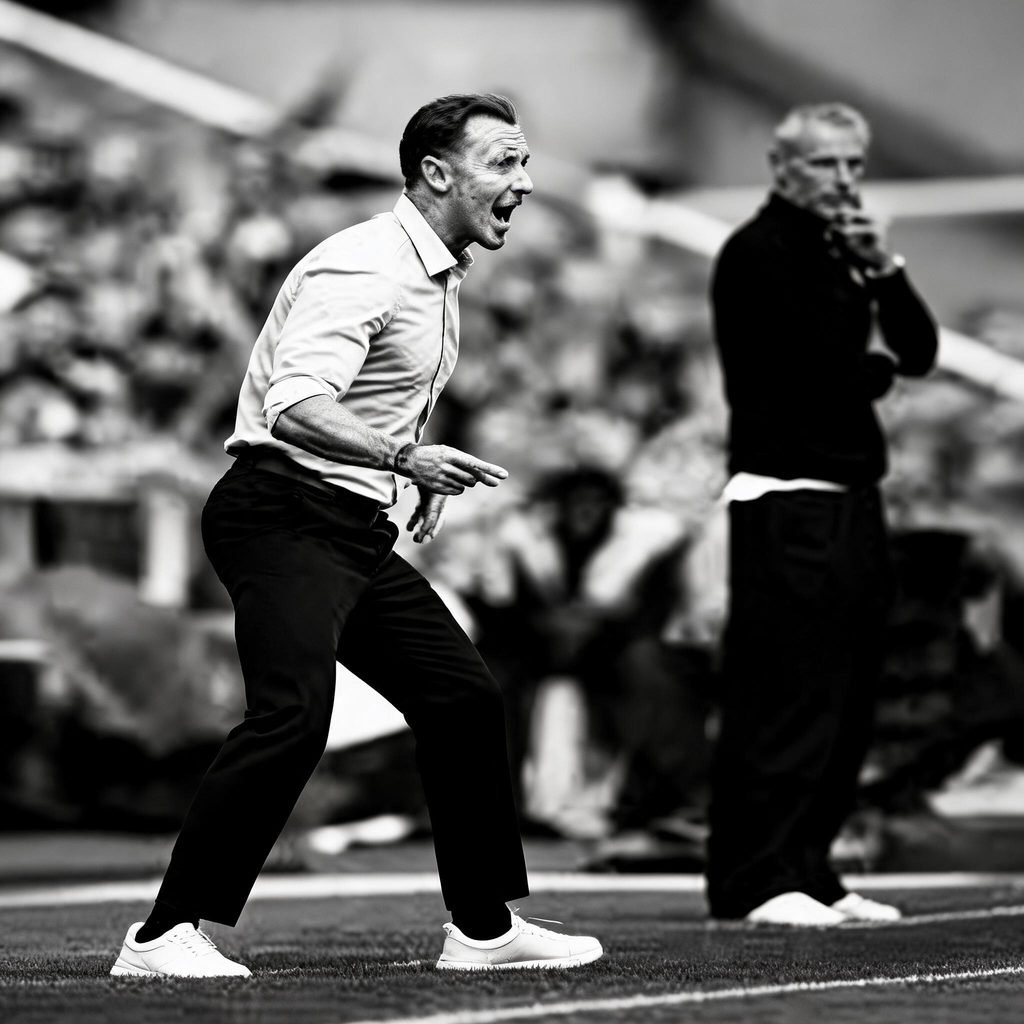
Three games of quality finishing and a couple of slices of fortune — Barnes’ cannot-do-that-again strike, Ramsey scoring on his introduction, Liverpool’s leveller arriving from the penalty spot in stoppage time rather than a chance this back line actually conceded in open play — have made a shots-conceded column read fine on the league table. That is not a stable equilibrium across thirty-eight games. Defences that concede at close to nineteen shots a game across a full season, historically, are relegation-adjacent defences, not mid-table ones, unless the goalkeeper and finishing at both ends keep overperforming for nine months running. That basically never happens. The law of averages does not negotiate with good vibes, and it has a very long season to make its point.
None of which means the approach is wrong. It means it’s a wager, exactly like the summer’s transfer business was a wager, and wagers carry the possibility of losing as the explicit cost of the potential upside. The same afternoon that saw a teenager score Bournemouth’s equaliser off Dedić’s own delivery also saw two lapses from that same player gift Bournemouth a two-goal cushion inside thirty-five minutes. You do not get to keep one half of that trade and discard the other.
What happens next is the actual story of this season, more than any single result. If the counter-attack numbers tighten as Dedić’s concentration catches up with his positioning, as the back four settles, as Jaissle finds the flexibility at St James’ Park that he found in Saudi Arabia once he had time to build it — the brave way pays off, the way Ross Wilson’s transfer strategy is designed to pay off three years from now rather than three months. If it doesn’t, nineteen shots a game stops being a number Newcastle survive and starts being one that costs them points nobody can quality-finish their way back from.
Either way, watch the shots-conceded column more closely than the league table for the next ten games. It will tell you which version of brave this is going to be.
The brave way already showed us what this costs on a balance sheet. The shot count is showing us what it costs on the pitch.
What do you think of Jaissle after the first three league games? Will Newcastle be able to tighten up their leaky defence? Join the conversation on X @mytoonarmy #NUFC