Data Driven Insights. Fearless Opinions.

Tactics

  • Borrowed Time: What Newcastle’s Numbers Are Actually Buying Jaissle

    The Math No One Tweets

    A tweet on X, a five-game sample, and the maths behind a start that’s running well ahead of the performances underneath it — time the rebuild shouldn’t waste.

    Twelve of sixteen. That’s how many “big chances” Manchester City’s opponents have missed against them this season — the club sitting top of the Premier League, conceding chances at a rate that would alarm most defensive coordinators, saved from the numbers by finishing so wasteful it borders on charitable. It’s a useful place to start, because the exact same mechanism is sitting underneath the numbers at Newcastle right now — just working in the other direction. That’s not a reason to panic. It’s a reason to be honest about what the next few months are actually buying the club, and what needs to happen while the buying lasts.

    The claim

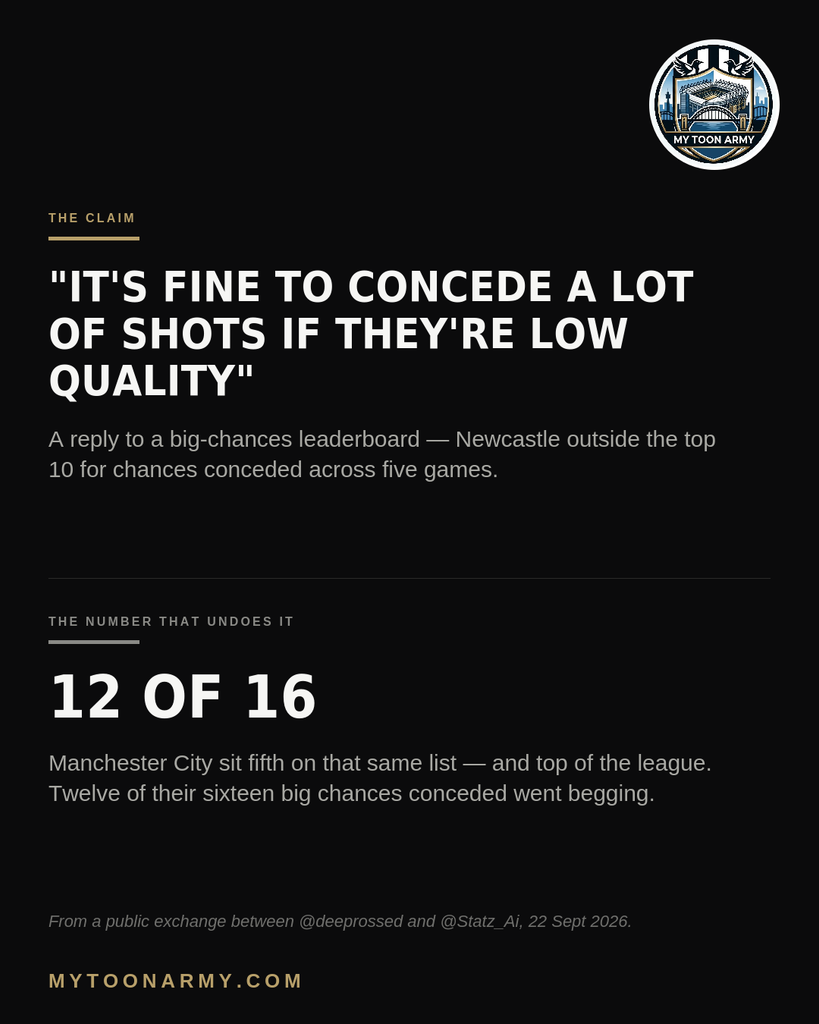
    On Monday night, Ross (@deeprossed) replied to a thread from the analytics account Statz (@Statz_Ai) that had ranked Premier League sides by big chances conceded across their first five matches. Newcastle didn’t crack the top ten. Ross’s conclusion: the volume of shots Newcastle are conceding doesn’t matter, because the shots aren’t good ones, and a defence facing low-quality efforts is a defence that’s fine.

    It’s a reasonable-sounding instinct — the sort of thing that gets nodded along to by ten thousand people before anyone runs a number on it. It’s also wrong, in a way that’s provable rather than debatable, and it’s worth taking apart properly rather than dismissing with a shrug. Ross clearly cares about the numbers enough to go looking for them, which is more than can be said for most of Twitter. He’s just reached for the wrong one.
    Here’s the leaderboard he was working from:
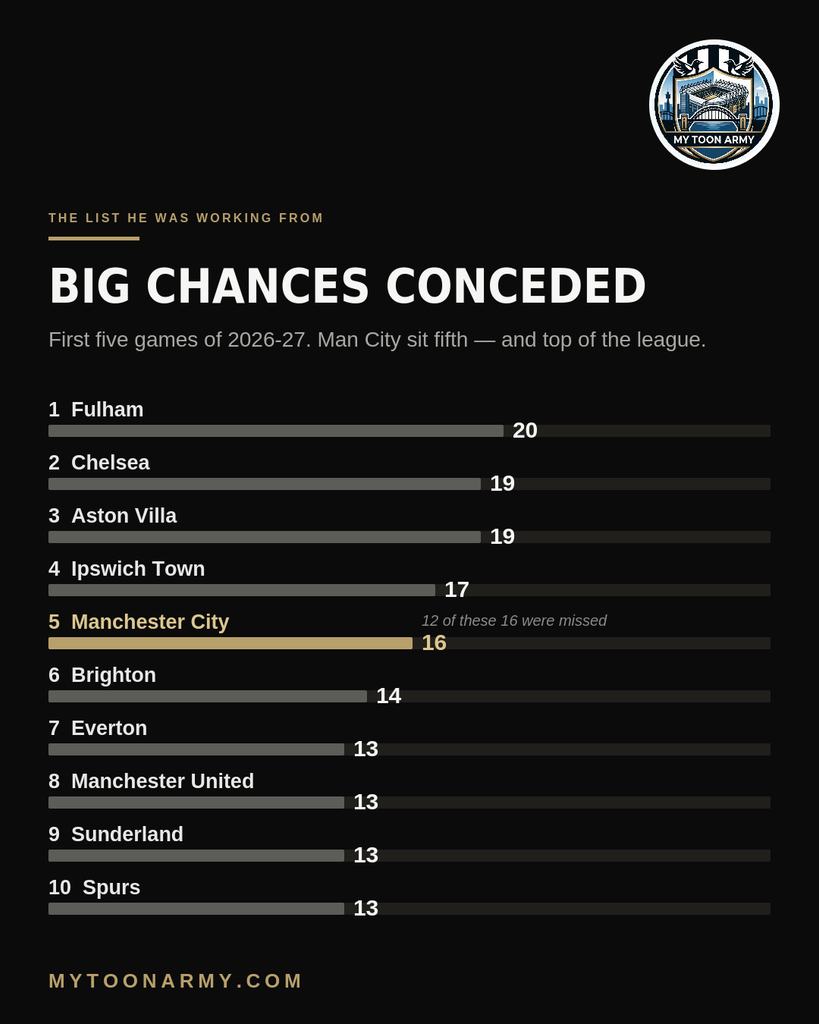
    Two things jump out immediately, and Statz himself flagged the second one in the very next line of his own thread: Manchester City — top of the league, unbeaten, five straight wins — sit fifth on this list, and twelve of the sixteen big chances they’ve conceded have been missed. That’s a 25 per cent conversion rate against opponents in the highest-quality bracket of shot, roughly half what you’d expect a competent Premier League forward line to manage from situations Opta’s own analysts have judged good enough to be expected to score from. City aren’t controlling that outcome. They’re benefiting from it.

    Which means the stat Ross is leaning on for reassurance is the same stat currently explaining why the best team in the country isn’t getting punished the way its underlying defending suggests it should be. If it can flatter Manchester City by twelve wayward finishes, it can just as easily flatter anyone sitting further down that list — including a side that isn’t on it at all.

    Where “big chance” breaks down

    Start with what the category actually measures. A big chance, in Opta’s framework, is a shot from a position where a player would reasonably be expected to score — broadly, the far right tail of shot quality, roughly the efforts carrying something north of a 30–40 per cent chance of going in. It’s a deliberately narrow bucket, built to flag the sitters and the one-on-ones. It was never built to describe the totality of a team’s defensive exposure, and using it that way is the first error in Ross’s reasoning.

    Expected goals exists precisely because a binary “big chance or not” filter throws away almost everything that actually happens in a football match. Every shot faced carries some probability of becoming a goal — a cut-back turned first-time from the edge of the box, a corner that falls kindly for a half-hit volley, a defensive header that only half-clears — and none of those routinely qualify as big chances, while each of them carries a real, non-trivial chance of finding the net. A defence can concede zero big chances by Opta’s definition and still be bleeding an expected-goals total north of two a match, purely by accumulating enough of that middle tier. Counting only the tail and drawing conclusions about the whole distribution is the mistake sitting underneath the tweet.

    The maths nobody tweets

    Treat each shot faced as an independent trial with some probability of success, p, and the probability of conceding at least once across n shots follows: P(at least one goal) = 1 − (1 − p)ⁿ. Shots that fall outside the big-chance bracket still convert at something in the region of one in twelve to one in fourteen — nowhere near zero. Run fifteen of those through the formula at p = 0.07 and the probability of conceding climbs past 65 per cent. Push it to twenty shots and it clears 75 per cent. None of those shots needs to be a big chance for that outcome to arrive. The danger was never sitting in any single effort — it’s compounding across the volume, the same way a casino’s edge does across enough hands, regardless of how unthreatening any individual one looks.

    Goals themselves don’t arrive smoothly, either — they arrive as counts, which is where a Poisson model earns its keep. The tool takes its name from Siméon Denis Poisson, the French mathematician who introduced it in an 1837 study of criminal and civil jury verdicts, working out how to predict the number of rare, independent events that would occur within a fixed stretch — given nothing more than their average rate — from a starting point in probability theory rather than sport. It’s since become the standard way to model exactly that kind of count in football: not how likely any single shot is to score, but how many goals a team is likely to concede across ninety minutes given its overall rate of chances allowed. Treat goals conceded in a match as Poisson-distributed with mean λ equal to cumulative expected goals faced, and the relationship between shot volume and disaster is convex, not linear: nudging λ from 1.0 to 2.0 doesn’t just double the expected goals conceded, it disproportionately inflates the probability sitting in the two-and-three-goal outcomes — the collapses, not the routine defeats.

    And there’s a reason a five-game count of big chances conceded is such an unreliable guide in the first place. Rare-event counts behave like Poisson processes, and their relative variance — the coefficient of variation — scales with 1 ÷ √λ. A stat averaging one or two events a game wobbles enormously over five matches; a stat averaging twelve to fifteen events a game, like total shots faced, doesn’t. Put a number on it: a defence with a genuine long-run rate of 1.5 big chances conceded per game would, over five matches, have a Poisson mean of 7.5 and a standard deviation of roughly 2.7 — meaning a perfectly average defence could produce anywhere from two to thirteen in this exact sample purely by chance, before a single tactical or personnel factor gets involved. The leaderboard Ross quoted, running from 20 down to single figures inside five fixtures, is a metric demonstrating its own unreliability in real time.

    This is also the terrain of PDO — a name that looks like an acronym but isn’t one; it comes from the online handle of a commenter on an old Edmonton Oilers hockey blog who first noticed the pattern it now describes. The stat itself is simple: a team’s save percentage plus its shooting percentage, added together and used as a rough proxy for how much of a team’s results are being carried by finishing variance rather than repeatable process. PDO across a division tends to sit close to a league-average baseline over a full season and drift back toward it wherever it’s strayed. City sitting on a big-chances-conceded record that would normally trouble a mid-table side, while their opponents miss three-quarters of their clearest sights of goal, is a PDO story. Newcastle’s own numbers, below, show exactly where that same dynamic currently sits for them.

    Newcastle, by the numbers

    Here’s where the theory stops being abstract. Through the first four gameweeks of 2026-27 — the last point at which Opta’s underlying data has been fully reconciled into the season totals — Newcastle have created 3.54 expected goals. That’s the second-lowest tally of created chances in the entire Premier League, ahead of only Aston Villa. At the other end, they’ve conceded 7.38 — the second-highest in the division, behind only Crystal Palace. Put those together and the expected-goals difference is −3.84. Not bottom-half. Not relegation-form. The single worst expected-goals difference of any club in the Premier League, marginally worse even than bottom-placed Aston Villa’s −3.73.

    None of that should land as a surprise dressed up as one. This is a squad four months into a genuine rebuild — Bruno Guimarães, Sandro Tonali and Anthony Gordon all sold across the last two windows, a reshaped spine still learning each other, and Matthias Jaissle only a handful of matches into installing a way of playing that was never going to arrive fully formed by September. A dip in the underlying numbers during a squad and identity change is normal. It’s what the numbers below actually mean that matters.

    Run those same four gameweeks through Squawka’s rounded xG model — converting each match’s underlying numbers into the scoreline they actually deserved rather than the one that went on the board — and Newcastle sit 19th, with a record of nought wins, two draws and two defeats. Seven places worse than where they actually stood in the real table at that exact moment. There is no bigger gap between deserved position and actual position anywhere in the division.

    The finishing explains the whole of it. Newcastle have scored seven goals from that 3.54 xG — an overperformance of +3.46, the third-highest in the Premier League, behind only Brighton and Chelsea. It’s carrying the entire points tally. And it’s worth being precise about where the gap actually sits, because the instinctive read — a defence riding its luck — isn’t quite what the numbers show. Newcastle’s expected goals against through four games works out to 1.85 a match. Their actual goals conceded, across five completed fixtures as of 20 September, sit at nine — 1.8 a match. The defence isn’t overperforming its process at all. It’s delivering almost exactly what a genuinely leaky process predicts, goal for goal. The only thing standing between Newcastle and a considerably tougher league table is finishing form at the other end of the pitch, and finishing form is, by some distance, the least repeatable metric in the sport — the first thing to regress once a sample grows.

    One result already hints at what happens when the wrapping comes off. At Elland Road, Newcastle’s underlying play merited something close to a 2-1 defeat — Leeds’ 1.79 xG against Newcastle’s 0.68 rounds cleanly to that scoreline. The actual result was 4-1. The process was already bad enough to lose comfortably on its own merits; on the day, it lost considerably worse than that.

    The very next match, still outside this reconciled four-game window but worth naming on its own terms, put the other half of the argument on the pitch. Hull City had 21 shots at St James’ Park on 19 September — nearly double Newcastle’s own tally of 12, eighteen of them arriving in a second-half siege that had the hosts men behind the ball for long spells. None of that volume amounted to a big chance by Opta’s count; Newcastle actually finished with the better expected-goals total on the day, 1.41 to 1.24, which means Hull’s 21 attempts averaged out to barely a tenth of a goal apiece in quality. Run twenty-one shots at that kind of average probability through the binomial formula above and conceding at least once was odds-on regardless — and Newcastle did, in the 67th minute. What kept the afternoon from unravelling further was two clinical finishes inside the first seven minutes at the other end, and a goalkeeper who made the saves that were there to be made. It’s the whole piece in miniature, inside ninety minutes: a defensive picture that’s genuinely stretched, an attack currently bailing it out, and a final scoreline that gave no hint of either.

    FotMob’s own model, running independently of Opta’s and refreshed through that Hull match, tells much the same story from a different angle: an expected-goals-against total of 9.1 across five games — barely different from the nine goals Newcastle have actually conceded — with only two sides in the entire division rated worse defensively. Different provider, same verdict, one gameweek further on.

    Three clubs, one lesson

    Newcastle aren’t operating in isolation here, and looking at where they sit against two other clubs makes the pattern harder to wave away.
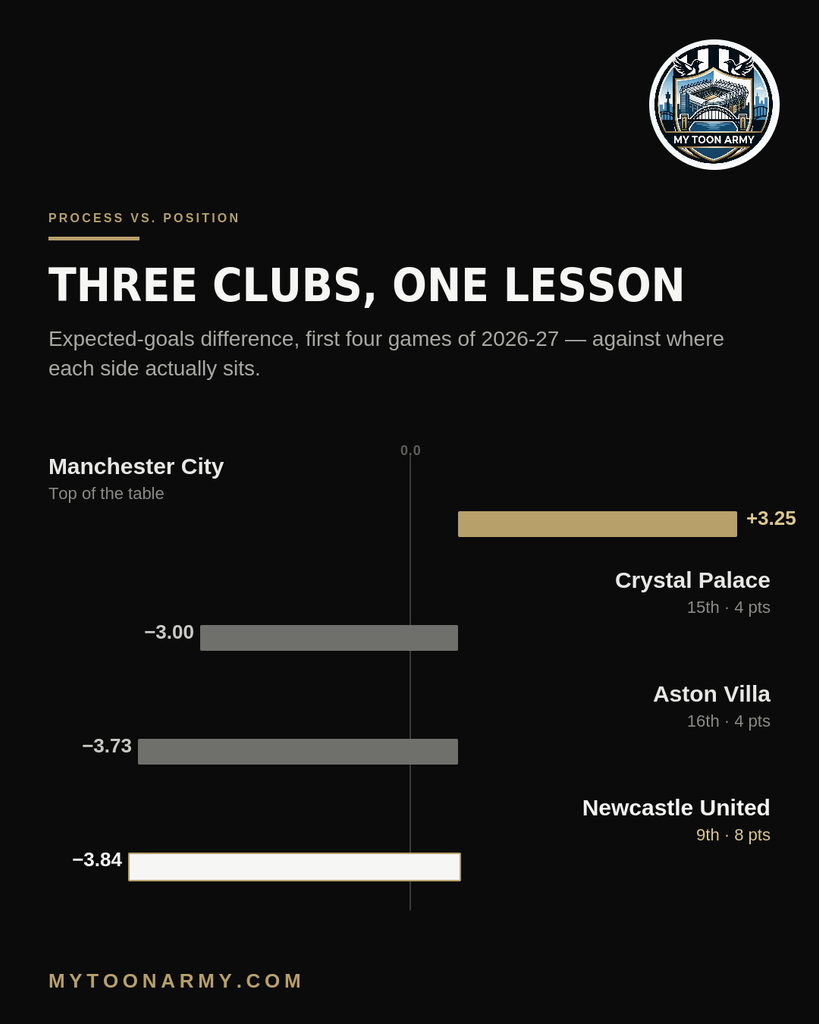
    Manchester City’s process matches their position — elite underlying numbers, elite results, with a layer of finishing luck against them sitting on top of genuine quality rather than substituting for it. Crystal Palace and Aston Villa’s processes also match their positions — poor underlying numbers, poor results, the table doing exactly what you’d expect it to do. Newcastle are the anomaly in this set. Their process is worse than Palace’s. It is marginally worse than Villa’s. And yet they sit fifth in this four-club comparison on points while owning the worst underlying number of the lot — which is exactly why the next block of fixtures matters more than the points column currently suggests, and why the work is worth starting now rather than once the table catches up and says so for them.

    Tyneside has been here before

    None of this is hypothetical for this football club specifically, and it’s worth naming honestly rather than skating past it. In 2011-12, Alan Pardew’s Newcastle finished fifth — an eight-year contract handed out on the strength of it. Buried inside that campaign was a defence recording the worst shots-against totals of Pardew’s tenure, carried by the best save percentage and the kindest finishing luck he ever had at his disposal. None of it repeated. Newcastle spent most of 2012-13 in a real relegation fight, escaping on the second-to-last weekend in 16th.

    The lesson from that season isn’t that the collapse was inevitable — it’s that the window bought by good fortune went unused. Pardew’s Newcastle didn’t reinforce the areas the underlying numbers were flagging; a hot finishing spell got mistaken for the finished article, and the rebuild that should have happened during the grace period simply didn’t. That’s the part worth this side getting right instead, and there’s real reason to think the club is better placed to do it: considerably more resource behind the project than Pardew ever had, a sporting director’s office running recruitment with a plan rather than reacting to results, and a manager who is early enough in his own tenure that these numbers are a diagnosis rather than a verdict. History rhyming isn’t the same as history repeating. What happens next depends on what gets done with the time currently being bought — and that part hasn’t been decided yet.

    The short version

    Facing a lot of shots is dangerous even when hardly any of them are clear-cut, because the risk adds up across the many moderate chances a defence concedes, not just the handful of obvious ones a stats account counts by hand. A ranking built on just five matches of a rare event like “big chances conceded” is too small a sample to trust — it swings wildly by chance alone, which is exactly why Manchester City can sit mid-table on that particular list while topping the real one. Right now, Newcastle’s actual underlying numbers — chances created and chances conceded combined — are the worst in the Premier League, and the only thing keeping the league table from reflecting that is a finishing return in front of goal that ranks among the best in the division — and shooting form is, on the weight of everything football’s underlying numbers show about how it behaves, the least repeatable output in the sport, which makes the current rate far likelier to fall away than to hold.

    None of that is cause for alarm, and it shouldn’t be read as one. It’s a side four months into a genuine rebuild, playing for a manager who is still installing his own way of doing things, currently being carried by a finishing spell that’s buying real, usable time. That’s not a small thing — points banked now are points a harder patch later won’t have to find from scratch. The job in front of Jaissle and his staff is simple to state even if it isn’t easy to do: tighten the process producing the shots faced, keep building the chance creation that’s currently running short, and treat the table’s current generosity as working capital rather than proof the job’s already done. Newcastle have lived a version of this story before, under Pardew in 2011-12, and what went wrong wasn’t the lucky start — it was that the club spent the following year finding that out the hard way instead of getting ahead of it while there was still time. That’s the difference that actually matters here, and unlike the stats above, it’s the one still open to being written the right way.

    What do you think of our start to the season? Will Jaissle be able to tighten things at the back? Join the conversation on X @mytoonarmy #NUFC
  • Same Word, Different Club

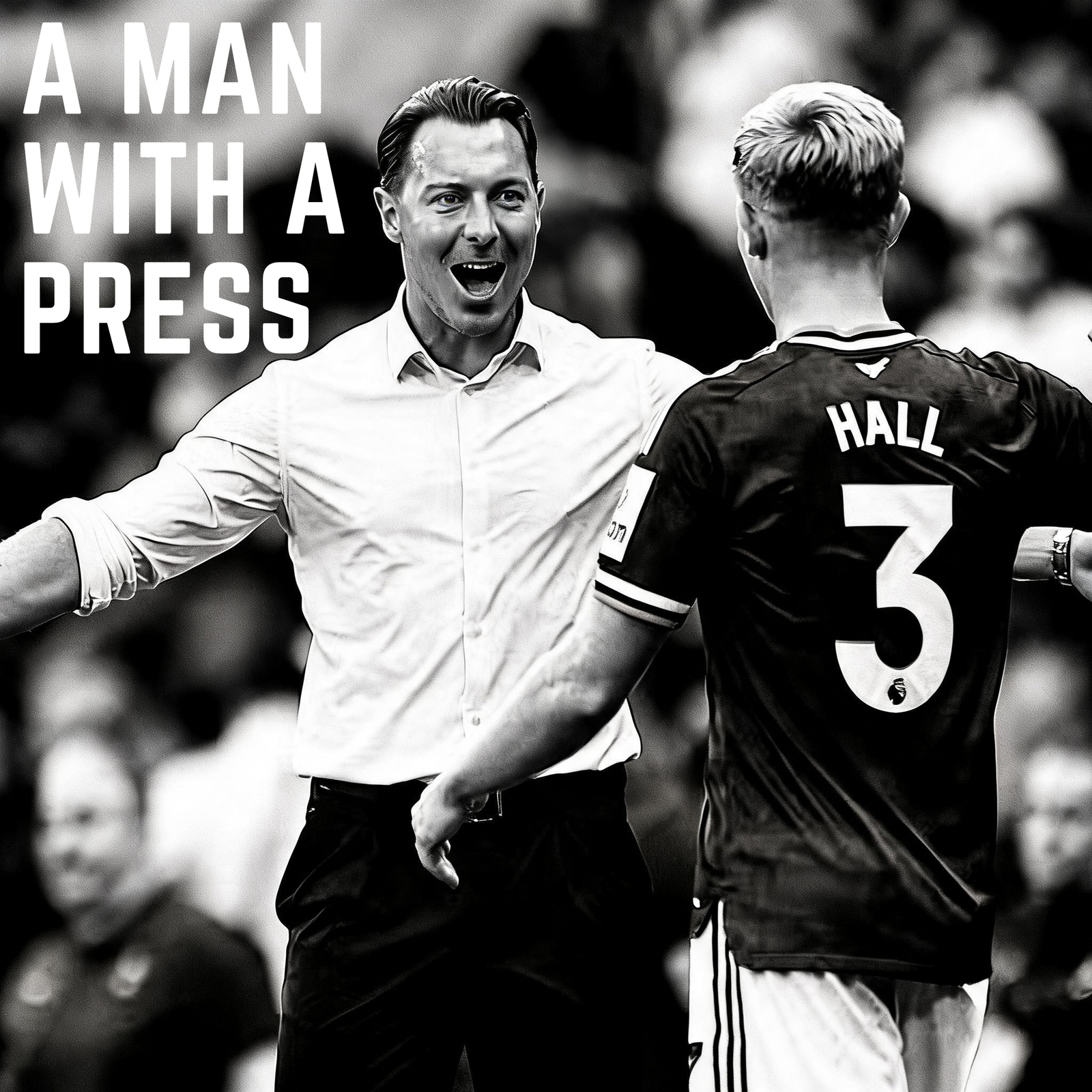
    A Man With A Press

    Eddie Howe pressed high. Matthias Jaissle presses high. Look at the team sheet from Bournemouth away, though, and barely a name in the back six was signed to do it — and yet four games into a manager’s reign that started three weeks before kickoff, Newcastle haven’t lost. The mechanics behind it are better watched than paraphrased at second hand. Amar Dedić’s underlap, Malick Thiaw stepping out of defence, Yoane Wissa going missing from his own penalty box on purpose — it’s all in here.

    An excellent video by James Lawrence Allcott

    What the breakdown doesn’t quite spell out is the more interesting story sitting underneath it. Howe’s press and Jaissle’s press share a word and almost nothing else.

    Howe’s version was control dressed up as aggression. Newcastle invited sides onto them, went long to Nick Woltemade’s head, and committed bodies sideways to force possession backwards until the opposition ran out of ideas. The press was there to slow the game down and keep the risk low — chaos as a last resort, not a first instinct.

    Jaissle’s press is chaos by design. Lukáš Horníček holding the ball live through a goal kick isn’t caution, it’s bait — an invitation for the opposition to commit numbers forward so Newcastle can play straight through the gap that creates. Wissa dropping into midfield isn’t a forward being wasted, it’s a refusal to leave a defender anything to mark on the last line. Where Howe’s Newcastle wanted the game slow, Jaissle’s wants it live, gambling the first phase of buildup to win space further up the pitch.

    Both call it pressing. What’s actually happened is that Jaissle has imported the high-octane transition football that built his reputation at Red Bull Salzburg — though it might be less of a graft than it looks. If Ross Wilson already knew Howe’s exit was coming, with the succession held quiet until Jaissle’s name was secured, then Dedić, Horníček and González were never recruited to play someone else’s football. They were recruited for this. Either way, four unbeaten games are still four unbeaten games — worth watching, not yet worth crowning.

    Because the honest answer is nobody knows yet whether it holds. A back six built around four summer arrivals aged 24 and under can bait a Bournemouth press in September, on a ground where the home side wants to play into Newcastle’s hands anyway. Whether the same approach survives a run through sides who won’t oblige — who sit off, protect their box, and dare Newcastle to break them down without the chaos to hide behind — is the actual question.

    Same word: press. Different football club. We’re about to find out which one wins.

    What do you think of Jaissle-ball after the first 5 games of the new regime? How long will it be before others figure out how to beat it? Join the conversation on X @mytoonarmy #NUFC

  • The Bill for Bravery: What the Shot Counts Say About Jaissle’s Newcastle

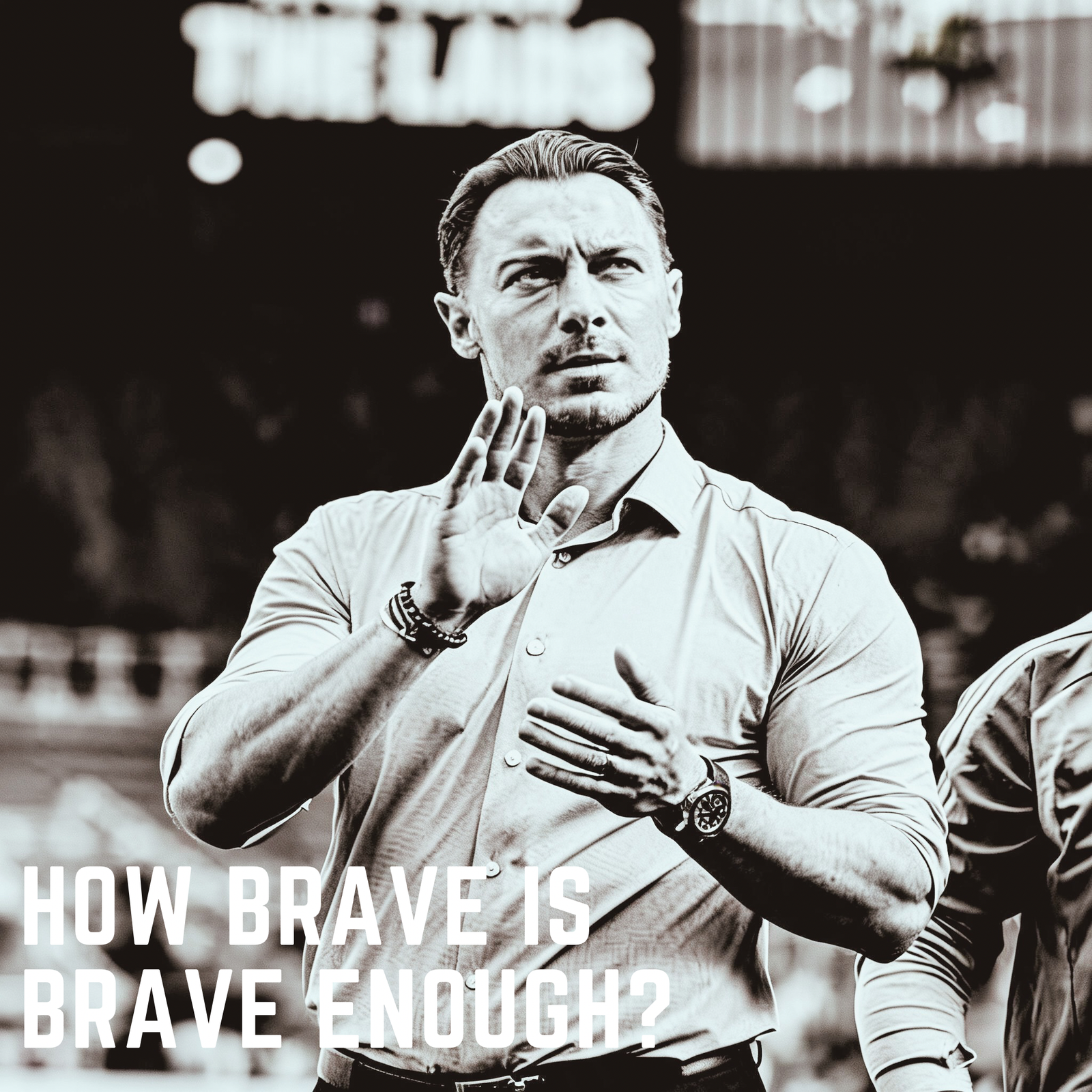
    How brave is brave enough?

    Watch the split-second after Newcastle lose the ball in midfield and you are watching Matthias Jaissle’s entire football philosophy compressed into one freeze-frame: full-backs already stepping past the halfway line, a front four pushing into spaces that haven’t been vacated yet, a defensive line inching up before the ball has even changed hands. Nobody drops off. Nobody manages the game. The instruction, evidently, is to go and get it back higher than you lost it.

    It is thrilling to watch. It is also why fifty-eight shots have been fired at Newcastle’s goal in Jaissle’s first three Premier League matches — an average of just over nineteen a game, against Liverpool, Tottenham and Bournemouth. One win and two draws have Newcastle unbeaten through those three games. The record reads fine. The process behind it has not.

    The Brave Way, Tactically Speaking

    Jaissle has never pretended otherwise. Asked before the Bournemouth match whether he’d tighten up against a side built to counter, he said the approach stays “independent of the opponent, we have a clear way, clear identity.” That is not a throwaway line. It is a manager telling you, in advance, that he will not shape-shift to protect his defence no matter who’s coming the other way — the same conviction that has powered this summer’s recruitment strategy, which he has described, more than once, as simply “a brave way, but the way we want to go.”

    Go back through his press conferences from the opening month and the phrase turns up again and again, attached to something different each time: rating a transfer window he wouldn’t score out of ten, defending a net spend he wouldn’t itemise, tempering Dan Burn’s talk of Europe against a squad he called one of the league’s youngest coming off a 12th-place finish, and pre-loading an excuse for Matias Fernandez-Pardo before the winger had kicked a competitive ball. Nick Woltemade, last year’s £69m club-record signing, left on loan to Juventus this window for a fee somewhere around a twentieth of what Newcastle paid for him thirteen months ago. That is what brave costs when you write it down on a balance sheet: patience, and faith that this summer’s twenty-one-year-old is a sounder long-run bet than last year’s.

    The tactics are the same wager, run out on grass instead of a spreadsheet. Amar Dedić didn’t arrive as a blind punt — Jaissle brought him in from Benfica specifically because he already trusted the player’s game from their time together at Salzburg. Joe Willock and Jacob Murphy, both linked with exits all summer, were kept and immediately rewarded with bench impact against Liverpool. None of that sits apart from the shot count Newcastle are conceding; it’s the same operating principle expressed as a back four instead of a squad list. Commit to players you already trust, push bodies forward before the ball is fully won, accept that youth and unfamiliarity will produce ugly patches along the way, and bank on the upside outweighing them over a longer stretch than three games.

    Same Coach, Different Numbers

    The useful test is whether this shot count is simply what Jaissle’s football produces wherever he goes, or whether Newcastle are seeing something specific to this squad and this moment.

    The early signs point to the latter, and the case is stronger than a hunch. A statistical comparison published before Jaissle’s first game, setting his final two seasons at Al-Ahli against Newcastle’s own recent defensive record, found the pressing identity translates almost exactly: near-identical shot counts generated directly from the high press, a defensive line sitting at a comparable height, the same volume of aggressive defensive actions. The one place the numbers diverged sharply was transition defending — Jaissle’s Al-Ahli conceded roughly 0.77 shots a game from counter-attacks, comfortably tighter than the 1.22 Newcastle had been shipping under their previous regime. By that measure, Jaissle arrived with a reputation for being harder to hit on the break, not easier.

    Which makes nineteen shots a game — including twenty-five in a single afternoon against Liverpool — sit oddly against his own history. At Al-Ahli he averaged closer to ten shots conceded a match across two seasons while running practically the same press. At Salzburg, operating almost exclusively out of a 4-1-2-1-2 diamond that barely changed regardless of the scoreline, his sides won back-to-back titles and reached the Champions League knockout stage for the first time in the club’s history playing the same vertical, front-foot football — without bleeding shots at anything like this rate.

    So this is not simply how Jaissle’s tactics work everywhere. Something about Newcastle right now is amplifying the risk beyond what his own managerial record would predict.

    Why, Then?

    A few explanations sit alongside each other rather than compete.

    The obvious one is time. Jaissle walked into the building weeks before a ball was kicked, replacing a manager who had spent four years drilling a different structure into these exact players. He said as much himself before his first game, acknowledging the squad remains a work in progress and that building a new identity — after losing Bruno Guimarães, Sandro Tonali and Anthony Gordon in the same window — would take longer than one pre-season allows.

    The second is personnel, though the mechanism is sharper than “he plays too high.” Dedić’s own touch map this season argues against that reading — his heaviest zones sit deep, inside Newcastle’s own defensive and middle thirds, with barely a mark inside the final third. Nothing like the habitual overlap you’d see from a Diego Dalot or a Matty Cash. His baseline position is conservative, not advanced, which makes the two moments that undid Newcastle against Bournemouth more concerning, not less. They weren’t the recurring cost of a full-back who lives up the pitch finally getting caught out. They were isolated lapses inside an otherwise disciplined pattern, arriving at precisely the moments the game needed him switched on. A structural habit is something a manager coaches out by holding the line higher or lower. A specific lapse in concentration, twice in one afternoon, at the moments that decided the game, is a harder thing to promise will simply improve with time — trust from Salzburg or not.

    There’s also a simpler fix sitting on the bench, worth flagging even with the caveats attached. Tino Livramento is Newcastle’s first-choice right-back when available, an England Under-21 European champion in two different tournaments, and a player whose reputation — concentration named specifically as a strength in his profile — is built on defensive solidity as much as attacking output. Set his final full season alongside Dedić’s opening three games and the gap turns up in exactly the places you’d expect: 1.25 xG conceded per 90 while on the pitch against Dedić’s 1.82, 0.95 goals conceded per 90 against 1.33, and a foul-committed rate of 0.47 per 90 against Dedić’s 2.00 — roughly four times fewer fouls, often the tell of a defender managing the game rather than recovering from having just been beaten by it.

    None of that is a clean verdict. Three games is a small enough sample that one bad afternoon at Bournemouth can drag an average a long way on its own, and Livramento’s numbers come from an entirely different system under the previous manager, not from any minutes inside Jaissle’s actual structure. But directionally, it’s the same story the touch map told: the calmer, lower-event full-back profile is sitting on the bench, still working back from the calf injury and surgery that wiped out his entire pre-season. Nobody should rush him for the sake of a headline. Once he’s genuinely match-sharp rather than fresh off a comeback minute, though, he looks like the lowest-risk route back to solving this specific problem without touching the system at all.

    The third is the level. Ten shots a game in the Saudi Pro League and a title-winning diamond in Austria are not the same test as Liverpool’s front four in August. Jaissle himself has drawn the distinction before, noting that his time working with a squad full of the established internationals at Al-Ahli forced him to think “much more game-to-game” than the fixed system Salzburg’s academy conveyor belt demanded of him. Newcastle currently ask something closer to the Salzburg version of him — one settled idea, applied without much in-game modification — against opposition that punishes fixed ideas fastest.

    The Bill Comes Due, Eventually

    Here is the part worth being honest about rather than papering over with good vibes from an unbeaten start.

    Three games of quality finishing and a couple of slices of fortune — Barnes’ cannot-do-that-again strike, Ramsey scoring on his introduction, Liverpool’s leveller arriving from the penalty spot in stoppage time rather than a chance this back line actually conceded in open play — have made a shots-conceded column read fine on the league table. That is not a stable equilibrium across thirty-eight games. Defences that concede at close to nineteen shots a game across a full season, historically, are relegation-adjacent defences, not mid-table ones, unless the goalkeeper and finishing at both ends keep overperforming for nine months running. That basically never happens. The law of averages does not negotiate with good vibes, and it has a very long season to make its point.

    None of which means the approach is wrong. It means it’s a wager, exactly like the summer’s transfer business was a wager, and wagers carry the possibility of losing as the explicit cost of the potential upside. The same afternoon that saw a teenager score Bournemouth’s equaliser off Dedić’s own delivery also saw two lapses from that same player gift Bournemouth a two-goal cushion inside thirty-five minutes. You do not get to keep one half of that trade and discard the other.

    What happens next is the actual story of this season, more than any single result. If the counter-attack numbers tighten as Dedić’s concentration catches up with his positioning, as the back four settles, as Jaissle finds the flexibility at St James’ Park that he found in Saudi Arabia once he had time to build it — the brave way pays off, the way Ross Wilson’s transfer strategy is designed to pay off three years from now rather than three months. If it doesn’t, nineteen shots a game stops being a number Newcastle survive and starts being one that costs them points nobody can quality-finish their way back from.

    Either way, watch the shots-conceded column more closely than the league table for the next ten games. It will tell you which version of brave this is going to be.

    The brave way already showed us what this costs on a balance sheet. The shot count is showing us what it costs on the pitch.

    What do you think of Jaissle after the first three league games? Will Newcastle be able to tighten up their leaky defence? Join the conversation on X @mytoonarmy #NUFC
  • Nine and Not Out: The Bournemouth Hoodoo Survives, But Newcastle’s Soft Centre Doesn’t

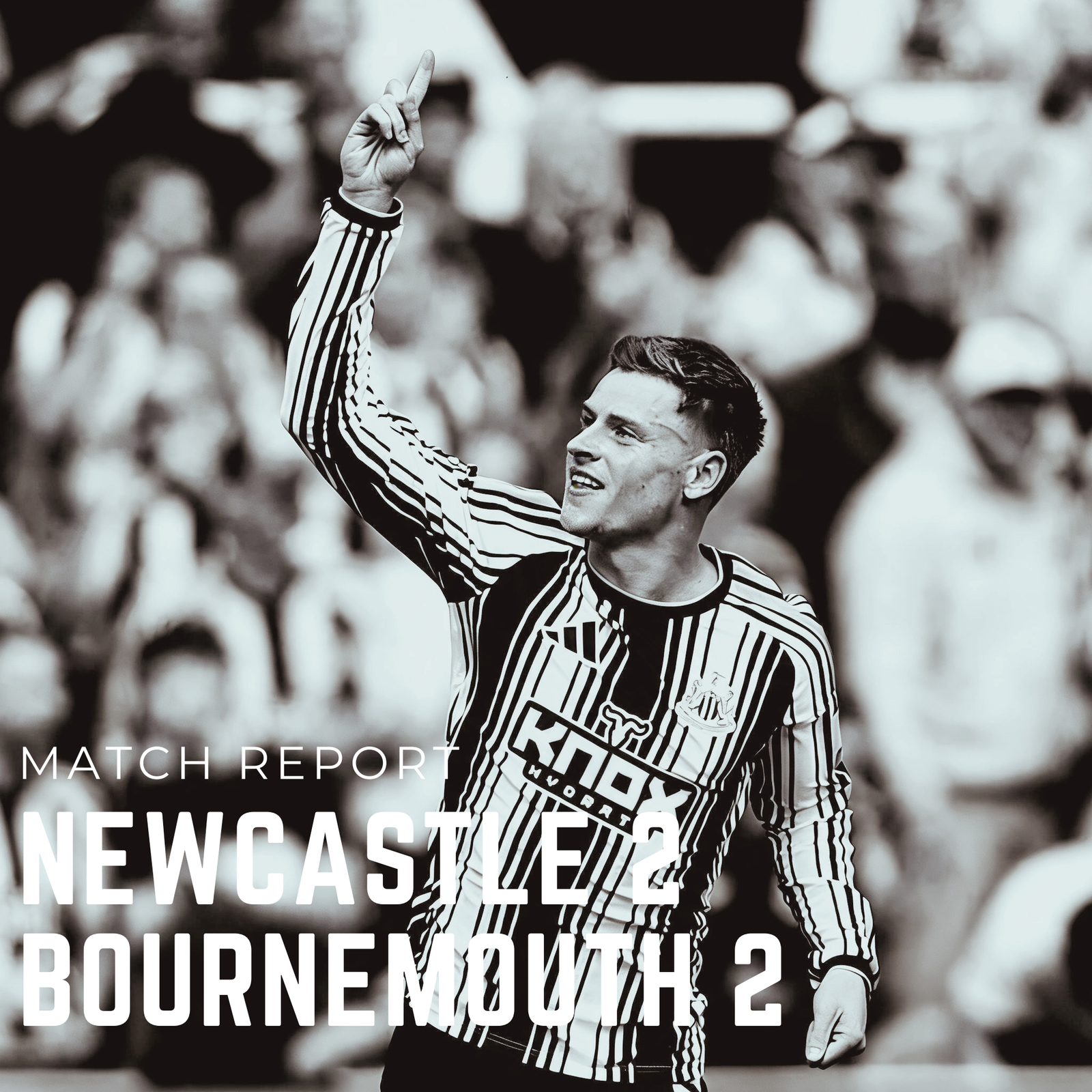
    Newcastle 2 Bournemouth 2

    Twelve yards out, eighty-eighth minute, Jacob Ramsey took one touch to settle a half-cleared ball and side-footed it low past Djordje Petrovic. St James’ Park did not so much roar as exhale — fifty-two thousand people releasing eighty-eight minutes of accumulated grievance in one go.

    It was Newcastle’s second shot on target all afternoon. Their second. Against a side who had managed five.

    That single statistic tells you almost everything about the shape of Saturday lunchtime, and almost nothing about what actually mattered. Because the question posed in this column on Friday was never whether Newcastle would out-pass or out-create Bournemouth. It was whether this team, carrying the sudden and uncomfortable weight of expectation, could handle a fixture they were supposed to win against opposition they cannot beat. The answer arrived in two parts, and the second part was more revealing than the first.

    The First Half That Proved the Warning and Missed the Point

    Friday’s preview flagged the number that should have frightened everyone: no side in the Premier League had faced more shots than Newcastle across the opening two rounds. Jaissle’s system creates through aggression and concedes through it, and Bournemouth — pacey, direct, built to punish an open midfield — looked like precisely the wrong opponent to test it against.

    Forty-five minutes later that warning looked prophetic. Thirteen Bournemouth shots to Newcastle’s three. An expected goals reading of 1.29 to 0.14. Marco Rose’s side did not merely start brightly; they arrived at St James’ Park with the clarity of a team who had watched the Liverpool and Tottenham tapes and decided that Newcastle’s high line was an invitation.

    But the mechanism was not the one predicted. Both goals traced back to the same right boot, and it belonged to Newcastle’s own right-back.

    The ninth minute: Alex Scott’s shot deflected off a Newcastle body and spun loose at the back post, and Amar Dedić stood watching it as though the phase of play had ended when the shot was struck. Marcus Tavernier did not stand watching. He arrived, and he finished, and Newcastle’s players surrounded referee Rob Jones insisting Anthony Elanga had been fouled in the build-up. VAR looked. VAR declined. Former PGMOL chief Keith Hackett has since backed the non-intervention as a legitimate refereeing judgement, and on the replays it is hard to argue otherwise — but the mood of the afternoon was set in that opening exchange, and it never fully recovered.

    The thirty-fifth was worse, and it was worse because it was structural rather than accidental. Dedić lost the ball high up the pitch, in the advanced position his attacking instincts keep dragging him towards. Tavernier skipped past Nico González in the space that Dedić had vacated. Justin Kluivert’s shot smashed against the post and rebounded off Lukáš Horníček’s back; Scott collected the loose ball on a desperately tight angle and clipped a low cross that ricocheted off Malick Thiaw and looped over his own goalkeeper.

    Call it misfortune if you like. The scoresheet does — Thiaw’s name sits there with the letters OG beside it, and he will not enjoy seeing them. But the dominoes fell in a very particular order, and the first one was pushed by a twenty-four-year-old full-back who has been outstanding going forward and repeatedly caught out coming back.

    Here is the complication, and it is the reason this is a character study rather than a hanging. Dedić’s delivery into the box is what led to the equaliser. He also curled a late free-kick high over the crossbar chasing a winner. Three of the four goals in this match had his fingerprints on them, in both directions. Ross Wilson signed a right-back whose attacking threat and defensive naivety are not two separate traits but the same trait, pointed in opposite directions. That is a coaching problem, not a recruitment error — but it is a problem, and Leeds away is not the place you want it unresolved.

    The Boy Newcastle Let Go

    There is a small, sour piece of poetry buried in the identity of Bournemouth’s scorer.

    Marcus Tavernier grew up in Newcastle’s academy. He was released as a boy, picked up by Middlesbrough at under-14 level a fortnight later, and has spent the years since building a career that keeps intersecting with the club that decided he was not good enough. Saturday’s opener was, by the Press Association’s count, his fourth goal in five appearances against Newcastle United.

    Which brings us to the harder question this column promised to answer: why can’t we beat them?

    The lazy explanation is that Bournemouth are a bogey side and bogey sides defy analysis. The better explanation is that the Cherries possess a specific structural weapon that has now survived a complete change of managerial philosophy. Andoni Iraola built a team around fast, direct wide players who attack space behind a committed defensive line. Marco Rose — Leipzig, Dortmund, Mönchengladbach — coaches a different game in most respects, but he inherited Kluivert, Tavernier and Rayan, and he did not have to be taught what they were for.

    Nine Premier League matches without a Newcastle win, stretching back to July 2020. Two Bournemouth managers, four Newcastle ones. The dugouts keep changing. The puzzle piece that unlocks us does not.

    What Bournemouth Actually Are

    And here we should be honest about the opposition, because “mid-table side Newcastle should beat” undersells them badly.

    The summer of 2026 was, on paper, the summer Bournemouth were supposed to be dismantled. Alex Scott — twenty-three, England-capped, refusing a new contract — was chased by Manchester United, Chelsea, Arsenal and Liverpool, with a late Chelsea bid rejected outright. Rayan, the Brazilian teenager they paid Vasco da Gama £30m for in January, drew Real Madrid’s attention. Eli Junior Kroupi, thirteen Premier League goals in his first full season, was watched by Arsenal and Paris Saint-Germain.

    None of them left.

    For a finance-literate readership this is the detail worth sitting with. Bournemouth did not merely wish their players would stay; they had built the contractual architecture to make refusal credible — long deals, release clauses set at levels (£87m for Rayan, roughly £86.5m for Kroupi) that price out opportunism rather than invite it. They sold Marcos Senesi, a defender approaching the end of his deal, and reinvested. António Silva, the man who replaced him, won nine duels on Saturday and eight of eleven in the air, more than any player on the pitch in either shirt.

    That is not a plucky small club. That is a properly run one, refusing to accept the role of feeder club that the league’s economics keep pressing on everybody outside the top six. Newcastle, of all clubs, should recognise the achievement — we spent the summer watching Bruno Guimarães and Sandro Tonali walk out of the door.

    Twenty Yards, Two Minutes, One Moment

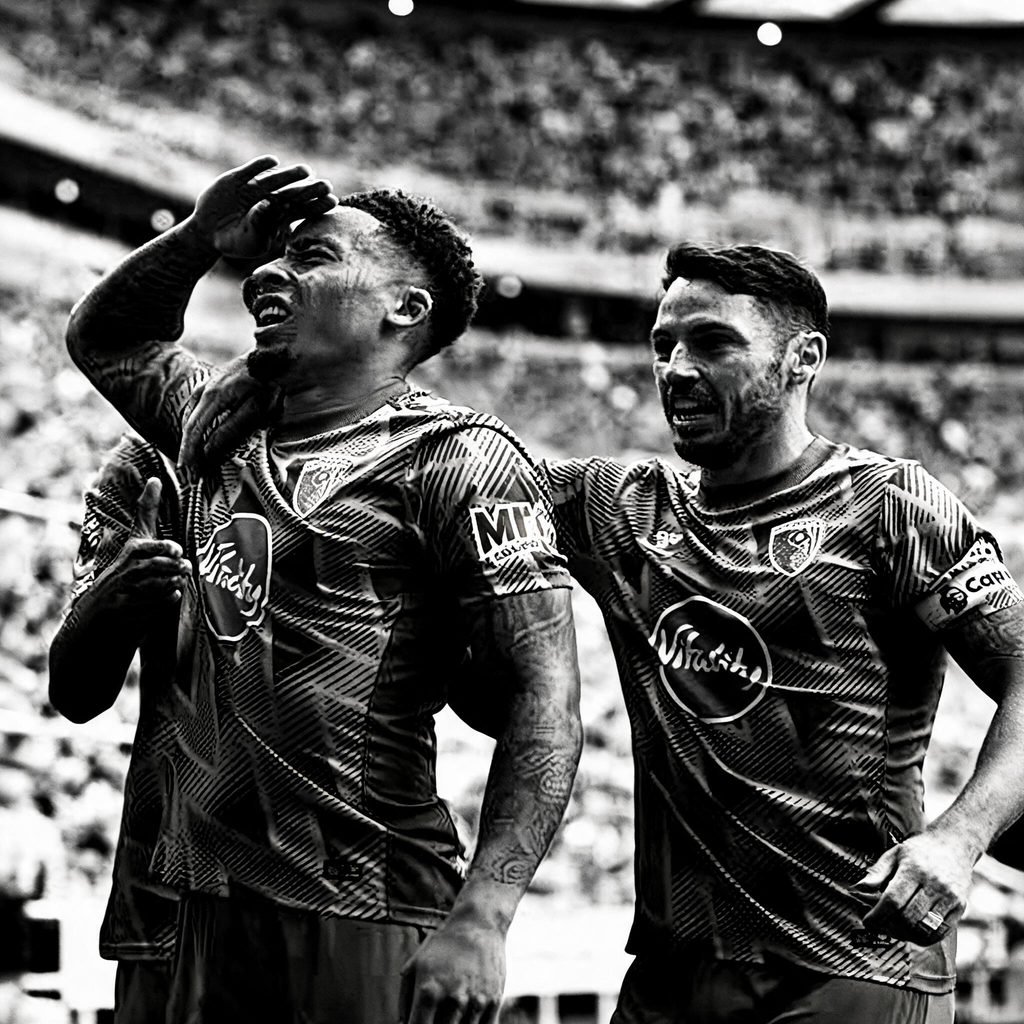
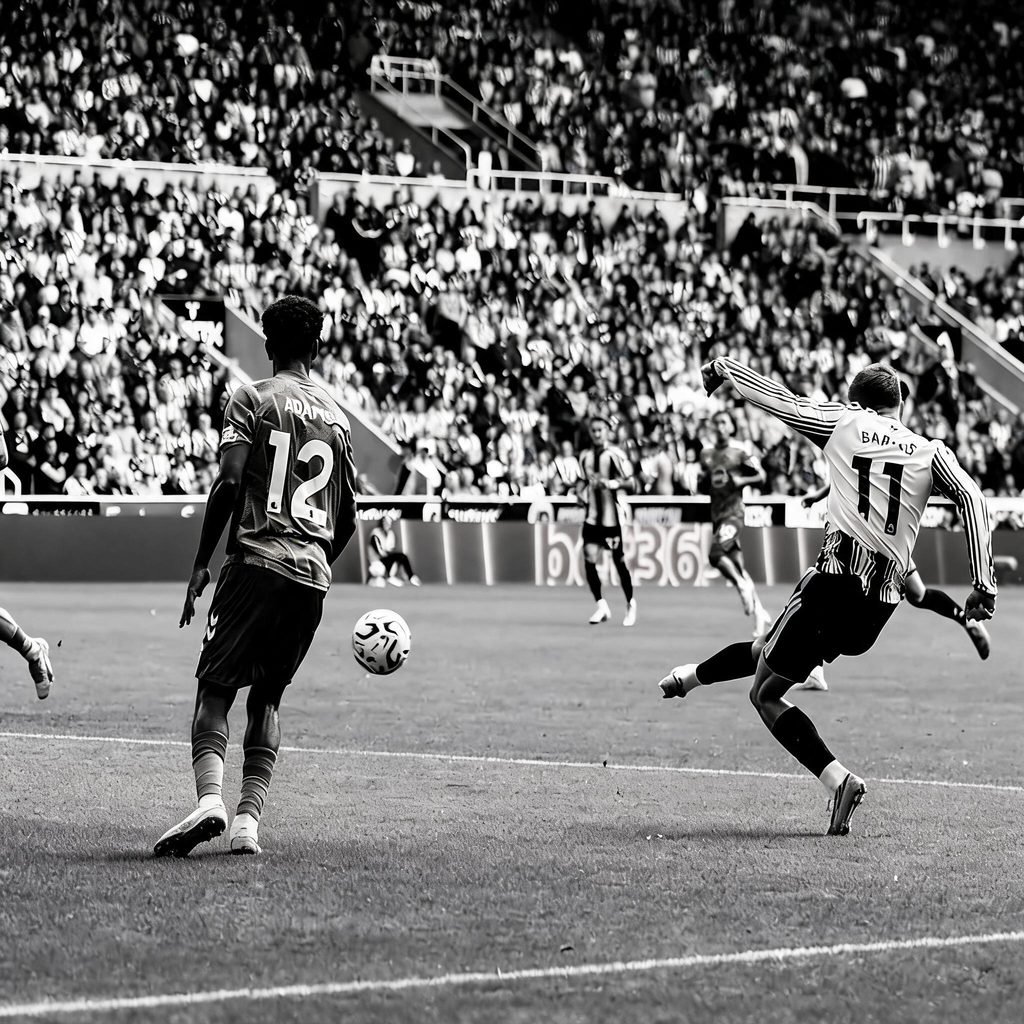
    Newcastle were drowning. And then Harvey Barnes decided they weren’t.

    Less than two minutes after Thiaw’s own goal, Lewis Hall slid the ball down the left channel, Barnes collected it, cut inside onto his right foot and curled a shot into the far top corner from the edge of the box. The underlying numbers rate the chance at 0.11 expected goals. The execution rated 0.83 on target. In plain English: nobody scores that shot, and he scored it.

    Football is not usually decided by moments of individual defiance. It just is often enough that teams keep believing in them. Had that ball gone two feet wider, Newcastle go in three down or two down and dead, Jaissle’s substitutions become damage limitation rather than intervention, and this article is about a very different afternoon.

    The Referee, and a Problem the League Has Not Solved

    The second half is where the argument starts.

    Newcastle came out quicker, sharper and with a settled idea of where the game was to be won. They did not get the chance to build any rhythm — and that was by design, though not solely Bournemouth’s.

    Thirty-five fouls were awarded across ninety minutes. Rob Jones’s own season average coming into this fixture ran at 22.7 fouls per game, itself flagged as above the Premier League norm. This match ran hotter and choppier than his usual, and it ran that way at exactly the moment Newcastle needed continuity. Bournemouth’s players, comfortably ahead, discovered a succession of ailments requiring attention. Physios came on in rotation. Every restart took a beat longer than it needed to.

    One passage captures it precisely. Shortly after coming on, Matias Fernandez-Pardo won a free-kick thirty-four yards from goal — the sort of set-piece that keeps a siege alive. The whistle went again for something else, and the moment evaporated. Jaissle, whose reading of the situation was entirely correct, collected the first booking of his Premier League managerial career in the seventy-first minute for saying so. Six minutes were added at the end.

    Let us be precise about the complaint, because it is not the tired one. Bournemouth were entitled to manage the game; every side ahead in the eighty-second minute does the same, and Newcastle would have done it too. The issue is that the Premier League spent years introducing stopwatch timekeeping specifically to make this behaviour unprofitable — precise added time for treatment, substitutions, celebrations, delay. Howard Webb promised the clampdown was not a matter of “days and weeks.” Three seasons on, a visiting side slowed a match to a crawl at St James’ Park and it worked, right up until it didn’t.

    The pre-season assessment of the 2026-27 officiating pool framed the coming year’s real test not as new technology or fresh guidance, but as whether the same foul, the same holding offence, the same threshold for stopping play is judged identically in August and in May. Saturday was a data point. It will not be the last, and it will not only ever fall against us.

    Jaissle’s Hour

    Now the part that should genuinely encourage you.

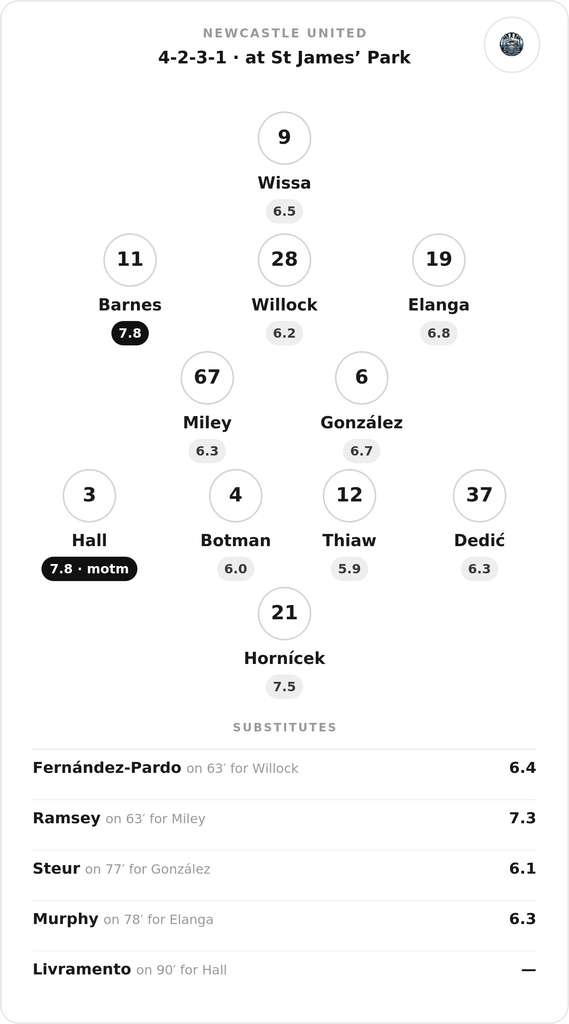
    At sixty-three minutes, still 1-2 down, still creating little, Jaissle removed Joe Willock and Lewis Miley and sent on Fernandez-Pardo and Ramsey together. Not a late throw of the dice — a considered intervention with nearly half an hour left, from a manager who had watched the first half and concluded that the problem was not effort but structure.

    The numbers either side of that change are stark. Bournemouth outshot Newcastle 13-3 before the break; after it, Newcastle edged the shot count 5-4 and the expected goals 0.57 to 0.08. The Cherries, who looked genuinely unplayable for half an hour, simply stopped being able to reach Newcastle’s box. Possession shifted, but more importantly the shape of possession shifted — quicker, straighter, forward.

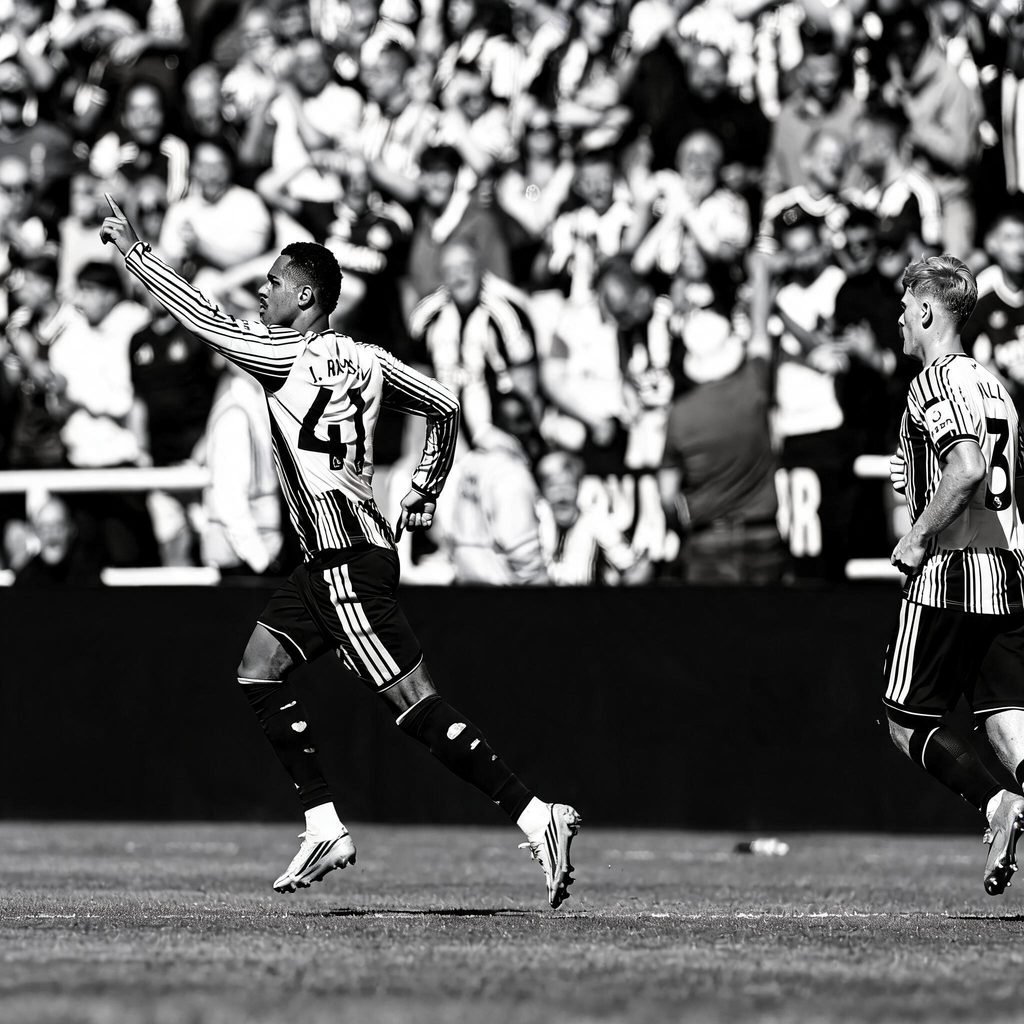
    Twenty-five minutes after arriving, Ramsey scored.

    And the crowd, it must be said, did as much of the work as the tactics board. Fifty-two thousand six hundred and forty-three inside a full house, and by the closing quarter they had turned St James’ Park into something Bournemouth visibly did not want to be standing in. Speaking to Match of the Day afterwards, Jaissle said: “I have mixed feelings. But after that start, you should be happy. But if we could have performed at the best level over 90 minutes, we could have had all three points. We couldn’t match Bournemouth’s intensity in the first half and conceded twice.”

    That is the correct read. This was not a good performance. It was, however, evidence of a thing this club has conspicuously lacked. Last season Newcastle led the division in points thrown away from winning positions. On Saturday they were the ones doing the clawing.

    The Best Player Was Not the One Who Scored

    Harvey Barnes produced the moment. Lewis Hall produced the performance.

    Both were rated 7.8, but the composition differs entirely. Hall supplied the assist for Barnes’s goal, made thirteen ball recoveries — more than any player on the pitch, in either shirt — completed 87 per cent of his passes and played nine line-breaking passes from left-back. When Newcastle were being overrun, he was the one repeatedly winning the ball back and pointing it forward. When they were chasing, he was the platform underneath the chase.

    Yoane Wissa ran ten kilometres and hit 33.7 km/h without registering a single shot, which is its own kind of thankless. Nico González played more line-breaking passes than anyone on the pitch — twelve — while also conceding six fouls and being dribbled past three times, a rookie’s afternoon in an English midfield.

    But Hall is the answer. Barnes won the highlights reel; Hall won the hour.

    Twenty-Seven Minutes of a £51m Question

    Friday’s preview predicted Jaissle would introduce Fernandez-Pardo gradually, from the bench, rather than disturb a functioning front line. That is precisely what happened, and the Belgian’s afternoon lasted twenty-seven minutes.

    He did not score, did not assist, and was thoroughly upstaged by the man who came on alongside him. What he did do was cover 875 metres at running pace and register nine sprints in under half an hour, take three touches inside the Bournemouth box, and beat his man the one time he tried. He also won the free-kick that the referee’s whistle promptly buried.

    Flashes, then. Nothing more, and nothing to worry about. Jaissle called it “a lot of quality” and stressed the need to manage a young player carefully. Judgement deferred, which is exactly where it should sit.

    What’s Next

    Newcastle travel to Millwall on Tuesday for a Carabao Cup third-round tie that will hand minutes to the players who did not get them here — and Tino Livramento, who Friday’s preview said would not be risked, has already returned for a stoppage-time cameo. Then Leeds away on Monday the fourteenth, and Hull City at St James’ Park the following Saturday. Five points from three games with a trip to Elland Road next is a perfectly respectable platform; it is also a schedule with no more free passes in it.

    Bournemouth host Lincoln City on Tuesday and Brentford next Saturday, and Rose’s problem is now a matter of public record. His side became the first team in Premier League history to score first in each of their opening three fixtures and win none of them. They have dropped seven points from winning positions already this season and twenty-nine since the start of the last — a figure they share, with some irony, with Newcastle. Four of the five goals they have conceded this term arrived after the eightieth minute. “If we can’t finish the games,” Rose said afterwards, “we need to defend our goal like it’s the last game of our lives.”

    The hoodoo stands at nine. We still cannot beat them.

    But for the first time in a long while, the story on the way back down Barrack Road was not about what Newcastle let slip. It was about what they refused to. Friday’s column asked whether this team could handle the sudden, uncomfortable presence of expectation. They failed the first half of that examination badly, and then they answered it in the only currency that has ever mattered on Tyneside.

    They did not give in.

    What do you think about the fightback from 2 goals down? Shall Pardo start the next league game against Leeds? Join the conversation on X @mytoonarmy #NUFC
  • The Brave Way

    Matthias Jaissle - The Brave Way

    Four times in twenty minutes, Matthias Jaissle reached for the same two words — and between them sits the clearest account yet of how he means to run Newcastle United.

    He said it rating a transfer window he refused to rate. He said it explaining a balance sheet he refused to itemise. He said it defending a squad he refused to over-promise on. And he said it again, gently, warning supporters not to expect too much too soon from a twenty-one-year-old signed on deadline day. The brave way. Not a slogan pushed out by the club’s media team, not a line borrowed from a press release — a phrase Jaissle kept returning to unprompted, in a training-ground media suite on Thursday, as though it were the only honest answer available to four different questions.

    It is worth sitting with why he needed it four times.


    The first came from a straightforward ask: rate the transfer window out of ten. Jaissle declined the number, then explained the refusal. “I won’t rate it, but I’m happy — a great job from Ross and his team,” he said. “A clear idea with all the signings: a young squad in general, young signings with huge potential. That’s a brave way, but this is the way we want to go here in Newcastle.” Eight arrivals across the window, five of them summer signings, five of the club’s fresh faces born after January 2005 — young enough that they do not even occupy a place on Newcastle’s 25-man Premier League squad list, because the rules do not require it. That is not incidental colour. It is the clearest possible evidence that the words match the recruitment: a sporting director building a squad so structurally youthful that half a dozen of its newest members are, on paper, still developmental cover.

    The second use came wrapped in numbers he wouldn’t give. Asked about the £100m-plus spent on marquee arrivals this year, Jaissle pivoted to the ledger rather than the fee. “When you see the balance in what we spent and what we earned, it’s interesting — a great step from the club,” he said. “It’s exactly the description of that transition phase right now, and bringing the average age heavily down compared to last season — all these things are so consistent with our brave way for the future, and that will be successful.” He would not put a figure on net spend. He didn’t need to. Nick Woltemade, the club’s own £69m record signing from thirteen months ago, left for Juventus on loan this week for a fee amounting to roughly a twentieth of what Newcastle paid for him — while Matias Fernandez-Pardo, twenty-one and untested in the Premier League, arrived on deadline day to effectively do his job. That is what “brave way” costs when you say it out loud on a balance sheet: write-downs, patience, and faith that the next twenty-one-year-old is a better bet than the last twenty-four-year-old.

    The third use was pure temperature control. Dan Burn had talked before the season about the squad challenging for Europe; asked whether that was realistic, Jaissle didn’t dismiss it, but he did contain it. “I like that Dan is ambitious, I like that players are ambitious — but we are realistic,” he said. “We’re clear that we have one of the youngest squads in the Premier League right now. This is a brave way, but we see a lot of potential. After last season and the 12th-place finish, we know about the transition phase, we know about the challenges ahead.” Here, the phrase stopped being about recruitment and started being about expectation management — a coach drawing a line between what his squad might become and what it currently is, three games into his tenure, unbeaten but hardly the finished article: a 2-2 draw with Liverpool salvaged only by a stoppage-time Szoboszlai penalty against them, then a battling 2-0 win away at Tottenham built on second-half substitute impact from Elanga and Wissa.

    The fourth use was the quietest, and perhaps the most telling. Pressed on whether Fernandez-Pardo’s age called for caution from supporters, Jaissle didn’t hedge. “Yes, this is always needed. This is the brave way, like I said, with these signings, with young players — they need time to adapt,” he said. “Yes, some players adapt really fast, but usually there will be ups and downs, and this is something I’m aware of, hopefully the fans too.” No coach enjoys pre-loading an excuse for a signing before that signing has kicked a ball in anger. But Jaissle did it anyway, calmly, because the phrase had already done the work across three previous answers — the fans in that room had heard “brave way” enough times by then to understand it as a standing disclaimer rather than a soundbite.


    “The Brave Way” – Jaissle’s Mantra?

    Put the four together and a coaching philosophy comes into focus that owes as much to risk management as it does to tactics. Amar Dedić, plucked from Benfica specifically because Jaissle already trusts him from their Salzburg days, started the season fit and sharp inside a fortnight. Joe Willock and Jacob Murphy, both linked with exits all summer, were kept and immediately rewarded with a goalscoring impact off the bench against Liverpool. Nico González was handed his debut inside the Tottenham back four. None of this is accidental man-management — it is the operational expression of “brave way”: trust the graft of players already inside the building, absorb the occasional loss on a record signing who hasn’t clicked, and accept that youth means volatility before it means value.

    Bournemouth arrive at St James’ Park on Saturday as the next examination of that patience — a side unbeaten against Newcastle in five, still carrying the scars of a 4-1 mauling the last time these two met at a 12:30 kick-off. Jaissle will not be rating this one out of ten either. He does not need to. He has already told everyone, four times over, exactly what kind of result he is building towards, and exactly how long he is prepared to wait for it.

    What do you think about Jaissle’s “brave way”? Is this the new recipe for success in a Newcastle 2.0? Join the conversation on X @mytoonarmy #NUFC