
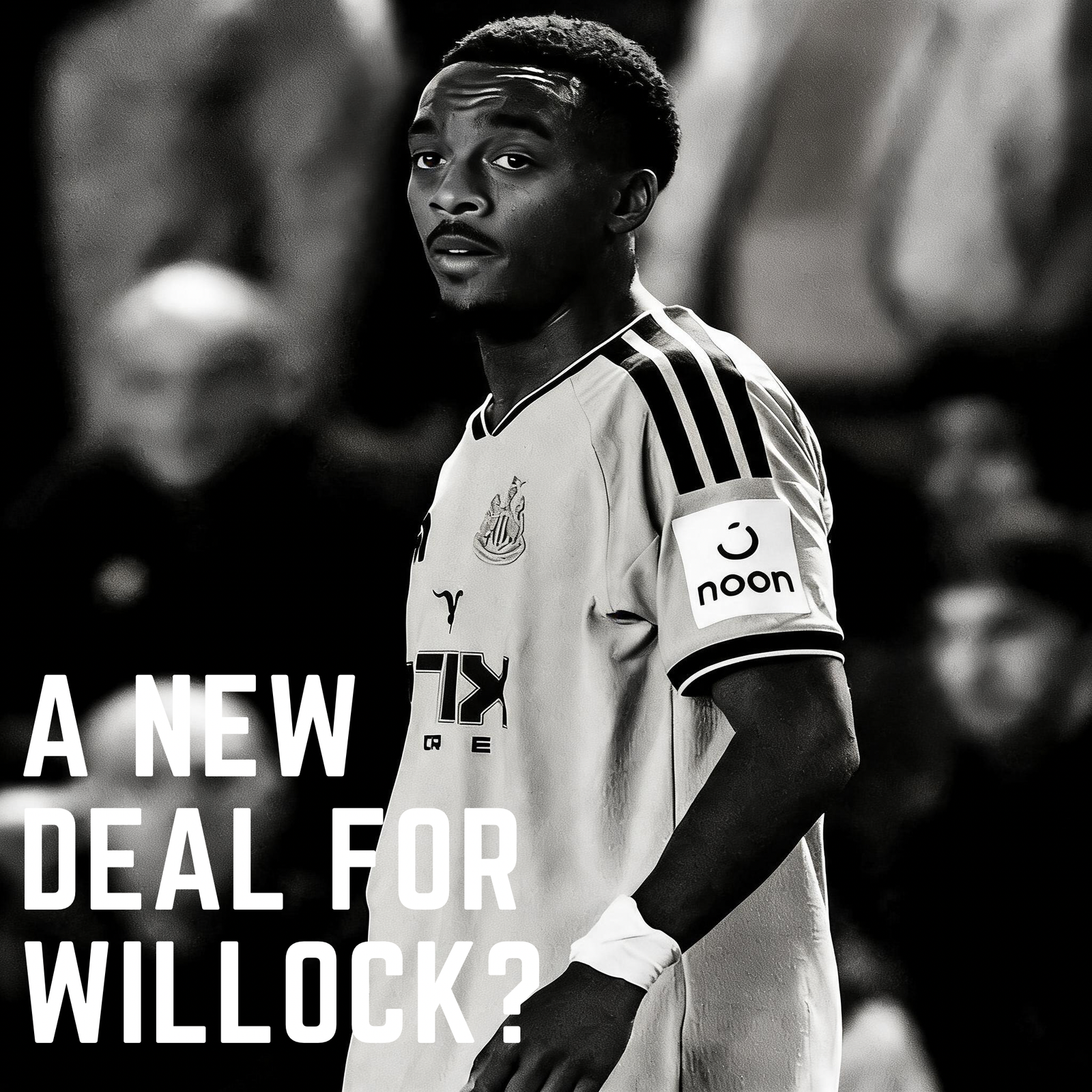
Fifty-seven minutes into his first involvement of the season, Joe Willock has been on the pitch for sixty seconds. Cody Gakpo has just cancelled out Anthony Elanga’s early strike, St James’ Park is still exhaling from that concession, and Lewis Hall’s ball has broken to Willock on the edge of the box. First touch. Ball in the net. The Gallowgate erupts, briefly forgetting that this was a player half of Tyneside had already said goodbye to.
That’s the trouble with writing off Joe Willock. He keeps not leaving.
By August, the exit had felt like a formality. Under twelve months left on his contract, shunted down the pecking order under Eddie Howe, and a move to Beşiktaş reportedly agreed in all but signature. Then Matthias Jaissle arrived, watched him train through pre-season, and decided he wasn’t for sale. Willock stayed. Three weeks later he was flicking home a matchwinner off a Lewis Hall cross away at Millwall — his second goal of a campaign that was never supposed to happen on Tyneside.
In between, the numbers back up what the eye is telling Gallowgate: this is not a favour being repaid. It’s form.
Start with the plainest of them. Since Jaissle took charge, Newcastle have played five competitive matches — three in the league, two in the Carabao Cup. Willock has featured in every single one. Not as a passenger carried by a new manager’s goodwill, but doing real, measurable work: an 85th-percentile rate of shot attempts among Premier League attacking midfielders despite barely more than a hundred minutes on the pitch in the league so far, a 6.92 average match rating, and — for what it’s worth as a curiosity rather than a headline — every one of his 28 attempted passes finding a Newcastle shirt. He isn’t just turning up. He’s the one generating the moments.

The Tottenham away trip on the last weekend of August told the fuller story, though, and it’s worth being honest about it. Handed the No.10 role in Jaissle’s 4-2-3-1 — a spot he shares with almost nobody else in the squad — Willock had the sort of afternoon that explains why this case needs stats rather than sentiment alone. He got clean through the Spurs defence and past the goalkeeper in the second half, only to lose his footing on the touch and watch the chance run away from him. Earlier in the game, a quick break down the right had fizzled out when his effort flew high and wide, out for a Tottenham throw-in. Newcastle won 2-0 anyway, Elanga and Wissa doing the scoring, and Willock was withdrawn with the game there to be killed off rather than started. The talent to be decisive was visible. So was the rawness in the moments that mattered most.
He’d say the same himself. After the Millwall winner, asked about his season so far, Willock talked about the goals still “missing” from his game — not as an excuse, but as a target. That’s not the sound of a player coasting on a new manager’s faith. It’s a 27-year-old who knows exactly what’s still to be added, and is naming it in public before anyone else does.
Which is, in its way, the whole argument. Nobody serious is claiming the finished article here. What Jaissle has found is a specialist: a player whose touches and defensive numbers sit in the bottom quarter of Premier League attacking midfielders, because his job isn’t volume — it’s the ten or fifteen touches a match that turn into shots and half-chances at a rate few others in his position can match. It’s a different kind of value to the one Newcastle built around Bruno Guimarães or Sandro Tonali. It’s the value of a player who, put in the right ninety-metre stretch of pitch, keeps finding the net or the pass that leads to it.
There is a version of this argument that stays entirely on the pitch. There’s a sharper one that doesn’t.

Willock signed permanently in August 2021 for a fee in the region of £25million, on the back of a loan spell so explosive — eight goals in fourteen games — that Newcastle simply couldn’t let him go back to Arsenal. His valuation peaked at €41.5million that October. It sits at €12.1million now. That fall isn’t a condemnation of the player; it’s what happens to transfer valuations for anyone who spends a season in and out of a matchday squad, which is exactly where Willock was twelve months ago. The point for Ross Wilson’s recruitment ledger is simpler than any of that: whatever’s left of the original fee on the books is now close enough to fully written down that a new contract is a wages decision, not a balance-sheet one. And his current deal runs out in June 2027 — which means from this coming January, he’s free to talk to clubs abroad about a pre-contract move, for nothing. Newcastle either commit now, on favourable terms while his stock has dipped, or they gamble on getting nothing at all for a player who has just proven, five matches out of five, that he’s worth something.
Willock, for what it’s worth, sounds like a man who wants to be asked. Reflecting this month on a fifth, maybe sixth, season at the club, he spoke about feeling valued and growing into a more senior role in the dressing room, crediting Jaissle with giving him what he called “a new lease of life.” Jaissle, for his part, needed one word when asked whether the Millwall winner justified keeping hold of him. “Yes.”
There’s a version of this story where Newcastle spend the next few months finding out the hard way what Willock is worth to somebody else. There’s a cheaper, simpler one where Newcastle just write down the numbers already sitting in front of them, and pay the man before somebody else does it for free.
Time to offer Willock a new contract to stay on longer? Is there room for him to get better still under a new manager? Join the conversation on X @mytoonarmy #NUFC