
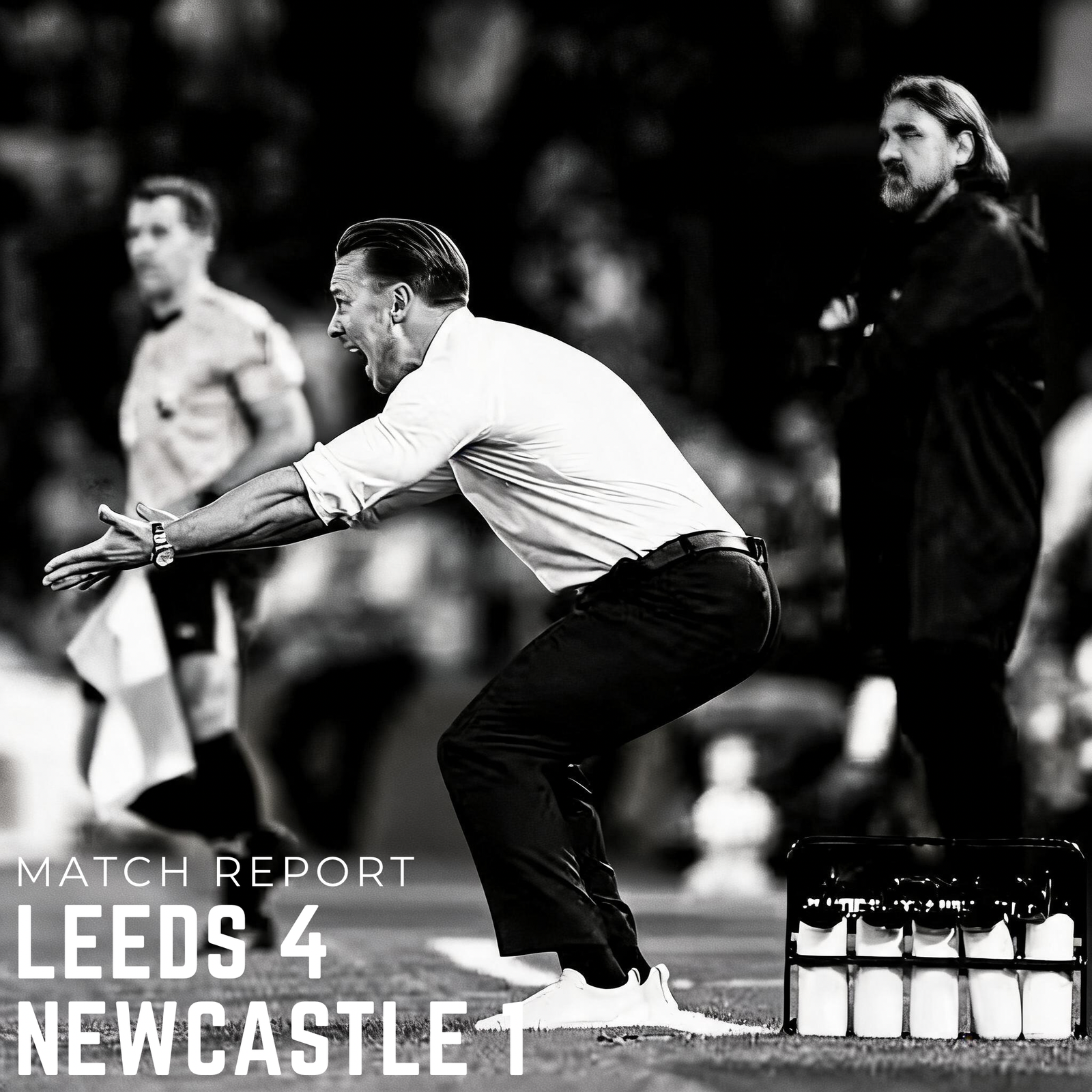
On Friday, I warned that Newcastle were surviving on moments they hadn’t earned. On Monday night, Elland Road presented the invoice.
Two minutes and forty-two seconds. That’s all the time that passed between Lewis Miley turning Ao Tanaka’s speculative strike into an own goal and Jayden Bogle wheeling away to celebrate a second, and by the time both had gone in, something had already changed in the away end. Not panic, not yet. Something closer to recognition — the sinking, specific feeling of watching a pattern you’d been warned about arrive right on schedule.
Because this was not bad luck. This was the bill coming due.
The Bill Comes Due
On Friday, previewing this fixture, I made a simple observation: Matthias Jaissle’s Newcastle were not out-playing anyone. They were out-scoring the chances they created — through Anthony Elanga’s pace, through moments of individual brilliance, through a goalkeeper standing on his head when required — while the underlying picture told a different story almost every week. Second-best by expected goals at Liverpool. Second-best at Bournemouth, even with the majority of the ball. Somehow still winning at Tottenham despite the numbers favouring Roberto De Zerbi’s side. Five games unbeaten, built on moments rather than method.
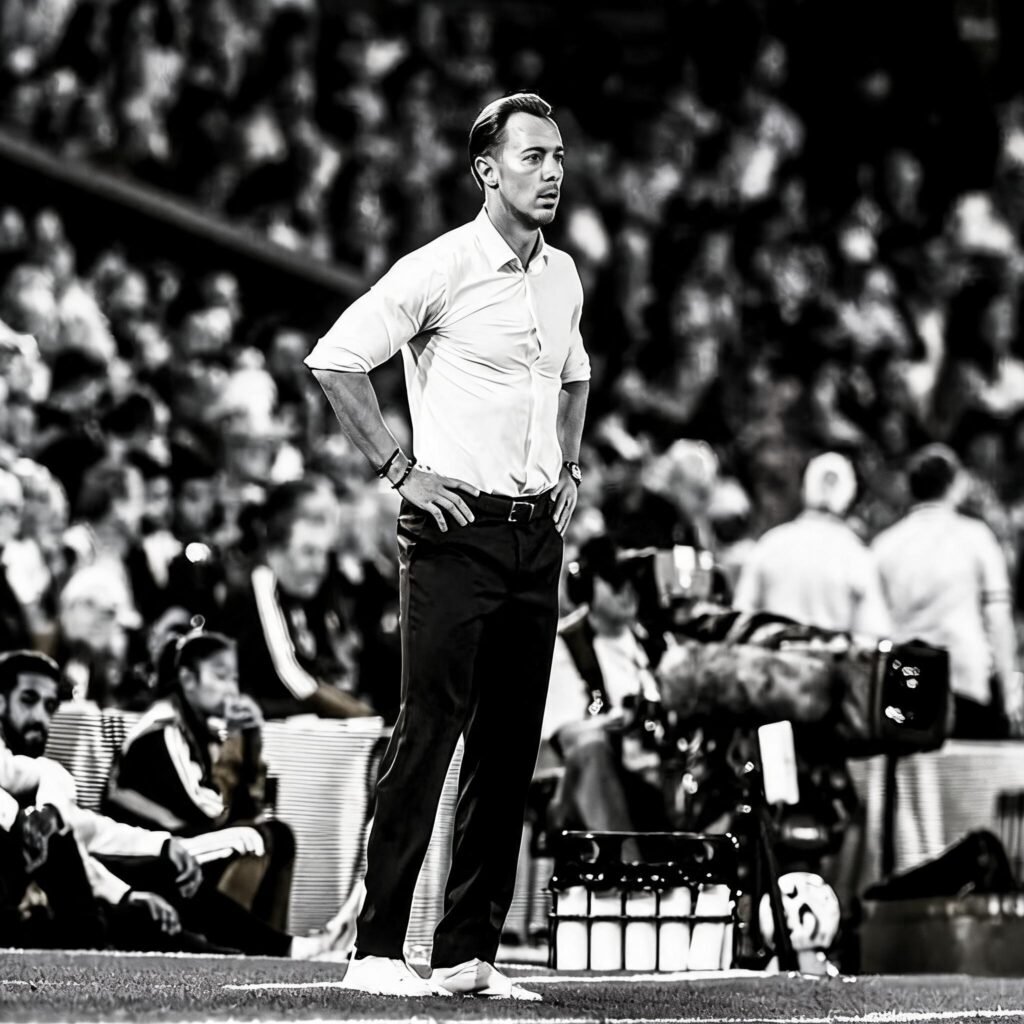

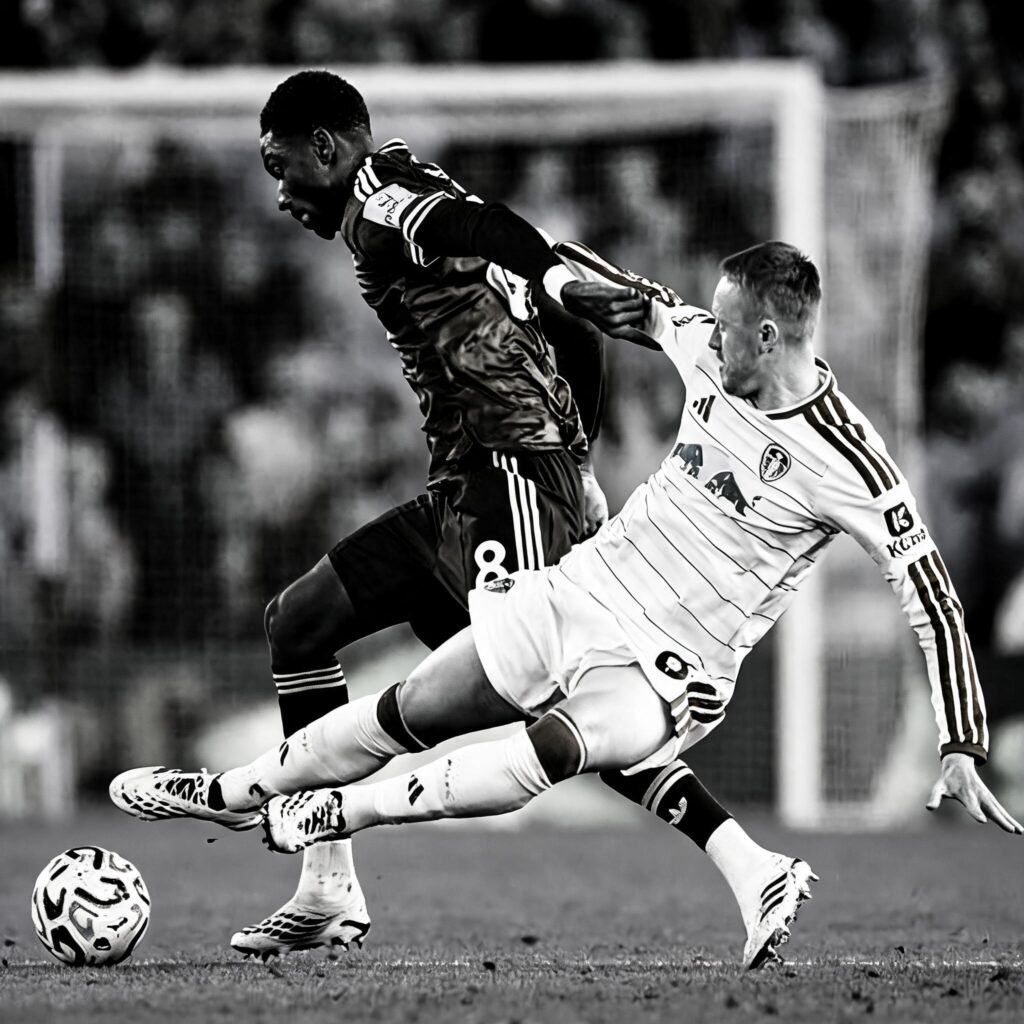
Leeds simply did what nobody else this season had managed: they turned the volume of chances Newcastle concede into an actual scoreline. By full time, Daniel Farke’s side had generated more than double the expected goals of their visitors and scored four times from it — clinical where Newcastle had spent a month being fortunate. It is, when the whole season is weighed rather than one midweek result, exactly the correction that was overdue. Newcastle came into Monday night averaging more shots against than any side in the division. Nobody had made them pay for it. Leeds did, inside thirty-four minutes, and the manner of it — a shot that took two Newcastle touches to find the net, a header that cannoned in off a defender’s shoulder rather than beating Hornícek cleanly — carried the specific cruelty of a team whose luck has simply run out rather than one that’s been torn apart tactically.
A Number Nine Who Never Arrived
If Newcastle needed a spark to drag them back into a game slipping away, they didn’t have one up front. Matias Fernández-Pardo started up front, and spent the night rotating the central striker’s role with Yoane Wissa — more often the furthest man forward than in behind him — without it changing much. Fifty-seven minutes without a shot, a chance created, or a telling touch anywhere near the Leeds box: still visibly building up his match sharpness after a stop-start start to life in England, and unable to latch onto anything played in his direction. This column’s predicted XI on Friday had Joe Willock starting in the front three instead, flagged as the sharper option even then. Jaissle went the other way, and the eye test backed up the original call. Fernández-Pardo was withdrawn on 57 minutes for his ineffectiveness, and Newcastle looked a sharper, better-connected side once Willock was on the pitch — a shot that clipped the crossbar, another straight at Trafford, both arriving after the game was already beyond saving but both proof of the ball-carrying control that had gone missing from kick-off.
Two Different Games
There were, in truth, two matches here. The first half was as one-sided as the scoreline eventually suggested — Leeds pouring forward with pace and purpose, Newcastle unable to get out of their own half without giving the ball straight back. The second told a different story, and it’s worth telling properly rather than dismissed as garbage time. Once the contest was safely out of reach, Farke’s players naturally eased off the accelerator — fresh legs from the bench, a settling into defensive shape rather than a relentless chase for a fifth. And into that space, Newcastle finally started playing like themselves. The long punts forward that Leeds’ back three had been reading and cutting out all evening gave way to something more patient — the ball kept on the ground, moved through midfield rather than launched over it, Newcastle actually holding spells of possession for the first time all night. It bought them a goal. Harvey Barnes worked the ball wide to the overlapping Tino Livramento, and Livramento’s deflected cross fell for Bazoumana Touré to finish confidently in the game’s closing minute — a goal built from patience rather than desperation, even if it arrived three goals too late to mean anything for the result.
Steur’s Night
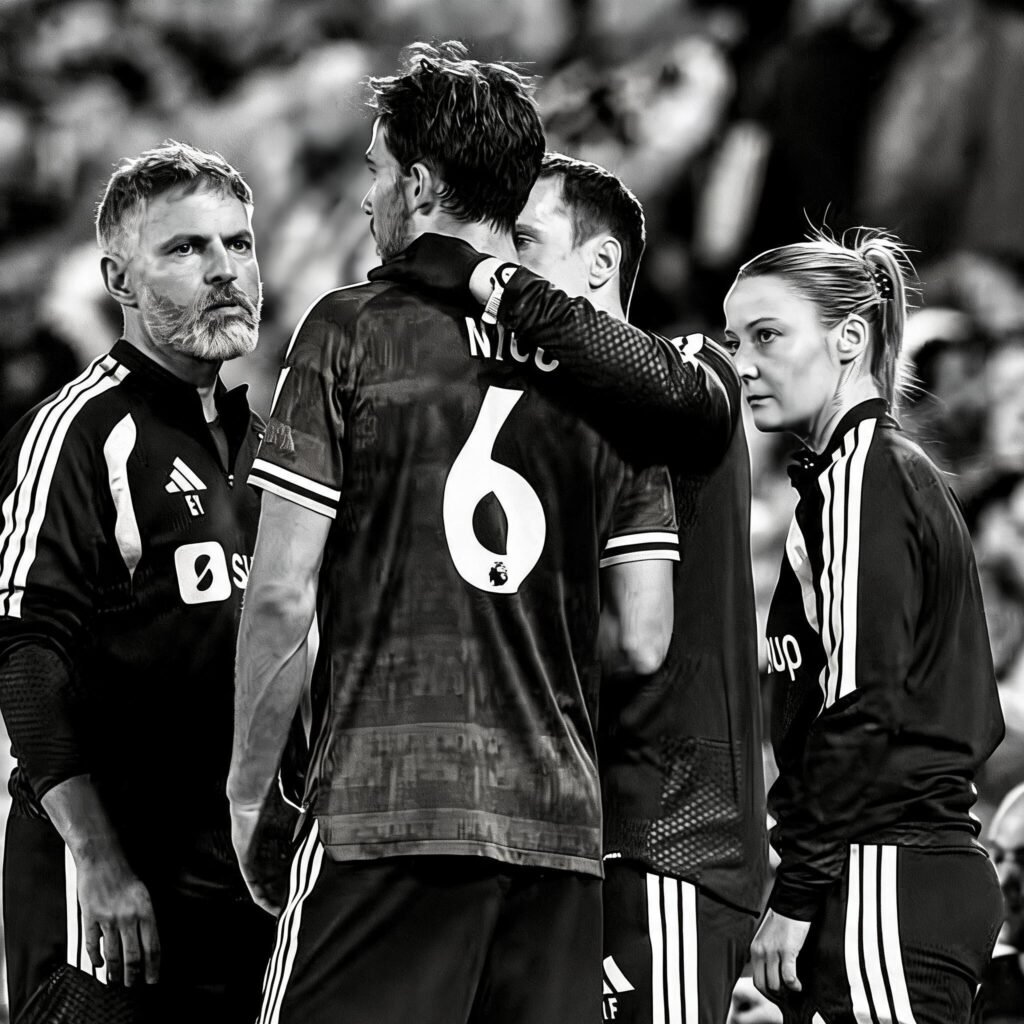
In the middle of all this was an eighteen-year-old handed a Premier League audition with no warning at all, just not on the terms he’d have chosen. Sean Steur was still warming up on the touchline when Nico González went down clutching his face early in the first half, and by the nineteenth minute he was being sent on cold, ahead of more experienced options still sat on the bench, into a Premier League away fixture that had already started to turn hostile. Fifteen minutes later, a slow, unhurried pass out from the back went straight to a Leeds shirt, and the move that followed ended with Bogle’s name on the second goal. It was a genuine mistake, and a costly one.
But it’s worth saying plainly what Steur did next, because it’s the part of the night easiest to overlook: he didn’t hide. No further mistakes, no further lapses — just seventy-one minutes of a teenager doing his job brought on earlier than planned, competing for the ball and getting through the rest of the match without incident. That’s not nothing. Thrown into the deep end with no notice, on the night his new club’s unbeaten start fell apart around him, he still had the character to see it through rather than shrink from it. Newcastle will need players who respond exactly like that a great deal more before this season is finished.
What Has to Change
The fix isn’t complicated to name, even if it’s harder to execute. Newcastle’s press is built to win the ball high and hurt teams in transition, and when it works — as it mostly has through four games — it papers over a defence that’s more porous underneath than the results have suggested. Leeds simply had the physicality to play through it: hold the ball under pressure, draw Newcastle’s midfield out of shape, and exploit the space Jaissle’s vertical system leaves in behind once the first line of pressing is beaten. Against a team built for exactly that fight, it finally cost them. The system doesn’t need tearing up — it kept Newcastle unbeaten in five games across all competitions coming into Monday — but it needs either a more disciplined holding presence shielding the back four, or the willingness to sit a little deeper against sides set up to punish an open pitch.
The selection call in the number ten role is the more immediately fixable problem. Fernández-Pardo is a talented forward still finding his feet in England; Leeds marked him tightly rather than sitting off, and the ball into him was mostly high and hopeful — easy pickings for taller, more physical defenders — rather than anything played to feet. Newcastle rushed it in the first half rather than waiting for the right pass, and the faster they went, the worse it got. Starting him ahead of a player who’d arguably earned the shirt already looks like the wrong call in hindsight. Willock carries the ball into midfield himself rather than waiting for it to arrive over the top, which sidesteps the service problem entirely.
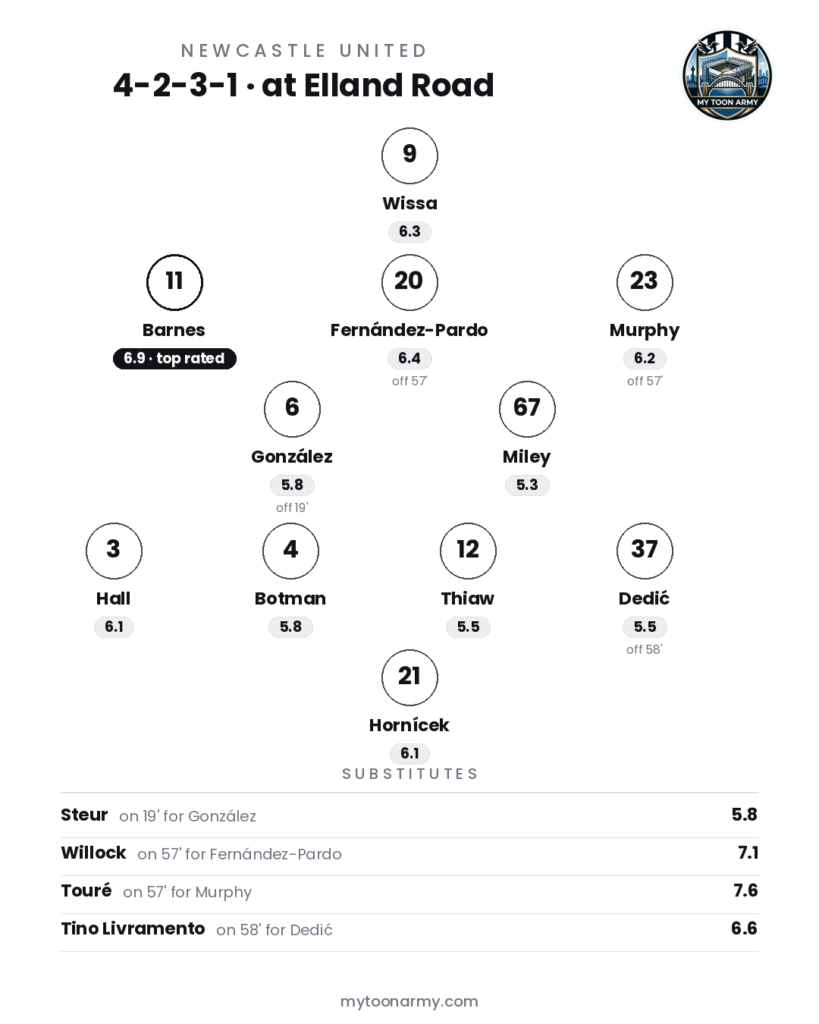
The harder problem is depth through the middle. González’s head knock left Jaissle sending on an eighteen-year-old, and while Steur held up better than the circumstances deserved, a squad with genuine ambitions needs recognised cover in that position that isn’t an emergency introduction. Jacob Ramsey picked up a knock in the warm-up and was never a viable option either, Jaissle confirmed afterwards — Aladji Bamba was also on the bench, fit and available — the likelier explanation is that Steur’s match fitness at this stage of the season simply outstripped his.
Jaissle called it “difficult to digest” afterwards, and he was right to. But it’s also, for what it’s worth, not the first setback of his coaching career. Newcastle’s own reset starts this Saturday, at home to Hull City — a considerably more forgiving proposition than Elland Road on a Monday night, and exactly the kind of fixture where the fundamentals Jaissle admitted were missing can be rebuilt in front of a St James’ Park crowd still willing to be won over. Coventry away in October follows, but that’s a conversation for another week. Jaissle has been here before, if not on this exact patch of English grass, and he’s answered it well before. There’s no reason, on the evidence of his career rather than one bad night, to expect anything different this time.
Newcastle’s worst performance of the season so far? Is this the wake up call we deserve? Join the conversation on X @mytoonarmy #NUFC
Responses
[…] Then came Leeds. A heavy defeat, a poor collective performance, and Murphy — thrown in from the st…. Nobody’s pretending otherwise, least of all him; he was among the players who apologised to supporters afterwards. But turn that single, difficult hour on a night when the entire team was taken apart into some kind of verdict on where Jacob Murphy is as a footballer, and you’ve lost the plot entirely. […]
[…] football doesn’t deal in exculpatory footnotes. The scoreboard read Miley, 32nd minute, and by full time it read 4-1. Miley had signed a six-year contract back in May, tying his future to the club he joined at seven […]