Data Driven Insights. Fearless Opinions.

Squad

  • Everything They Had

    Goalscorers

    Four days after Elland Road, a Newcastle side missing nine players ran until their legs gave way. They beat Hull 2-1, and they only just held on to do it.

    Sean Steur’s legs went in the 66th minute, and Matias Fernandez-Pardo’s followed eight minutes later. Neither had been fouled or visibly hurt, and both appeared to cramp. Afterwards Matthias Jaissle spoke of tired bodies and a squad too thin to rotate.

    Tyneside has an old line for afternoons like this one: We don’t demand a team that wins, we demand a club that tries. Four days earlier, at Elland Road, Newcastle had fallen short of it, with Leeds 3-0 up at half-time on their way to a 4-1 win. Malick Thiaw admitted afterwards that his side were “not what they want to be”.

    Jaissle asked for more, and in his pre-match press conference he made clear he wanted a more aggressive and more physical performance. Against a Hull side unbeaten in the league and playing without fear, he got it. He called it an “incredible reaction” afterwards, and nobody who had watched the first half would have argued.

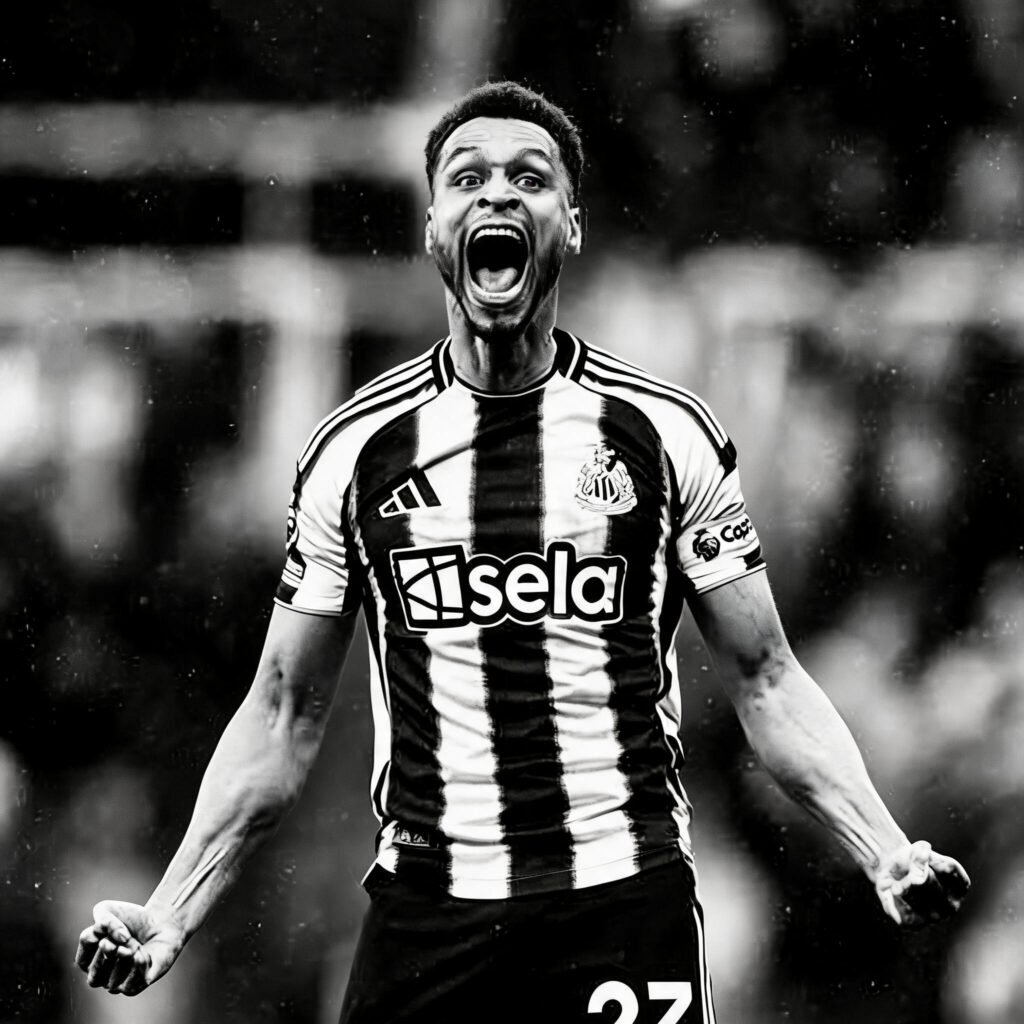
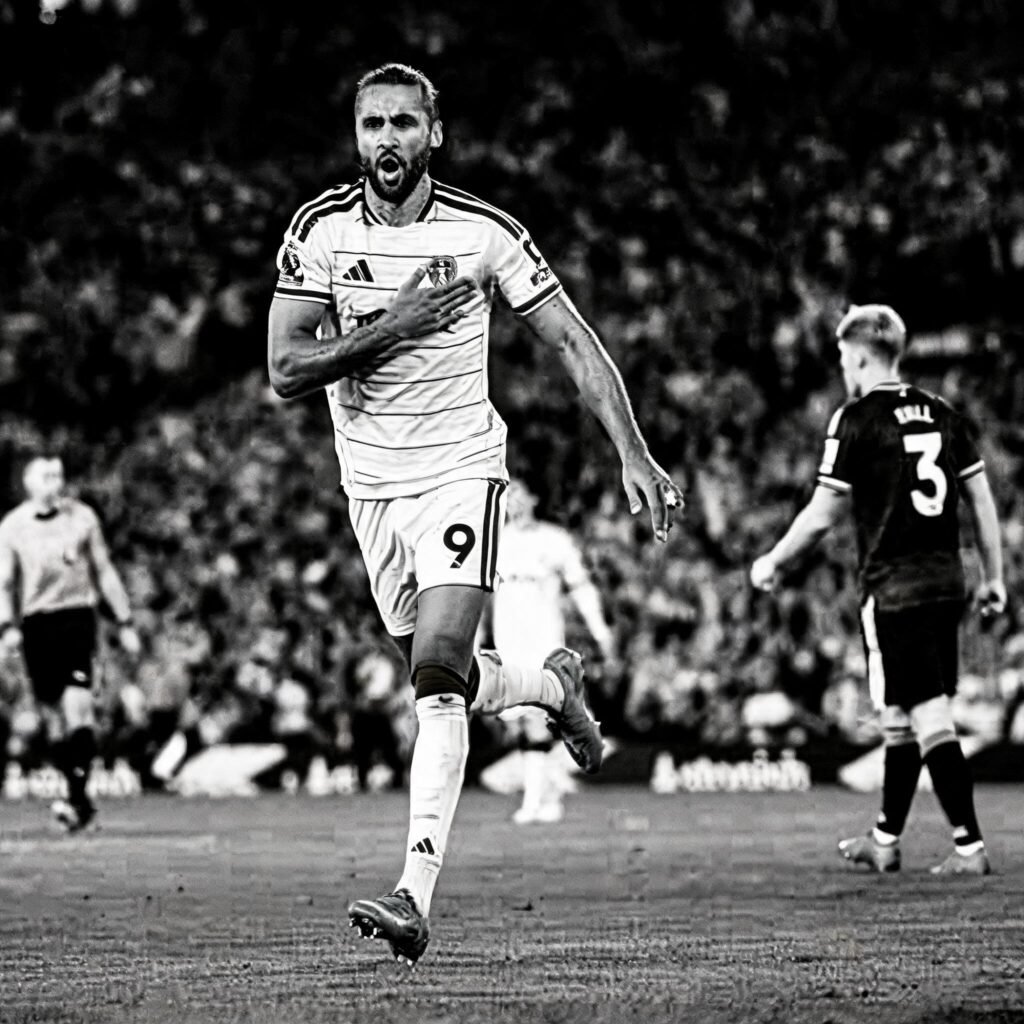
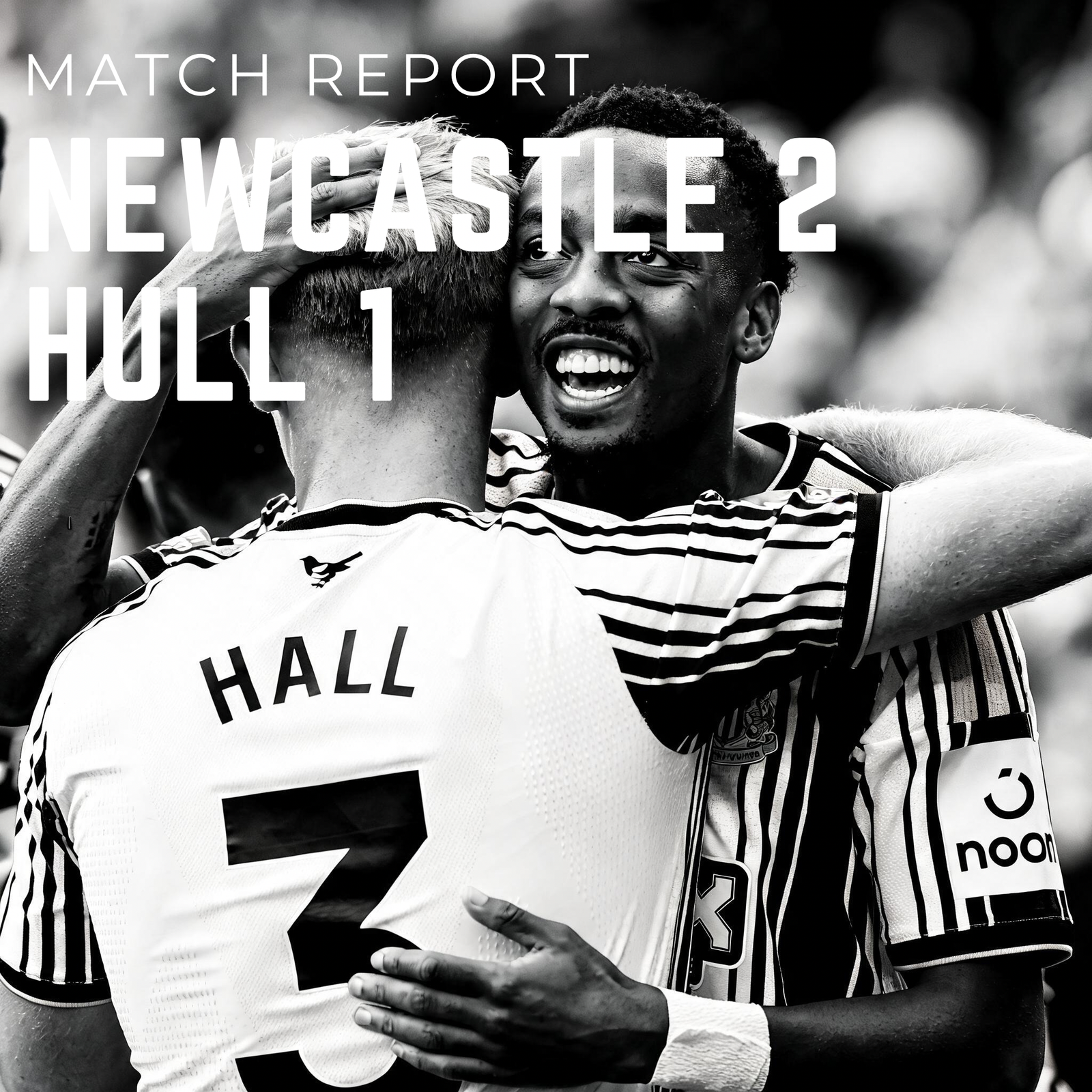
    Hull arrived having conceded only twice in four league games, and Newcastle scored twice inside the first seven minutes. In the third minute John Egan blocked Joe Willock’s first attempt, Hull failed to clear, and Harvey Barnes picked Willock out again, this time for a left-footed finish past Konstantinos Tzolakis. Four minutes later Lewis Hall won the ball from Oli McBurnie deep in Newcastle’s half, swapped passes with Barnes and swept a low finish into the corner.
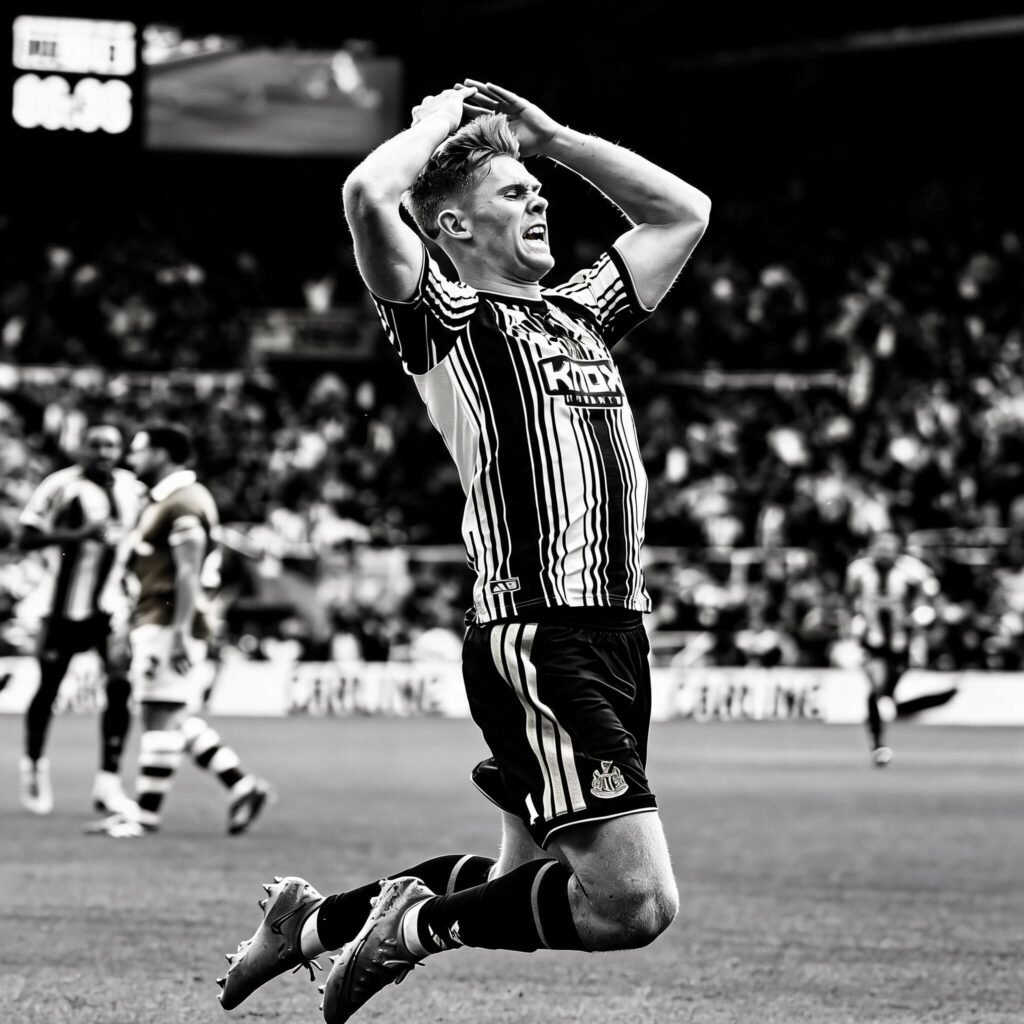
    That gave Barnes two assists inside seven minutes, which Opta says is the fastest any Newcastle player has managed in the Premier League, beating Fabian Schär’s nine minutes against Spurs in April 2023.

    Three down at half-time on Monday. Two up after seven minutes on Saturday.

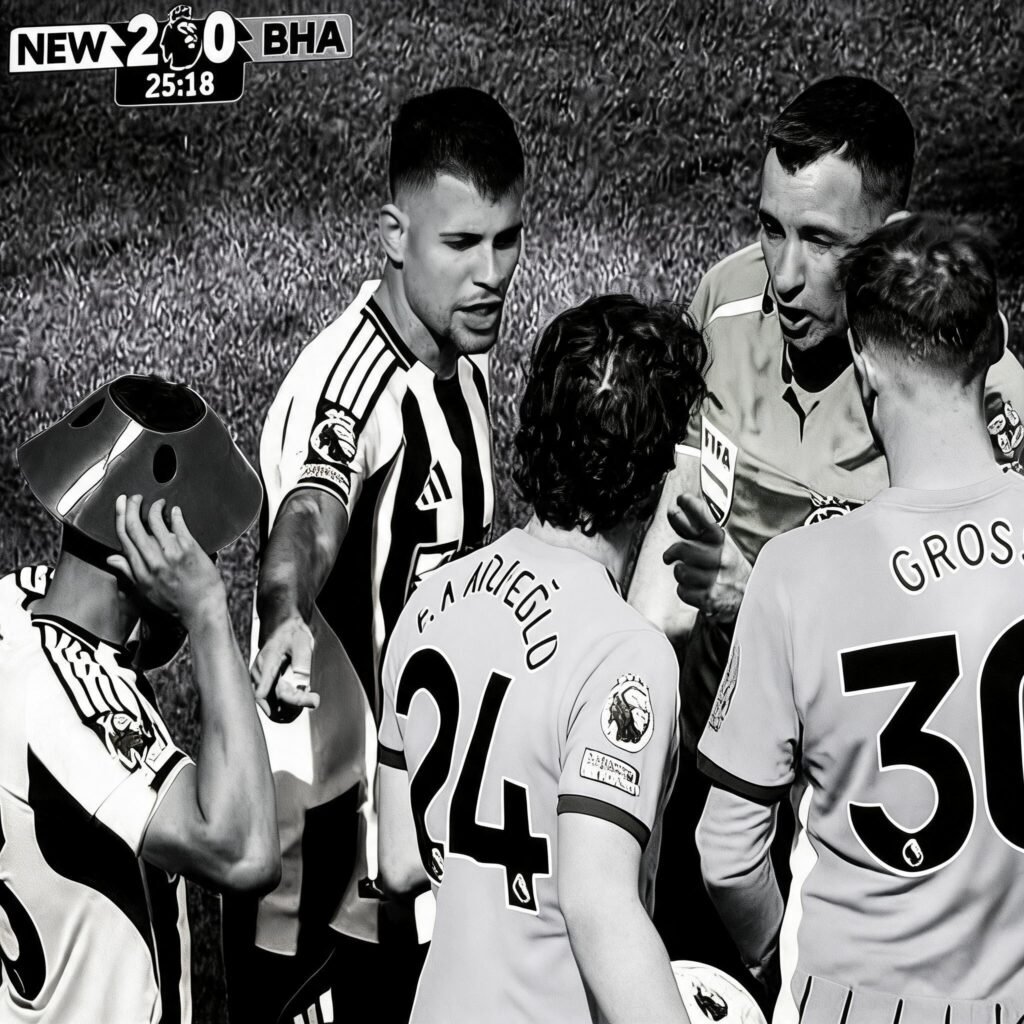
    Newcastle did not sit on the lead. They kept pressing high, and Hull managed only three shots before the break, worth 0.28 expected goals between them. Then came the moment that would matter later. Sorba Thomas grabbed Jacob Murphy’s foot in the box, VAR backed the penalty, and Tzolakis, booked before the kick, dived left to save Yoane Wissa’s effort.

    Newcastle went in at 2-0 when it could have been three. Jaissle said afterwards that the miss shifted the momentum and handed Hull some hope. A third goal, he added, would have made the second half far easier to manage.

    Barnes, Hall and Steur

    Elland Road had belonged to everyone’s regrets, and on Saturday the early stages belonged to Barnes, who had played every minute of Monday’s defeat and answered it inside seven minutes. He supplied both goals and ran the left flank for ninety minutes. In the second half he twice went close himself. First he dragged a shot wide after making room in his usual fashion, and later he was denied at full stretch by the legs of Tzolakis when he broke clear with the game still in the balance.
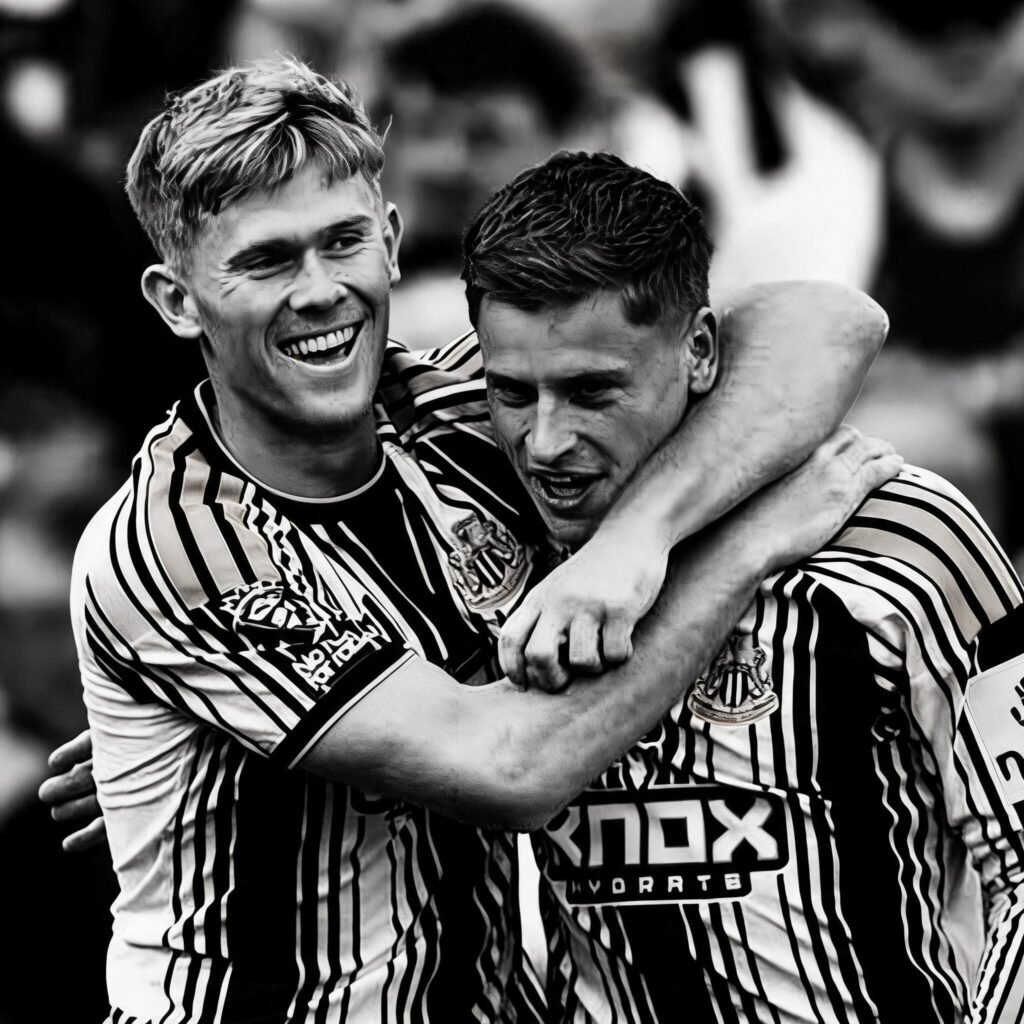
    FotMob’s ratings gave Barnes the top mark and Sofascore named Willock its man of the match, and both have a case. This blog’s Man of the Match is someone else.

    It is Lewis Hall.

    Start with the goal, his first at St James’ Park, which began with him winning the ball back and ended with a low finish into the corner. But the goal was the smaller part of his afternoon. He played all ninety minutes at left-back, and Sofascore credits him with seven clearances, a number that mattered on a day when Newcastle spent the final quarter defending their own box. In the first half he had also stretched for a back-post chance that would have made it three.
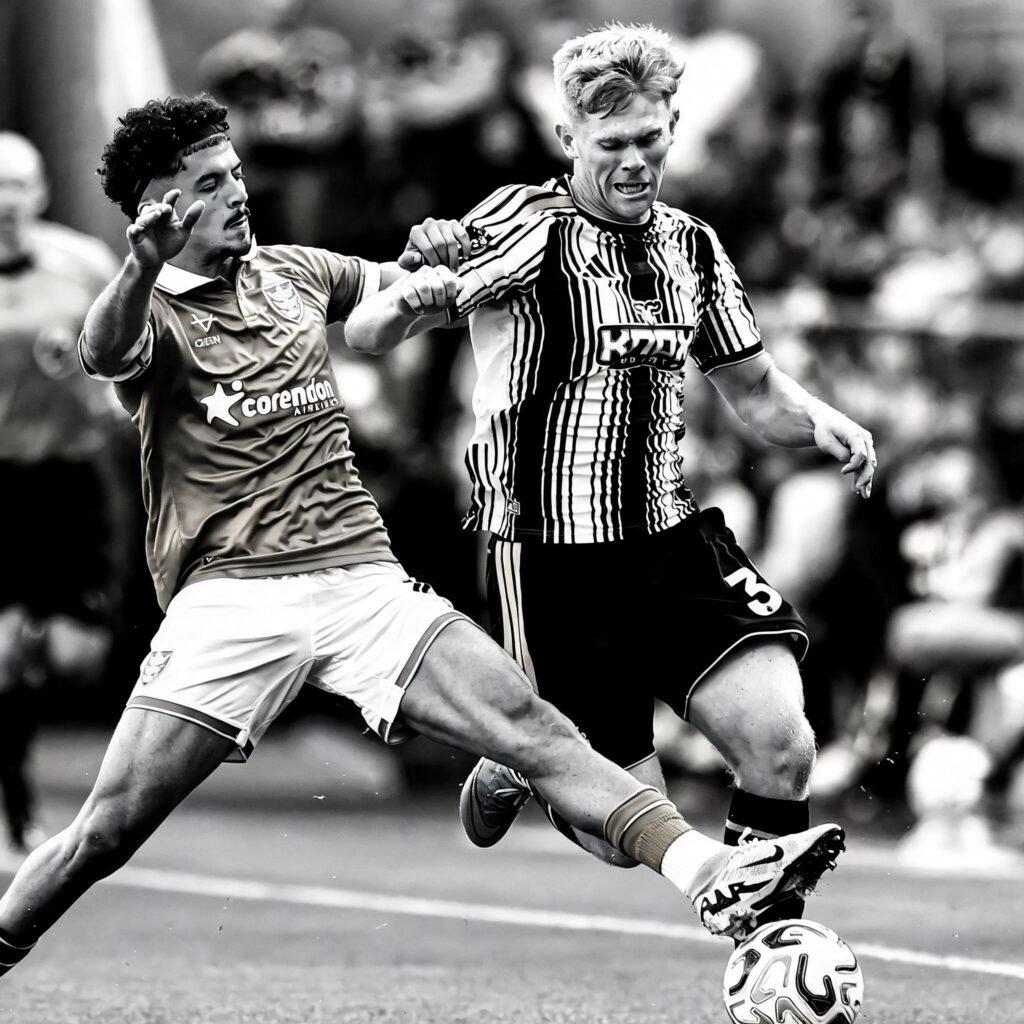
    England had recalled him to their squad the day before, and he answered with the kind of performance that justified it. It capped an excellent start to the season, with a clean sheet at Tottenham, an assist against Bournemouth and a head coach who admitted earlier this month that he was “in love” with what he was seeing.
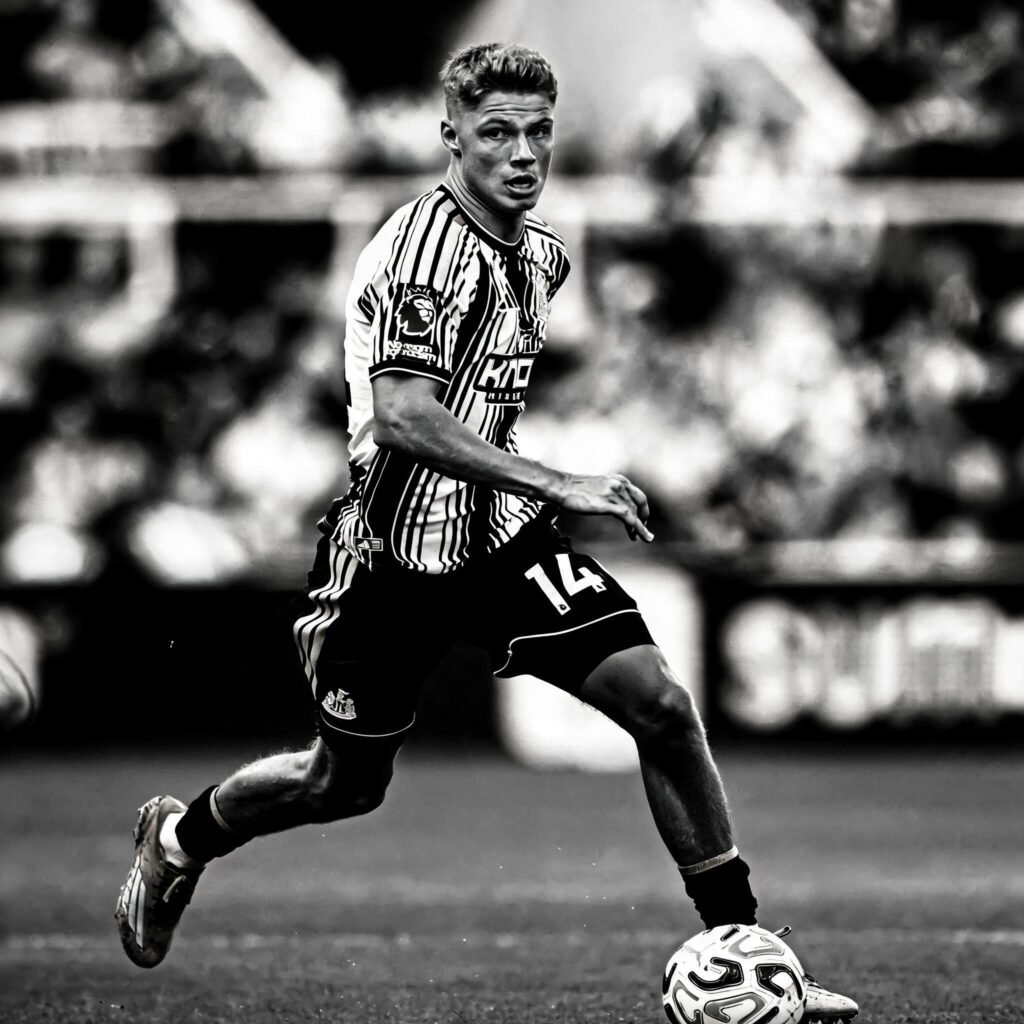
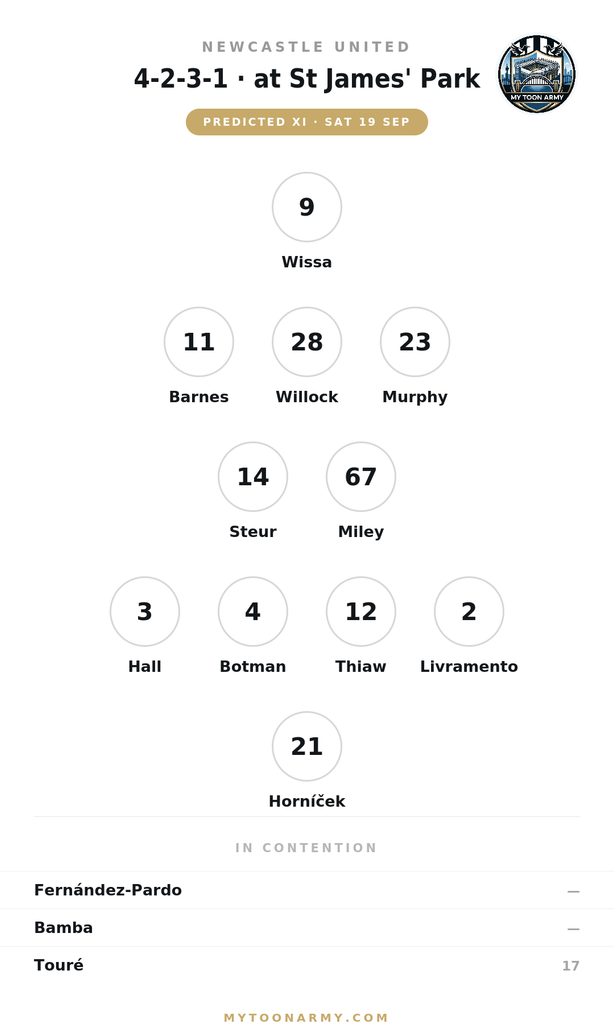
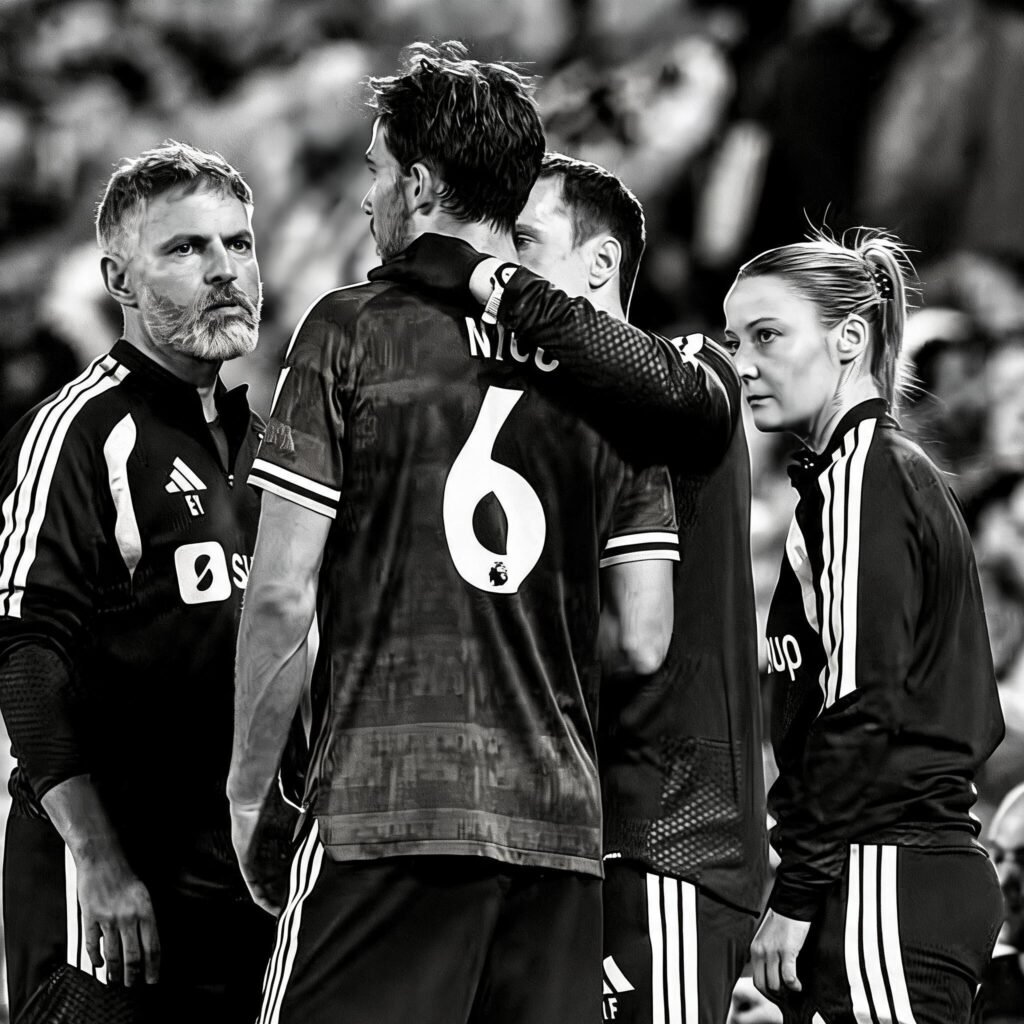
    Then there is Steur, who played the best game of his Newcastle career. He sat at the base of midfield, took the ball under pressure without ever seeming hurried, and looked nothing like a player making only his third start for the club. He is 18, and Jaissle said afterwards that such maturity is not normal at that age. He won two tackles, created two chances and left the pitch at 66 minutes to a standing ovation, a day after the Netherlands Under-21s had called him up for the first time.

    At Elland Road, Ao Tanaka’s shot had deflected off Steur and then off Lewis Miley on its way in, an own goal nobody could fairly pin on either. That kind of moment tends to follow a young player home, and this blog’s Friday preview was called The Weight of One Deflection. On Saturday, Steur put that weight down.

    Spare a thought for Jaissle

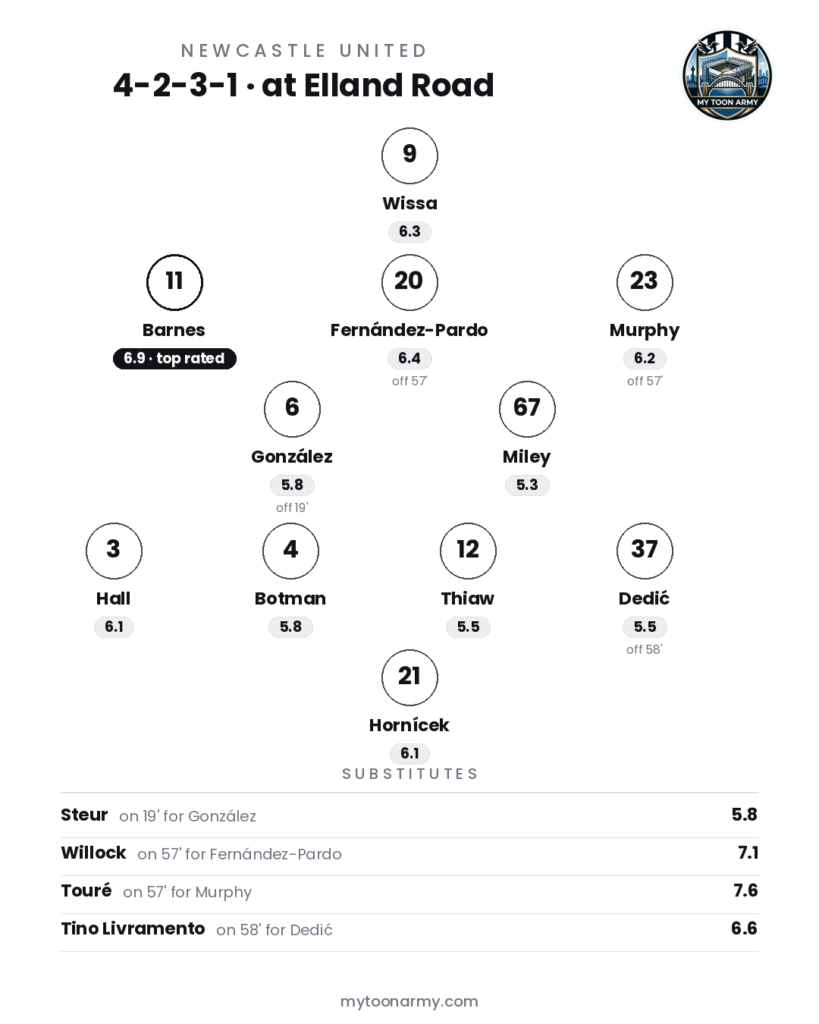
    Jaissle’s week began with a 4-1 defeat and ended with nine players unavailable, the latest of them Tino Livramento, who was left out of the squad with discomfort picked up in training the day before. Miley therefore started at right-back. The bench held Nick Pope, Fabian Schär, Bazoumana Touré, Aladji Bamba and five academy players, four of them teenagers.
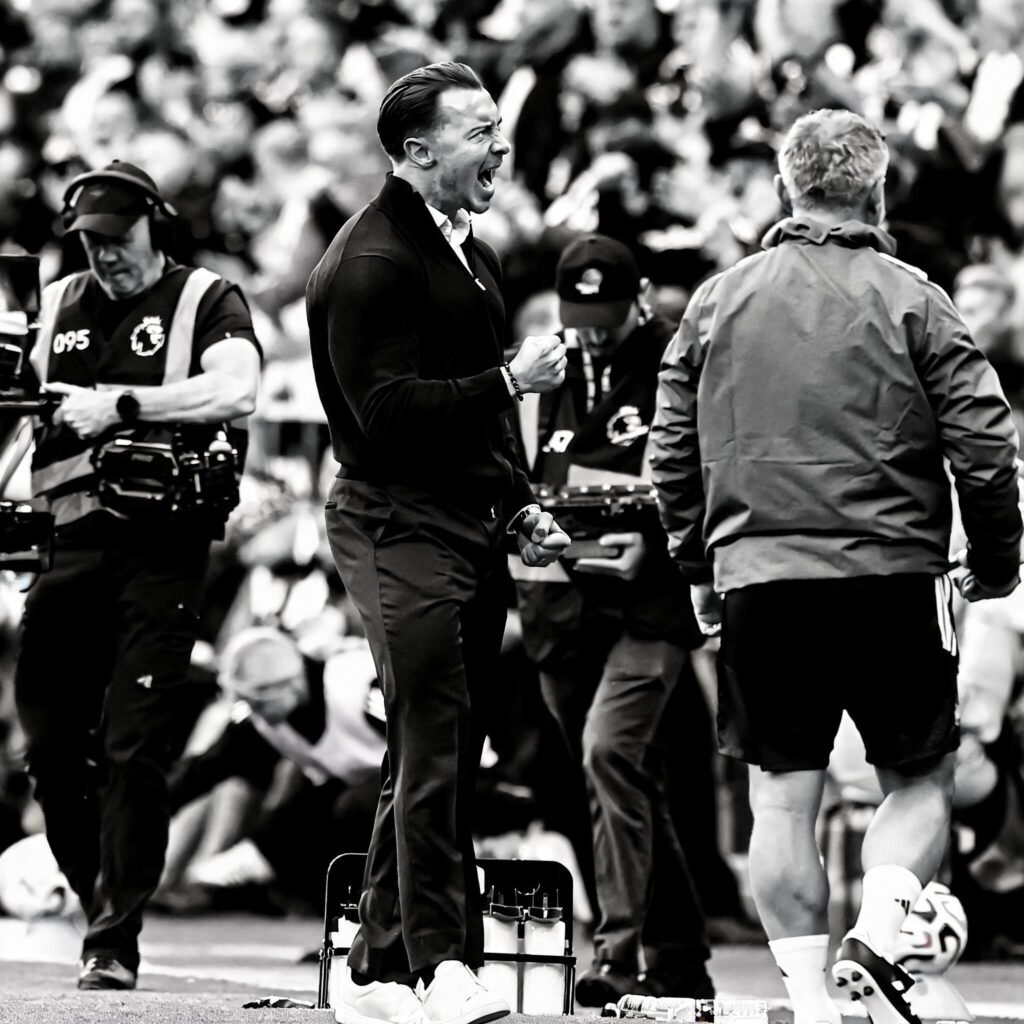
    And yet the plan held. Jaissle called the first half probably the best of the season so far, and it rested on a simple idea carried out with real discipline.

    Hull lined up in a 5-4-1 and tried to build through their two central midfielders, but Newcastle waited patiently and then flew at them the moment the ball went in. Sergej Jakirović described the same trap afterwards. Newcastle were waiting for Hull to play into midfield, he said, pressed as soon as they did and were very clinical on the counter-attack, while Hull had not defended the space between defence and midfield well enough. Their lone striker, McBurnie, waited for service that rarely came.

    The intensity did not cost Newcastle their discipline. They committed four fouls to Hull’s ten and collected one yellow card to Hull’s four, which says a good deal about a side that pressed hard while staying on its feet.

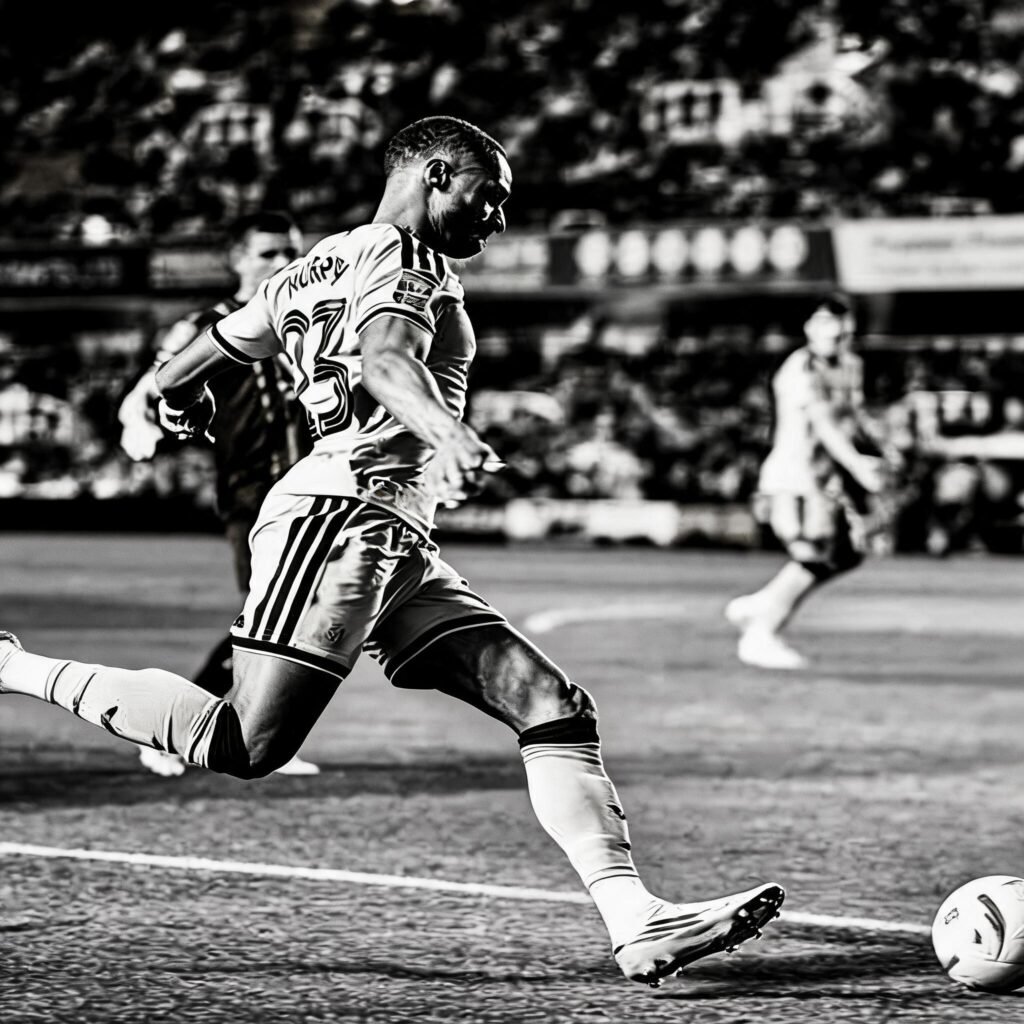
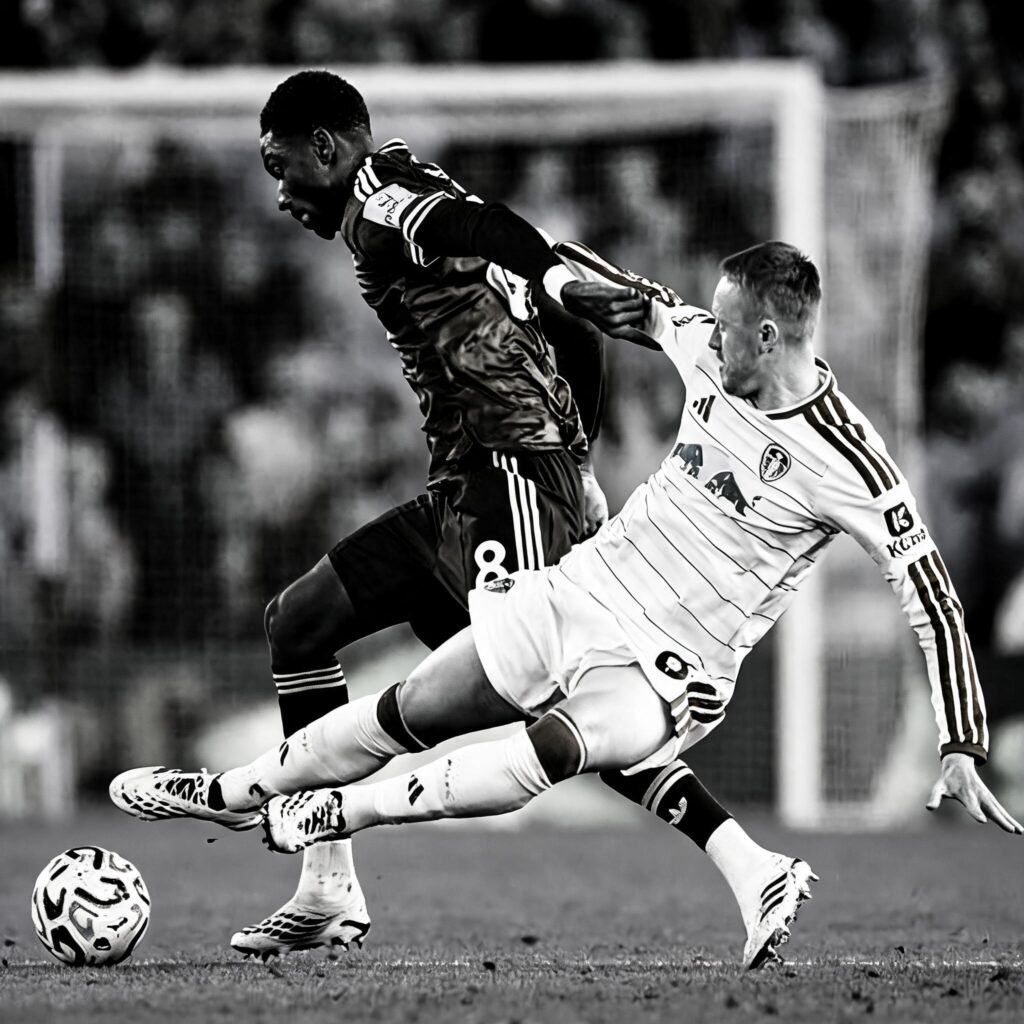
    Width did the rest. With Murphy on the right and Barnes on the left, Hull’s back five had to defend the whole width of the pitch. Murphy twice fizzed low crosses through the six-yard box that Wissa and Barnes only just missed, and he also won the penalty. Early in the second half he nutmegged Ryan Giles, who was booked for holding him back.

    The reshape came last, and it was forced. When Steur tired, Jaissle sent on Schär, moved Miley into midfield and switched to a back three, a formation he has made clear he would rather avoid. When Fernandez-Pardo followed, Touré came on, and Jaissle used only three of his five permitted substitutions because most of the rest of his bench were academy players.

    Hull finished with 21 shots, four of them on target, and one of those went in. That is a manager solving a problem with the pieces he had.

    The last twenty minutes

    The 67th minute changed the mood far more than the scoreline. Miley, barely a minute into his new role in midfield, was caught in possession. Belloumi, the winger this blog picked out on Friday, played a reverse pass, and Mohamed-Ali Cho, four minutes into his afternoon, found the net off the far post.

    History said Newcastle were safe, because they had never lost a league match at St James’ Park after leading by two goals at half-time, a record of 69 wins and four draws. Nobody in the stadium was thinking about it.

    What they were thinking about was last season. Newcastle dropped more points from winning positions than any other side, 27 in all, and Jaissle was open afterwards about the anxiety that follows them. Asked about the nerves on the pitch and in the stands, he said he had felt them too and put them down to a trauma from the past that has stuck. The players, he said, had told him such games used to end differently. He hoped supporters would feel a change in the coming weeks, with a ground that stays energised and supportive when something goes wrong.

    Hull sent on fresh legs, with Robinio Vaz and Lucas Gourna-Douath arriving at 78 minutes and Joe Gelhardt at 83. Newcastle had little left on the bench to change the game. Eighteen of Hull’s 21 shots came after the break. Lukas Horníček parried a Belloumi effort and later used his feet to keep out Vaz, and the longer it went on, the more the anxiety Jaissle described spread through the ground.

    With about ten minutes left the ball fell to McBurnie on the edge of the six-yard box, and the goal was there for the taking. Then Wissa, the man who had missed the penalty and was now the last man back, got a foot in. Tim Iroegbunam’s follow-up volley flew inches over the bar. At the other end Barnes broke clear behind the Hull defence, and Tzolakis stuck out a leg to deny him what would have been the goal to end it.

    Six minutes were added, and nobody at St James’ Park took a full breath in any of them. Hull won a late corner, Tzolakis came forward for it, the ball came in, and Newcastle defended it. The whistle went in the seventh minute of stoppage time.
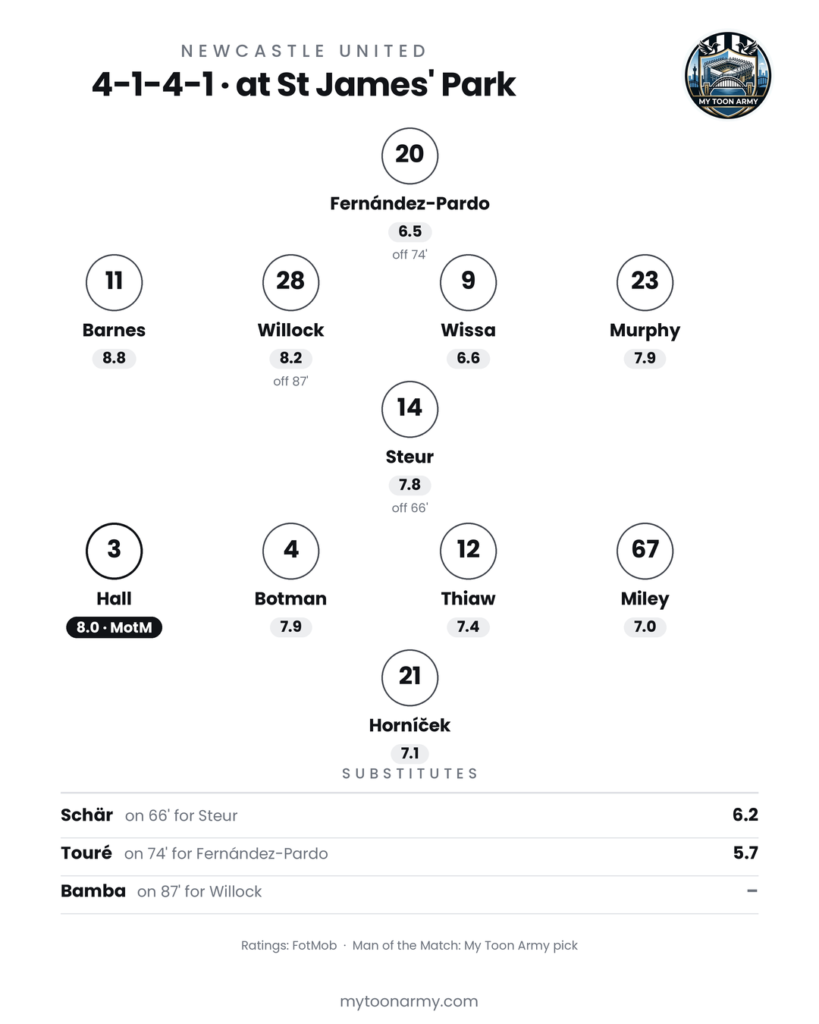
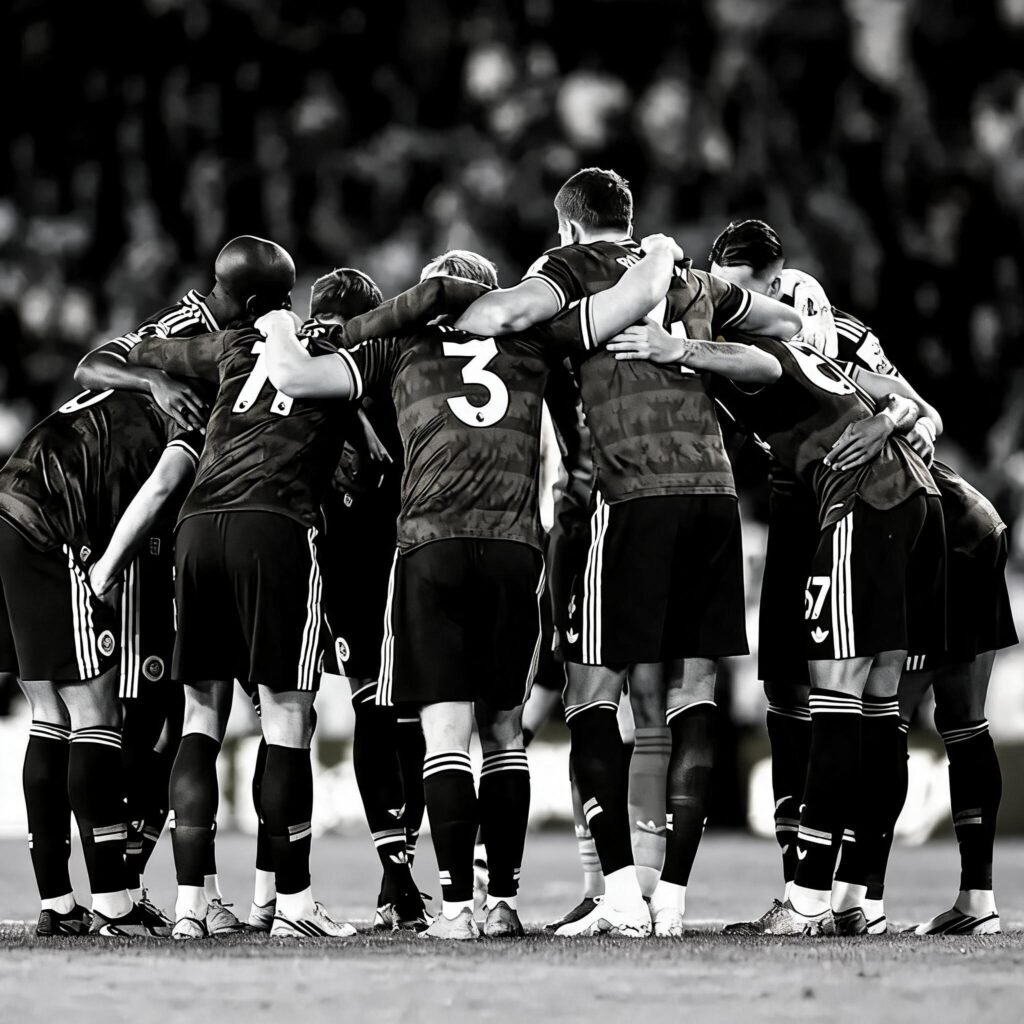
    Newcastle 2, Hull 1. It was their first home league win of the season and their first at St James’ Park over Hull in the Premier League. It lifted them to eight points from five games, level with Hull, and they had cleared their lines 54 times to Hull’s 12 to get there. Jaissle said afterwards that he was relieved, and it was hard to imagine anyone in the ground feeling differently.

    What comes next

    The international break lasts three weeks, and Newcastle will need every day of it. Nine players are out, and Jaissle said he hopes some will be back when the league resumes. Hall is away with England, Steur with the Netherlands Under-21s and, reportedly, Fernandez-Pardo with Belgium, while Livramento’s own England place now looks in doubt after Saturday’s injury.

    Then comes Coventry away on Monday 12 October, Newcastle’s first league meeting with the Sky Blues since September 2000. Frank Lampard’s side won at Nottingham Forest on Saturday after four straight defeats, so they will arrive with something to believe in.

    Hull have a reset of their own. Sergej Jakirović has given his players the whole of next week off, with a home friendly against Sheffield United on 1 October. Everton then visit the MKM Stadium on Sunday 11 October, in a game moved to a 2pm television slot. Their unbeaten start is over, but their belief, judging by their manager’s words afterwards, is not.

    Both clubs sit on eight points, with Hull ahead on goal difference, and they meet again at the MKM Stadium on 30 May, the date the season is due to end.

    What Newcastle need at Coventry is what Saturday gave them: not perfection, and certainly not a stroll, but a team that keeps running until its legs give out. We don’t demand a team that wins, we demand a club that tries. On Saturday, Newcastle gave Tyneside both.

    Are you happy with the effort the team put out again the in-form Hull? Did you wet your pants those last few minutes as the aerial bombardment from Hull came in? Join the conversation on X @mytoonarmy #NUFC
  • The Weight of One Deflection

    #NEWHUL

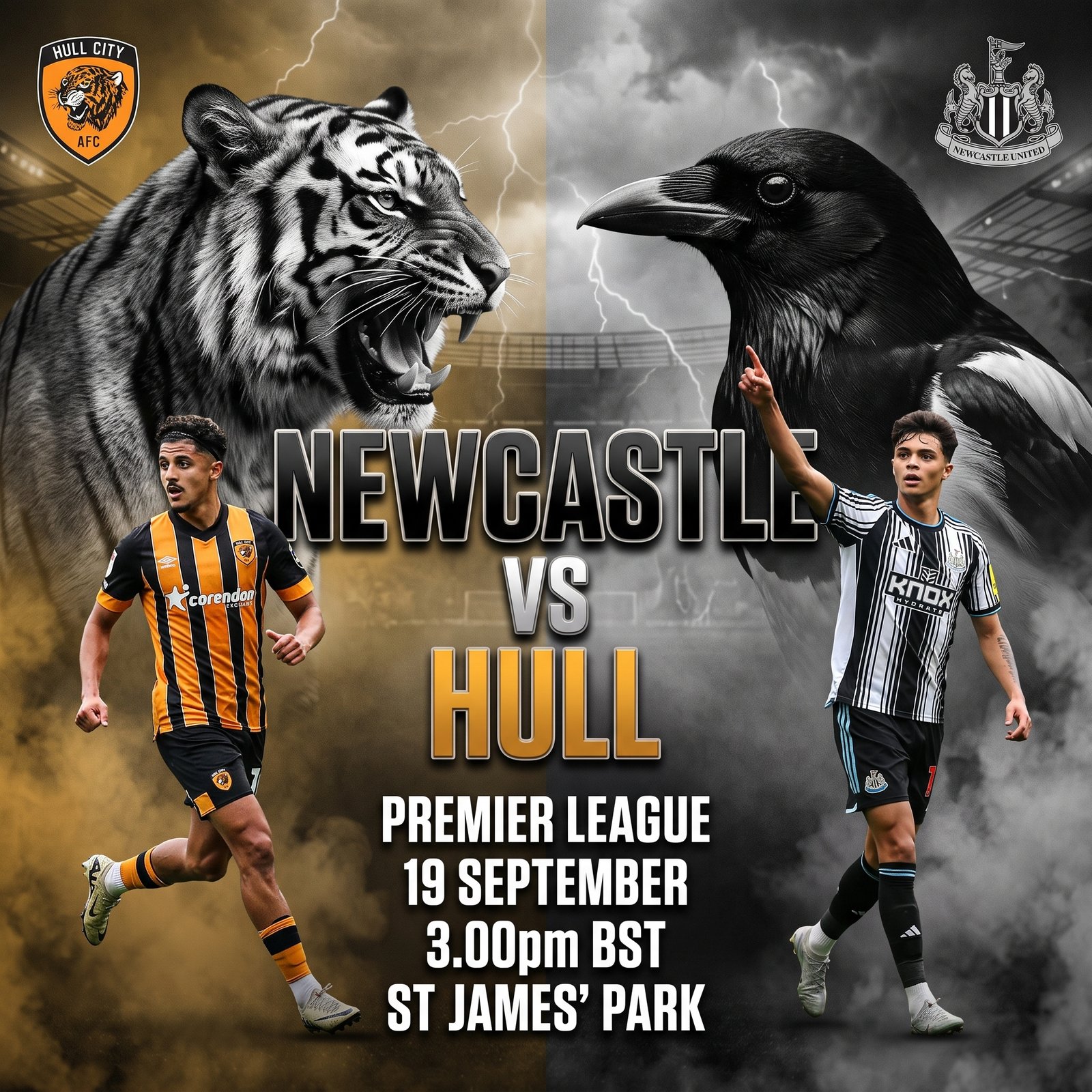
    Four days after Elland Road, a patched and youthful Newcastle side look for redemption against a Hull team playing with nothing to fear

    The touch that put Newcastle behind on Monday night wasn’t even Lewis Miley’s shot. It came off Ao Tanaka’s boot, deflected twice — off Sean Steur, then off Miley — and spun past Lukás Hornícek into the top corner. An own goal by ricochet, the kind no defender can really be blamed for. But football doesn’t deal in exculpatory footnotes. The scoreboard read Miley, 32nd minute, and by full time it read 4-1. Miley had signed a six-year contract back in May, tying his future to the club he joined at seven years old. Now he stood in the wreckage of his own deflection.

    Reports from Elland Road described Jaissle losing his temper in the away dressing room before he composed himself for the cameras. Nobody at the club has confirmed that on record. But it fits the gap between what he said in the tunnel and what followed an hour later. In front of the BBC’s microphones, he sounded measured, almost clinical — talking about physicality, fundamentals, the lessons his young side had just been taught the hard way. Later, to Chronicle Live, something rawer surfaced: “It is tough, it is hurtful, and it should be hurtful also for the players and staff.” Two registers, same manager, forty minutes apart.

    His pre-match press conference confirmed the scale of the problem without changing the tone. Eight players are absent in total. Dan Burn, Ewen Jaouen, Joelinton and William Osula are out long-term. Nico González is in concussion protocols, Jacob Ramsey injured. Jaissle confirmed Amar Dedić would also miss out. Anthony Elanga’s scan was still pending as he spoke to reporters — the manager wouldn’t call it either way, though he admitted it “doesn’t look that good.” No reinforcements are arriving before Saturday. Asked whether he’d rethink a midfield built on teenagers rather than experience, he didn’t blink: “It will be a young midfield. We trust them. This is our approach… it’s a brave journey the club is going on. I’m fully committed in that, so now if there’s one setback we shouldn’t delete our journey or our vision… We anticipated that something like that against Leeds happened, or is happening also in the next weeks and months. It’s just on us to respond, but still believing, we don’t change that.” Not a manager retreating into caution. One restating the terms of his own project, almost defiantly, as though retreat were never on the table.

    Hull aren’t obliging opposition for a rebuilding exercise, though. Sergej Jakirović’s side arrive at St James’ Park fourth in the table. Unbeaten. Eight points from four games. They’ve conceded twice all season — a record newly promoted sides aren’t supposed to carry into late September. They beat Manchester United on the opening weekend. Won away at Coventry. Held Aston Villa scoreless at the MKM. Then went to Stamford Bridge and took a point off Chelsea’s front three. Newcastle, by contrast, sit twelfth with a negative goal difference and a first defeat four days old. Whatever framing this fixture gets, “newly promoted side there for the taking” isn’t the honest version of it. Hull are the form team in the building.

    There’s history complicating the redemption story too. St James’ Park has never been kind to Newcastle against this particular opponent — two defeats and a draw there since 2008, no home win in almost two decades of trying. The overall head-to-head is level: two wins apiece, three draws. But Newcastle’s wins in that sequence have all come somewhere other than home. Beating Hull at St James’ Park isn’t a formality Newcastle are overdue. It’s something they simply haven’t managed in a very long time.

    Which brings the story back to personnel — and to two names carrying more weight than a routine team-sheet suggests.

    Tino Livramento is expected to start at right-back, with Dedić out. What he brings back is something Newcastle have barely had access to all season. The 23-year-old missed England’s World Cup after a calf injury in training. Add two separate knee problems and a hamstring issue last season, and he made just seventeen Premier League appearances in total — a run of misfortune long enough that his best qualities have become almost theoretical to Newcastle supporters rather than remembered: the explosive recovery pace, the willingness to carry the ball vertically rather than simply hold width. He came off the bench at Elland Road and picked up a booking for a combative challenge on Aaronson, which tells its own small story about intent. Leeds exploited exactly the channel he occupies — Bogle in behind, a long throw Newcastle’s back line couldn’t clear. His return offers something more specific than depth: recovery speed, and an attacking outlet down a side that’s been defended statically, out of necessity rather than design, for most of the campaign.

    Miley’s case is different, and more personal. This is a player who became Newcastle’s youngest-ever Premier League and Champions League appearance maker — a boyhood academy graduate who’d already lived through one hard year before this one. A freak leg break in training ended his last season early. Weeks later, still recovering, he signed a six-year contract anyway, tying his future to the club regardless. Now, at twenty, he’s the senior name in a midfield Jaissle has chosen to trust rather than reinforce. An own goal by deflection isn’t a performance indictment on its own. But it lands differently on a player whose form across the opening weeks has invited scrutiny rather than deflected it. If Jaissle’s “brave journey” means anything concrete on Saturday, it plays out through players exactly like Miley — not just Newcastle’s collective response to Leeds, but his own, in a stadium that has watched him grow up in front of it.

    Hull’s own threat has a name too, and it isn’t the one most previews will reach for. Mohamed Belloumi is a left-footed Algerian winger, signed from Farense for around €5.5 million after Hull’s promotion push. He missed most of the 2024-25 season with an ACL injury. What he’s shown since returning looks less like coincidence and more like a player finally healthy enough to prove why Hull signed him. He scored both of Hull’s goals in the 2-2 draw at Stamford Bridge, cutting in from the right onto his stronger left foot — the way genuinely dangerous inverted wingers do. Two goals and an assist in four league games this season, for a player who spent most of last year on the sidelines. Whichever of Botman, Thiaw or a makeshift back four picks him up on Saturday inherits the problem of a player playing the best football of his career, behind an XI with nothing to fear from the occasion.

    Livramento, Miley, Belloumi — three threads, and one stadium that has to hold all of them at once. Whatever else Saturday is about, it’s also fifty-two thousand people watching a returning full-back for signs of his old pace, watching a boyhood favourite for signs he’s shaken off Monday, and watching a Hull winger who’s already shown he doesn’t need an invitation.

    St James’ Park still carries its reputation. Football Ground Map named it the best atmosphere in the Premier League as recently as 2018, and the Gallowgate and Leazes ends still do the acoustic work that visiting sides find genuinely uncomfortable. But reputations get tested on afternoons like this one. It’s the first home game since Elland Road. The last match before the international break scatters the squad for a fortnight. There’s a real question over how the ground responds to watching an injury-patched, teenager-heavy XI try to compete again so soon after being physically dismantled. Jaissle has staked his public language on the idea that the crowd stays with the project regardless of result. Whether that holds inside the first twenty minutes — with Hull’s front three moving the ball like a team that knows exactly how good it currently is — is a different question from whether it holds in a press conference.

    Newcastle to win this, on balance. 2-1 feels right — Wissa or Barnes finding a way through a Hull defence that’s conceded only twice but hasn’t faced a front line with anything like Newcastle’s underlying quality. But the draw is a live outcome here, not a hedge. Hull haven’t lost. Newcastle haven’t won at St James’ Park against them since the last decade. Nothing in either team’s recent form makes a routine home win the safe assumption it would ordinarily be. Whatever happens, it’s the last word for a fortnight before the internationals scatter this squad across three continents — which makes Saturday’s answer, for better or worse, the one Newcastle will be left sitting with the longest.

    Did Jaissle give the team the “hair dryer” treatment after the last game’s disappointment? Will the team be able to bounce back strong in front of a sell out crowd? Join the conversation on X @mytoonarmy #NUFC
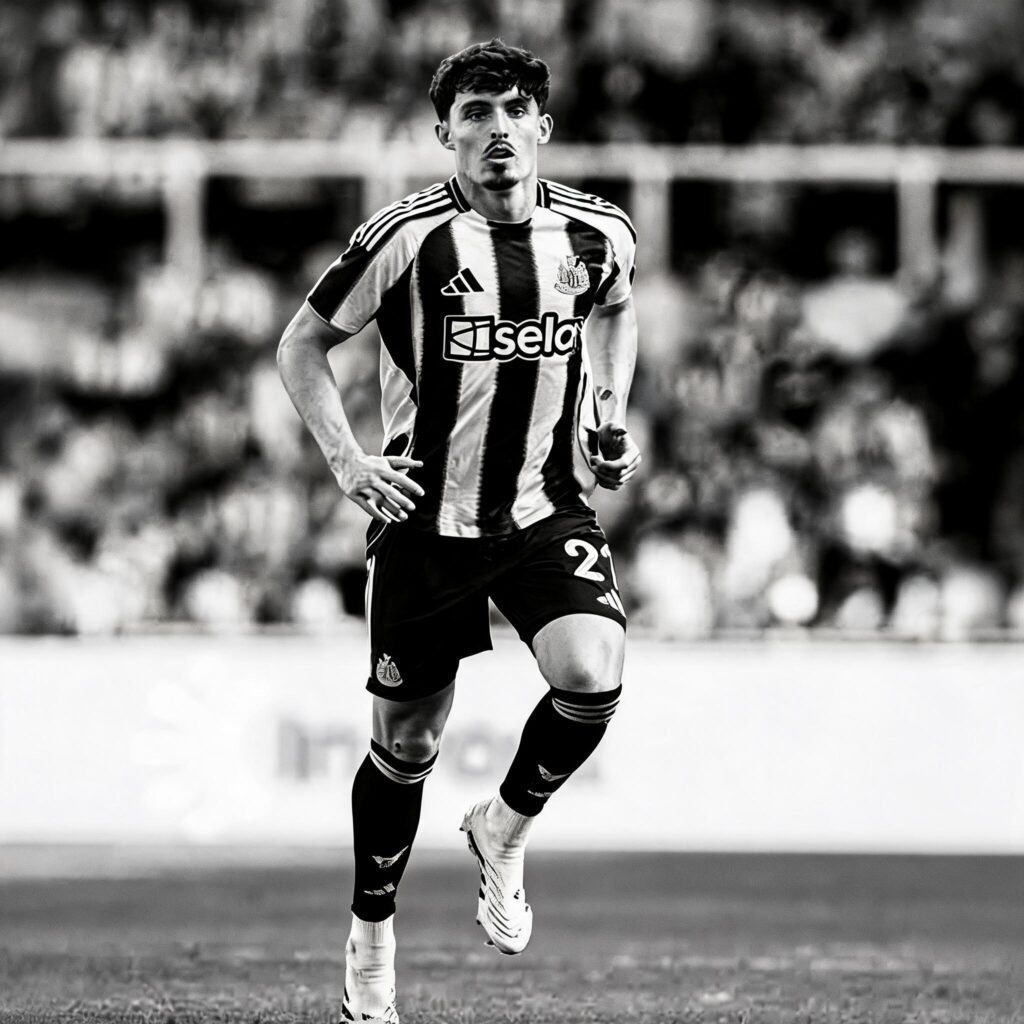
  • Blood Before Badge: The Case for Jacob Murphy

    Our Jacob Murphy

    Nine years old, wedged between his father and his twin brother under the St James’ Park floodlights, Jacob Murphy watched Alan Shearer and Gary Speed put Newcastle two goals up on PSV Eindhoven in a UEFA Cup night in April 2004. He didn’t grow up round the corner. He was born in Wembley, in the shadow of a stadium he wouldn’t play at for Newcastle for another twenty-one years. But his mother is from Birtley, his father from Ashington, and the rest of the family scattered across Gateshead — a Geordie bloodline exported to London that never once considered following anyone else. Shearer, to the boy in the crowd that night, was simply “a God.” Laurent Robert, a left winger with a wand of a left foot, was one he “loved to watch.”

    That’s the inheritance Jacob Murphy carries onto the pitch every time he pulls on the number 23 shirt, and it’s worth remembering on the mornings after a bad one — because there have been a few of those lately, and the discourse has been short on patience and shorter on memory.

    The long way home

    Murphy and his twin, Josh, joined Norwich City’s academy at eleven. What followed wasn’t a fast track. Six different loan spells scattered him across the lower leagues — Swindon, Southend, Blackpool, Scunthorpe, Colchester, Coventry — the unglamorous apprenticeship of a young pro finding his level the hard way, a long way from Carrow Road and further still from Tyneside. By the time Norwich made him a first-team regular in 2016/17, ten goals and a Championship promotion push had put him on Newcastle’s radar. Rafa Benítez wanted him. Murphy, by his own admission, wanted it so badly he told his club he was ready to walk if the move didn’t happen.

    It did, for £12.5 million in July 2017, and what he said that day still reads as unmistakably sincere rather than the standard-issue platitude of a unveiling presser: “wearing the Newcastle badge on my chest — I couldn’t think of anything better.” Photographs of him as a boy in a Newcastle shirt went round the club’s social channels within hours. This was never going to be just another transfer for him.

    It also wasn’t a smooth ride from there. Two further loans followed — West Brom, then Sheffield Wednesday — as Newcastle worked out what they had. Josh Murphy, reflecting on his brother’s career years later, didn’t dress it up: three years ago, he said, Jacob was “not really a fan favourite,” a fringe figure some had quietly written off. What changed wasn’t luck. It was, in Josh’s words, hard work, resilience, and refusing to stop turning up. By 2024/25, the winger written off a few seasons earlier was one of the first names on Eddie Howe’s team sheet, and comfortably the best form of his career: eight Premier League goals, twelve assists, a campaign as good as almost anyone’s outside the very top bracket of the division.

    It built to Wembley. On 16 March 2025, seventy years of hurt since Newcastle’s last domestic trophy, Murphy flicked on the knockdown that Alexander Isak finished for Newcastle’s second in a 2-1 win over Liverpool that finally ended it — Dan Burn’s opener, met from a Kieran Trippier corner, had come just before the break. The boy who’d watched Shearer under those floodlights had just played his part in the goal that sealed the club’s first domestic silverware in seventy years. Whatever else gets written about him this season, that afternoon happened, and it happened because of him.

    Why the money was turned down

    This summer, Nottingham Forest came calling — first £10 million, then £15 million, both bids on a 31-year-old entering the final year of his contract. On paper, for a club navigating the Premier League’s financial rules as carefully as Newcastle are, that’s the kind of offer a lot of boards wave through without a second thought. Newcastle’s board said no. Twice.

    Matthias Jaissle, explaining the decision, didn’t hedge: this was a “well-balanced squad,” one with players who still had “potential to do even better.” That’s not the language of a manager stuck with a player he can’t shift. It’s the language of a manager who looked at a rebuild stripped of Anthony Gordon, Bruno Guimarães and Sandro Tonali in a single summer, looked at a dressing room suddenly filled with faces in their early twenties, and decided the last thing that squad needed was to lose one of the few voices who actually remembers what winning at this club feels like. Murphy is the longest-serving player at Newcastle United. Nobody else in that dressing room has worn the shirt longer, carried the armband on the days he’s been asked to, or has a Wembley winner’s medal to show a nineteen-year-old teammate what the standard actually looks like. That’s not sentiment. That’s squad-building. Jaissle valued it enough to twice tell Forest that Murphy wasn’t walking out the door for their money, and the winger’s own response to the upheaval of this summer was not the sound of a man biding his time until the exit — he called the new manager’s methods “awesome” and talked about a philosophy of intensity that was “already ingrained in the Newcastle DNA.” That isn’t the language of somebody counting down the days.

    One bad night at Elland Road doesn’t rewrite nine years

    Then came Leeds. A heavy defeat, a poor collective performance, and Murphy — thrown in from the start in the Premier League for the first time this season — had an evening he’ll want to forget. Nobody’s pretending otherwise, least of all him; he was among the players who apologised to supporters afterwards. But turn that single, difficult hour on a night when the entire team was taken apart into some kind of verdict on where Jacob Murphy is as a footballer, and you’ve lost the plot entirely.

    This is a player who has already answered the question of what he does when written off. He did it once, coming back from the margins to become one of the first names on the team sheet under Howe. The idea that one poor cameo in a stinker of a collective performance, on a night the whole side capitulated, somehow undoes that — or undoes nine years of service, a boyhood dream fulfilled, and a role in ending a seventy-year wait — doesn’t hold up to a moment’s scrutiny. Newcastle’s supporters have watched this player long enough to know the difference between a genuine decline and a bad night in a bad team performance. Leeds was the latter. Treating it as the former says more about the appetite for a quick verdict than it does about Jacob Murphy.

    What he is now

    He isn’t first-choice any more, and there’s no point pretending he is — Anthony Elanga has cemented himself as first choice on the right, and that’s simply squad management in a rebuilt attacking line, not some judgement on Murphy’s ability. But rationed minutes and a fringe role are not the same thing as being surplus to requirements. When he’s been given the platform this season — in the cups, in pre-season — he’s delivered performances that suggest the level hasn’t gone anywhere, even if the opportunities have narrowed. He remains one of the most experienced players in a Newcastle dressing room that has been rebuilt around players closer to twenty than thirty, precisely the kind of head a young squad needs in the room when things go wrong, as they did at Elland Road.

    Go back to that nine-year-old under the floodlights, watching Shearer and Speed with his dad and his brother, already dreaming of a badge he wouldn’t wear for another thirteen years. He got there. He stayed there through loan spells and lean years and a rebuild that could easily have moved him on for a tidy £15 million this summer. He played his part in the Wembley goal that ended seventy years of waiting. That’s not a résumé you discard over one bad hour at Elland Road. It’s one that’s earned this club’s patience, and its faith — the same faith he showed in it, long before anyone here had heard his name.

    Love him, or hate him? What is your fondest memory of Jacob Murphy? Join the conversation on X @mytoonarmy #NUFC

  • The Numbers Catch Up

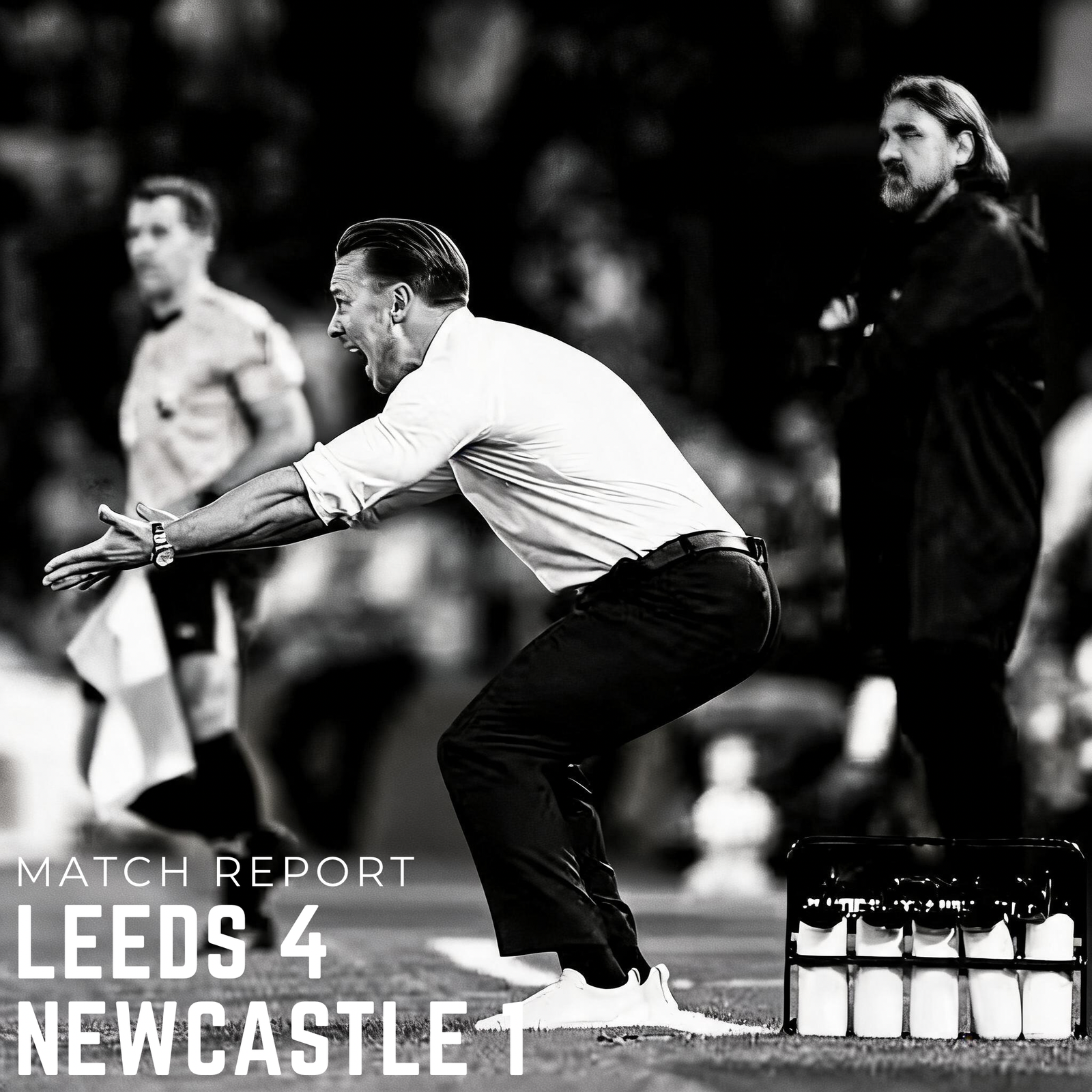
    Leeds 4 Newcastle 1

    On Friday, I warned that Newcastle were surviving on moments they hadn’t earned. On Monday night, Elland Road presented the invoice.

    Two minutes and forty-two seconds. That’s all the time that passed between Lewis Miley turning Ao Tanaka’s speculative strike into an own goal and Jayden Bogle wheeling away to celebrate a second, and by the time both had gone in, something had already changed in the away end. Not panic, not yet. Something closer to recognition — the sinking, specific feeling of watching a pattern you’d been warned about arrive right on schedule.

    Because this was not bad luck. This was the bill coming due.

    The Bill Comes Due

    On Friday, previewing this fixture, I made a simple observation: Matthias Jaissle’s Newcastle were not out-playing anyone. They were out-scoring the chances they created — through Anthony Elanga’s pace, through moments of individual brilliance, through a goalkeeper standing on his head when required — while the underlying picture told a different story almost every week. Second-best by expected goals at Liverpool. Second-best at Bournemouth, even with the majority of the ball. Somehow still winning at Tottenham despite the numbers favouring Roberto De Zerbi’s side. Five games unbeaten, built on moments rather than method.

    Leeds simply did what nobody else this season had managed: they turned the volume of chances Newcastle concede into an actual scoreline. By full time, Daniel Farke’s side had generated more than double the expected goals of their visitors and scored four times from it — clinical where Newcastle had spent a month being fortunate. It is, when the whole season is weighed rather than one midweek result, exactly the correction that was overdue. Newcastle came into Monday night averaging more shots against than any side in the division. Nobody had made them pay for it. Leeds did, inside thirty-four minutes, and the manner of it — a shot that took two Newcastle touches to find the net, a header that cannoned in off a defender’s shoulder rather than beating Hornícek cleanly — carried the specific cruelty of a team whose luck has simply run out rather than one that’s been torn apart tactically.

    A Number Nine Who Never Arrived

    If Newcastle needed a spark to drag them back into a game slipping away, they didn’t have one up front. Matias Fernández-Pardo started up front, and spent the night rotating the central striker’s role with Yoane Wissa — more often the furthest man forward than in behind him — without it changing much. Fifty-seven minutes without a shot, a chance created, or a telling touch anywhere near the Leeds box: still visibly building up his match sharpness after a stop-start start to life in England, and unable to latch onto anything played in his direction. This column’s predicted XI on Friday had Joe Willock starting in the front three instead, flagged as the sharper option even then. Jaissle went the other way, and the eye test backed up the original call. Fernández-Pardo was withdrawn on 57 minutes for his ineffectiveness, and Newcastle looked a sharper, better-connected side once Willock was on the pitch — a shot that clipped the crossbar, another straight at Trafford, both arriving after the game was already beyond saving but both proof of the ball-carrying control that had gone missing from kick-off.

    Two Different Games

    There were, in truth, two matches here. The first half was as one-sided as the scoreline eventually suggested — Leeds pouring forward with pace and purpose, Newcastle unable to get out of their own half without giving the ball straight back. The second told a different story, and it’s worth telling properly rather than dismissed as garbage time. Once the contest was safely out of reach, Farke’s players naturally eased off the accelerator — fresh legs from the bench, a settling into defensive shape rather than a relentless chase for a fifth. And into that space, Newcastle finally started playing like themselves. The long punts forward that Leeds’ back three had been reading and cutting out all evening gave way to something more patient — the ball kept on the ground, moved through midfield rather than launched over it, Newcastle actually holding spells of possession for the first time all night. It bought them a goal. Harvey Barnes worked the ball wide to the overlapping Tino Livramento, and Livramento’s deflected cross fell for Bazoumana Touré to finish confidently in the game’s closing minute — a goal built from patience rather than desperation, even if it arrived three goals too late to mean anything for the result.

    Steur’s Night

    In the middle of all this was an eighteen-year-old handed a Premier League audition with no warning at all, just not on the terms he’d have chosen. Sean Steur was still warming up on the touchline when Nico González went down clutching his face early in the first half, and by the nineteenth minute he was being sent on cold, ahead of more experienced options still sat on the bench, into a Premier League away fixture that had already started to turn hostile. Fifteen minutes later, a slow, unhurried pass out from the back went straight to a Leeds shirt, and the move that followed ended with Bogle’s name on the second goal. It was a genuine mistake, and a costly one.

    But it’s worth saying plainly what Steur did next, because it’s the part of the night easiest to overlook: he didn’t hide. No further mistakes, no further lapses — just seventy-one minutes of a teenager doing his job brought on earlier than planned, competing for the ball and getting through the rest of the match without incident. That’s not nothing. Thrown into the deep end with no notice, on the night his new club’s unbeaten start fell apart around him, he still had the character to see it through rather than shrink from it. Newcastle will need players who respond exactly like that a great deal more before this season is finished.

    What Has to Change

    The fix isn’t complicated to name, even if it’s harder to execute. Newcastle’s press is built to win the ball high and hurt teams in transition, and when it works — as it mostly has through four games — it papers over a defence that’s more porous underneath than the results have suggested. Leeds simply had the physicality to play through it: hold the ball under pressure, draw Newcastle’s midfield out of shape, and exploit the space Jaissle’s vertical system leaves in behind once the first line of pressing is beaten. Against a team built for exactly that fight, it finally cost them. The system doesn’t need tearing up — it kept Newcastle unbeaten in five games across all competitions coming into Monday — but it needs either a more disciplined holding presence shielding the back four, or the willingness to sit a little deeper against sides set up to punish an open pitch.

    The selection call in the number ten role is the more immediately fixable problem. Fernández-Pardo is a talented forward still finding his feet in England; Leeds marked him tightly rather than sitting off, and the ball into him was mostly high and hopeful — easy pickings for taller, more physical defenders — rather than anything played to feet. Newcastle rushed it in the first half rather than waiting for the right pass, and the faster they went, the worse it got. Starting him ahead of a player who’d arguably earned the shirt already looks like the wrong call in hindsight. Willock carries the ball into midfield himself rather than waiting for it to arrive over the top, which sidesteps the service problem entirely.

    The harder problem is depth through the middle. González’s head knock left Jaissle sending on an eighteen-year-old, and while Steur held up better than the circumstances deserved, a squad with genuine ambitions needs recognised cover in that position that isn’t an emergency introduction. Jacob Ramsey picked up a knock in the warm-up and was never a viable option either, Jaissle confirmed afterwards — Aladji Bamba was also on the bench, fit and available — the likelier explanation is that Steur’s match fitness at this stage of the season simply outstripped his.

    Jaissle called it “difficult to digest” afterwards, and he was right to. But it’s also, for what it’s worth, not the first setback of his coaching career. Newcastle’s own reset starts this Saturday, at home to Hull City — a considerably more forgiving proposition than Elland Road on a Monday night, and exactly the kind of fixture where the fundamentals Jaissle admitted were missing can be rebuilt in front of a St James’ Park crowd still willing to be won over. Coventry away in October follows, but that’s a conversation for another week. Jaissle has been here before, if not on this exact patch of English grass, and he’s answered it well before. There’s no reason, on the evidence of his career rather than one bad night, to expect anything different this time.

    Newcastle’s worst performance of the season so far? Is this the wake up call we deserve? Join the conversation on X @mytoonarmy #NUFC
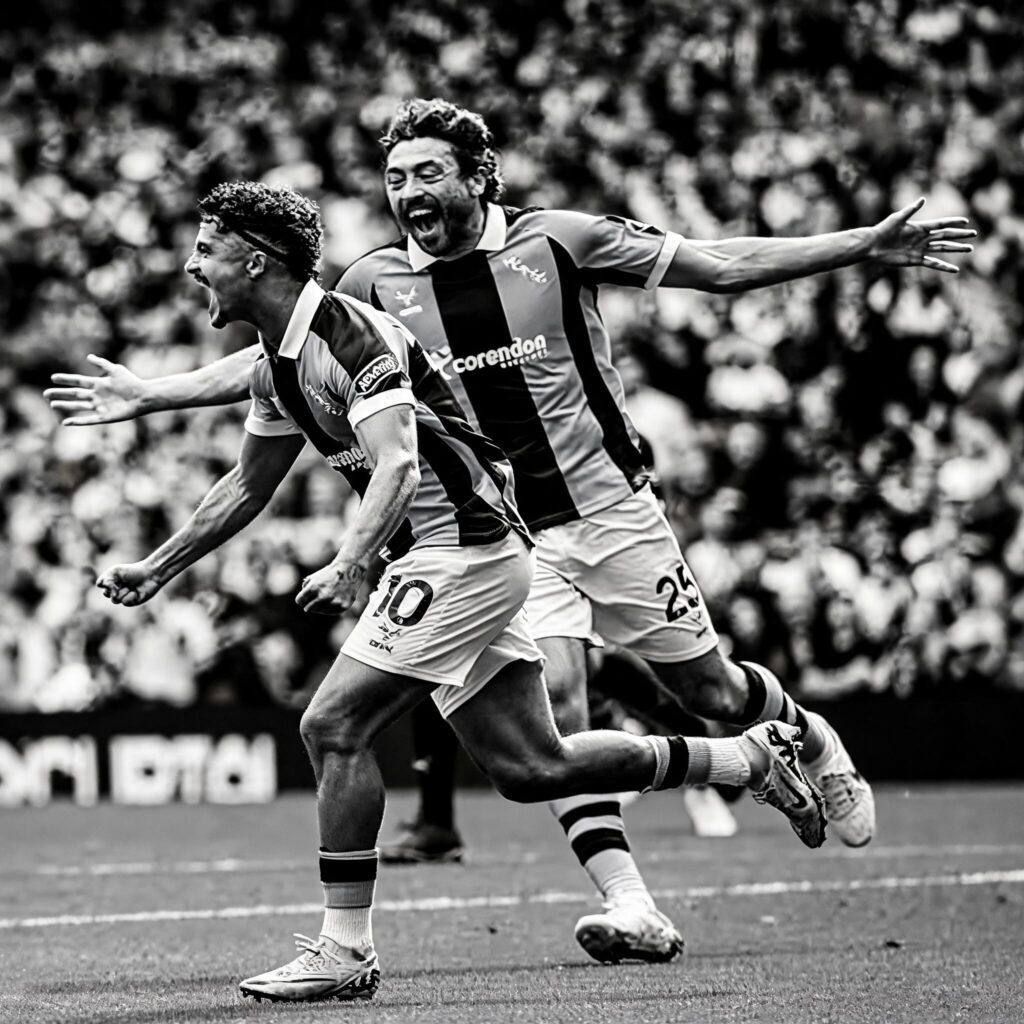
  • The Magic Was Real. So Is What Broke It.

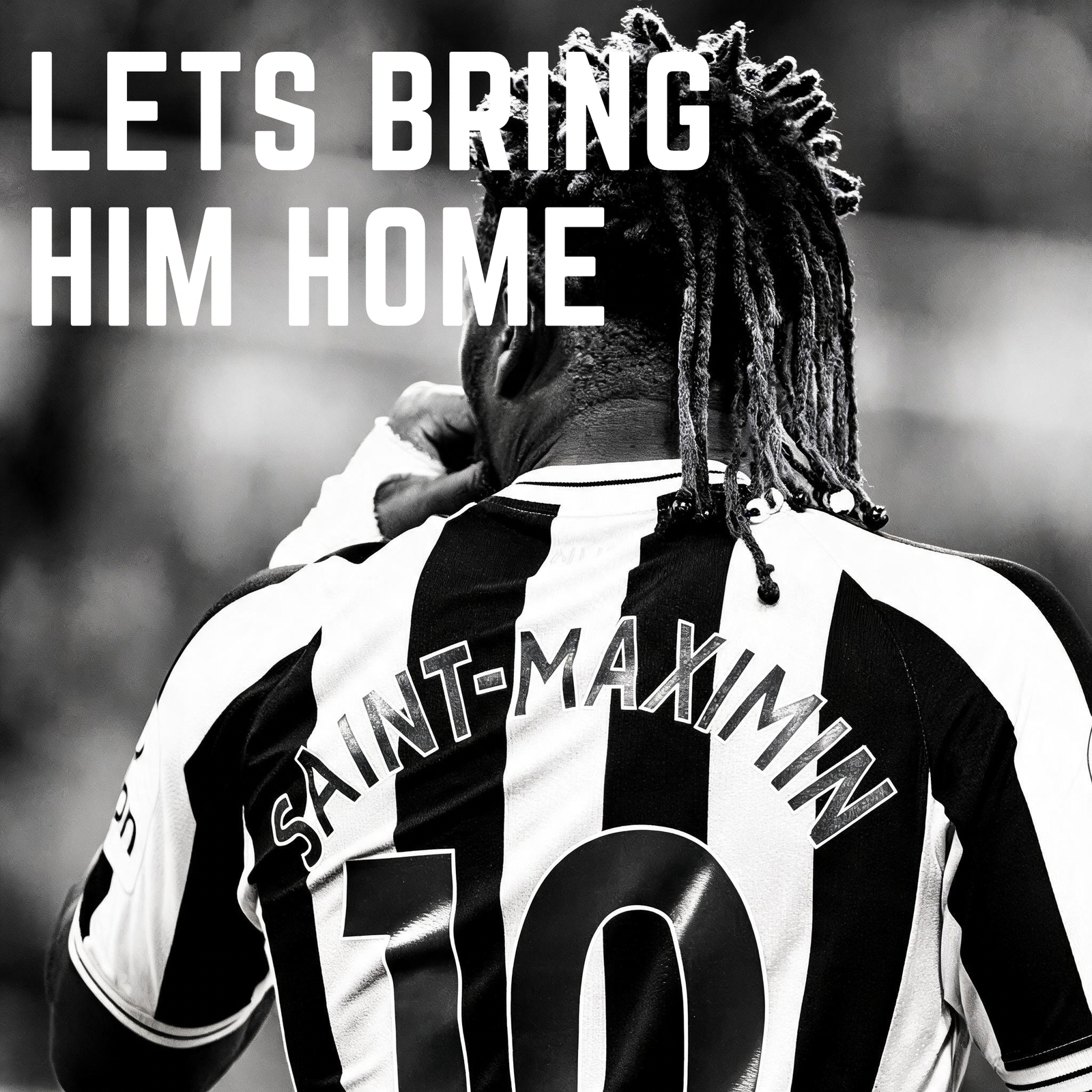
    Bring Home ASM

    Allan Saint-Maximin gave Newcastle three years of pure theatre before his body started handing in its notice. Tracing the highs, the damage, and why the honest way back to St James’ Park now runs through the boardroom, not the touchline.

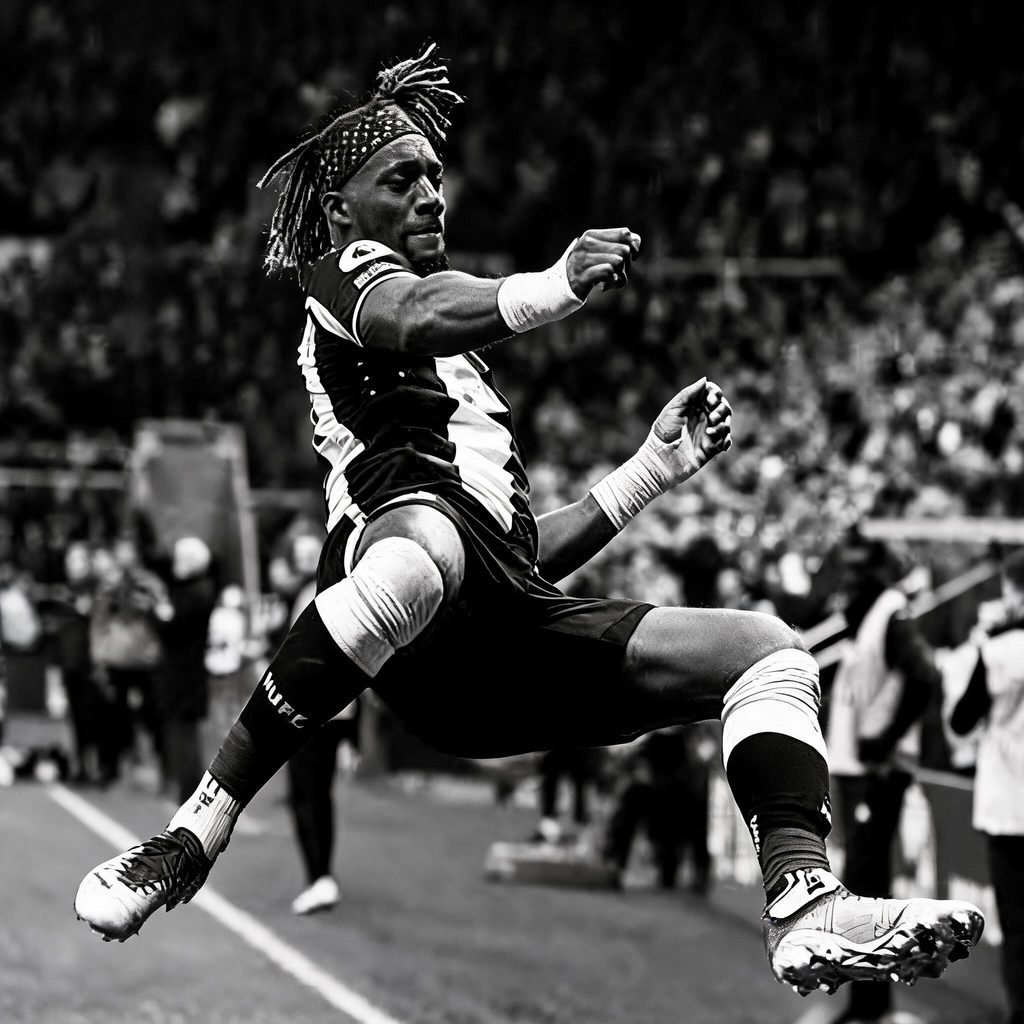
    St James’ Park, 19 May 2021. Seventy minutes on the clock against Sheffield United, and Allan Saint-Maximin has already gone past his marker fifteen times. Fifteen. Not attempted — completed. Somewhere in Spain that same season, Lionel Messi is doing the exact same number to Celta Vigo, and for one weekend the Frenchman from Châtenay-Malabry sits statistically level with the best footballer on the planet. Then, with twenty minutes still to play and the crowd fully drunk on him, he pulls up. Hamstring. Helped off. Season, in effect, over.

    That single afternoon is Saint-Maximin’s entire Newcastle story compressed into ninety minutes: genius that made grown men on the Gallowgate forget themselves, followed immediately by a body that couldn’t cash the cheques his feet kept writing.

    The Boy Who Made Losing Feel Like Something

    He arrived from Nice in August 2019 for a reported £16m, into a Newcastle side that Steve Bruce had inherited mid-collapse and Mike Ashley had starved for a decade. Nobody was going to Europe. Nobody was buying replica shirts out of hope. What Saint-Maximin gave that team, from almost his first involvement, was the one thing relegation-adjacent football rarely offers: a reason to actually watch. By November of his debut season, BBC Sport’s Opta data had him leading the entire Premier League in yards gained per carry — 12.17 metres from 125 attempts, more than a full metre clear of Marcus Rashford in second — and he was doing it from fewer carries than anyone else near him, which told you everything about the efficiency of the theft.

    It never really stopped. Across 2021 he set the Premier League’s all-time single-season record for completed dribbles — 143 of them — a mark that still stands. He top-scored Newcastle’s chance-creation charts in seasons the team barely had the ball. Fans who’d watched years of hoofball under Ashley got a winger who picked the ball up in his own half, looked up, and simply decided the six players between him and goal weren’t going to matter. He gave to foodbanks. He handed shirts and boots to kids at the gates without being asked by the club’s press office. Supporters who met him in the street came away with stories, not selfies. Long before Eddie Howe or Amanda Staveley, Saint-Maximin was the only reason some Newcastle fans had to renew.

    Then the club actually got good, and the arithmetic of a modern Premier League squad turned against him. As Howe built a side capable of finishing fourth and reaching a domestic cup final, competition for a starting shirt intensified and Saint-Maximin’s appearances thinned out — twenty-five outings in his final campaign, only twelve as a starter, a return of one goal and five assists that undersold a player still creating 31 chances despite barely ever completing ninety consecutive minutes. Financial Fair Play needed selling assets. Saint-Maximin, sellable and Saudi-attractive, was the obvious name. Newcastle moved him to Al-Ahli in July 2023 for £23m, closing a four-season, 124-appearance, 13-goal chapter that fans still talk about with more affection than the numbers alone would justify.

    Six Clubs, Three Years, and a Body Running Out of Road

    What has happened since should sober up even the most sentimental corner of the Gallowgate.

    Al-Ahli got two seasons out of him, most of it sporadic. Within a year they’d loaned him to Fenerbahçe, where he managed 20 appearances and 4 goals before returning to Jeddah — only to be sold on almost immediately, this time to Club América in Liga MX for a fee in the region of €10.3m in August 2025. That deal barely survived six months. By February 2026 he was a free agent again, walking into Lens for the back half of the French season on nothing more than a short-term arrangement.

    And here, briefly, the old magic flickered. Thirteen appearances, four goals, three assists, a Coupe de France winner’s medal, and a runners-up finish in Ligue 1 — genuinely his best sustained form since leaving Tyneside. Lens wanted him to stay. He didn’t. Instead he signed for Charlotte FC in Major League Soccer over the summer, his eleventh senior club, arriving as the replacement for the departing Wilfried Zaha. He’s currently on two assists from four starts and two substitute appearances this MLS season, a tidy 7.38 average rating.

    Al-Ahli, Fenerbahçe, Al-Ahli again, Club América, Lens, Charlotte. Six clubs, three continents, three years. That is not the CV of a footballer chasing his ceiling. It’s the CV of one being moved along, again and again, by clubs that wanted the name more than they could keep using the player.

    What the Injury List Actually Says

    Here is the part the highlight reels never show you. Pull Saint-Maximin’s medical file and it reads less like a footballer’s career and more like an ongoing negotiation with his own hamstrings.

    Three separate thigh strains inside his first four months in England. Ankle trouble that cost him most of December 2019. Calf, groin, and thigh injuries recurring through 2020, 2021 and 2022 with a regularity that stopped being bad luck and became a pattern. A knee problem in February 2023, followed two months later by the thigh injury that effectively ended his final Newcastle season before the Al-Ahli sale went through. And the pattern hasn’t broken since he left — if anything it has deepened. An unspecified injury in January 2025. Illness in February. A serious lay-off running from late April to late July 2025, nearly three months, landing right in the window before his move to Club América. A groin injury barely weeks into life in Mexico that October. Illness again in November. Another calf issue flaring almost exactly as he arrived at Lens in February 2026.

    That Sheffield United afternoon wasn’t an outlier. It was the rule, dressed up as a highlight. Saint-Maximin turns 30 in March. The body that made him magic has been sending the same message for the better part of a decade, and the message has never changed: this cannot be sustained at full throttle indefinitely.

    Why There’s No Jersey Waiting

    Here’s the twist most supporters have missed entirely: Saint-Maximin has already played for Matthias Jaissle. The German walked into Al-Ahli twenty-four hours after Saint-Maximin signed there in 2023, and the two spent a season together, guiding the newly promoted club to third in the Saudi Pro League alongside Riyad Mahrez and Roberto Firmino. By Saint-Maximin’s own account, it’s a relationship built on real respect — he’s called Jaissle a coach with the quality to go all the way to the top. So the question of whether he’d fit Jaissle’s Newcastle isn’t hypothetical speculation. It’s already been field-tested, for one season, in Jeddah.

    But the Jaissle that Saint-Maximin knew was building a functional Saudi Pro League project from nothing. The Jaissle now at St James’ Park is running something far more specific: a high-intensity, ball-oriented swarm press built on the Red Bull pathway, players collapsing on the ball the instant possession is lost rather than retreating into shape. “I want stress on the opponent as soon as possible,” is how Jaissle himself has described it — verticality through central channels, a narrow 4-4-2 diamond or 4-3-1-2, collective pressing triggers drilled on the training ground until they’re instinct.

    That is not, and was never, Saint-Maximin’s game. His gift is individual — manufacturing a yard of space from nothing, running at defenders in isolation, doing damage as a soloist. Howe spent four years trying to sand a defensive shape onto that talent and only ever half-succeeded. Jaissle’s system doesn’t have room to half-succeed with a winger; it needs pressing triggers who function as part of a unit, executed by players with fresher legs than a decade of soft-tissue damage leaves you with.

    And even setting the system aside, there’s no vacancy. Newcastle head into 2026-27 with Harvey Barnes, Anthony Elanga and Jacob Murphy established in wide areas, plus the summer arrivals of Bazoumana Toure and the positionally flexible Matias Fernandez-Pardo — five options, all built for exactly the running demands Jaissle requires, all of them younger than Saint-Maximin is now. There’s no squad number free, let alone a place in the XI.

    The Role That’s Actually There

    None of which means Newcastle is finished with him, or he with Newcastle. It just means the next chapter shouldn’t be written in boots.

    This a club with genuine form on this. Bobby Moncur, the last captain to lift a major trophy for Newcastle, has spent years as a club ambassador. When PIF’s takeover happened in 2021, Alan Shearer was approached within days about an informal ambassadorial role, advising the new ownership on how to rebuild the bridge between boardroom and terrace. John Beresford has spent years turning up for the club’s community and charity work simply because, in his own words, it’s always worth showing his face. Newcastle doesn’t just tolerate its former players sticking around — it actively leans on them.

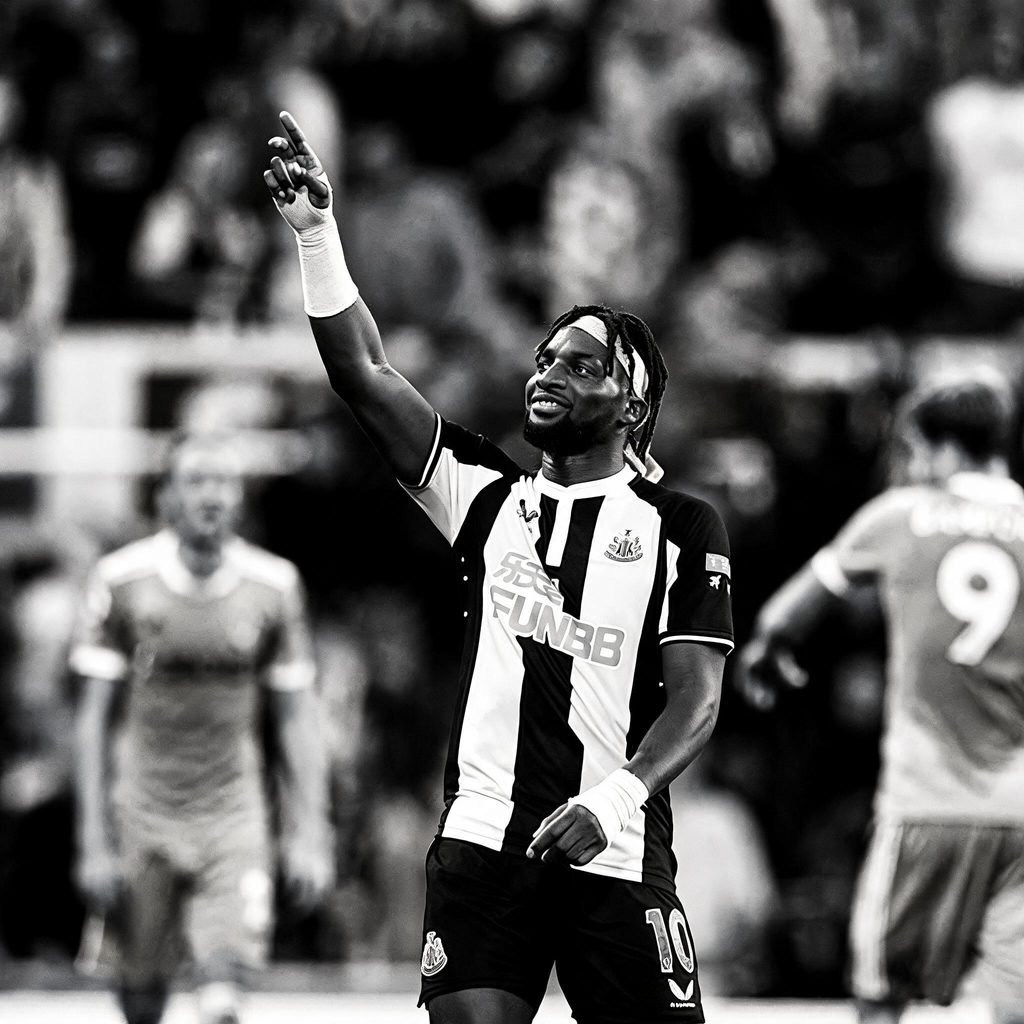
    Saint-Maximin is arguably a more natural fit for that world than any of them. He is one of the most recognisable, socially fluent personalities to wear the shirt this century, a player whose bond with supporters was built on foodbank visits and gate-side generosity rather than manufactured content. He has now played professionally in England, Saudi Arabia, Turkey, Mexico, France and the United States — a genuinely global footprint most ambassadors would need a marketing budget to fake. And there’s a tidy symmetry sitting underneath all of it: Saint-Maximin already has a real relationship with Jaissle, and with Al-Ahli, a club that sits under the same PIF ownership umbrella as Newcastle itself. For a club with obvious global ambitions, a figure who’s lived inside both ends of that ownership structure and is still adored on Tyneside is not a hard case to make.

    He said it himself, just this week, to the BBC: Newcastle remains his dream club, the one he watches every single match of, the one he stayed loyal to when he didn’t have to. That devotion doesn’t need a first-team squad number to mean something. It needs a phone call, a contract with fan engagement and Foundation work written into it, and a fixture list built around home matchdays rather than pre-season fitness tests.

    The magic was real. Nobody who was in the ground for that Sheffield United performance needs convincing of that. But so was the toll it took, appearance by appearance, injury by injury, across a decade that has now scattered him across four continents chasing a version of himself that isn’t coming back as a player. The good news is that Newcastle has never needed him to be that version to want him around. It just needs to offer him a different shirt to wear.

    If you agree that shirt should exist, say so. We’ve started a petition calling on Newcastle United to give Allan Saint-Maximin a formal ambassadorial role once his playing career ends — the same recognition the club has already extended to the likes of Bobby Moncur and Alan Shearer. Add your name to the petition here.