
Data Driven Insights. Fearless Opinions.

SCR

  • MKM Mayhem: Hull City’s Shocking Takedown of Manchester United Shakes the Opening Weekend—and Offers Newcastle a Blueprint

    If Premier League opening weekends are meant to establish a natural order, Saturday’s fixtures instead took a blowtorch to the script. As St. James’ Park prepares to switch on the floodlights for Sunday evening’s blockbuster against Iraola’s Liverpool, the top flight has already delivered a series of seismic, bloody noses to the established elite.

    The loudest crack of thunder came from the MKM Stadium. There, newly promoted Hull City produced a display of breathless, snarling transition play to send Manchester United crashing to a 2-0 defeat—a result that instantly rewrites the early-season narrative and offers a tantalizing blueprint for Matthias Jaissle’s Newcastle.

    The Shock at the MKM: Anatomy of a Masterclass

    Hull City’s victory was no smash-and-grab; it was a structural triumph backed by overwhelming underlying metrics. While Manchester United controlled the illusion of dominance with a 59% field tilt in the final third, they were completely toothless, generating a paltry 0.41 Expected Goals (xG)—their lowest output in a league fixture in over two years.

    Hull’s mid-block completely suffocated United’s deep build-up, restricting the visitors to just two shots inside the penalty box all afternoon. The real story, however, was dictated by the press. Hull’s central engine room dominated second-ball recovery, registering 14 high turnovers within 40 metres of the opposition goal. In stark contrast, United logged a staggering 18.4 Passes Per Defensive Action (PPDA).

    It was a terrifyingly familiar story for Michael Carrick’s men: defensive disorientation on the transition and a complete lack of spatial awareness. When Semi Ajayi poked home the opener after 17 minutes, the noise on Humberside was deafening. By the time Nobel Mendy powered a header past Senne Lammens just before halftime, United looked entirely unspooled.

    Around the Grounds: Brentford Bludgeon a Fragile Spurs

    The vulnerability of the established elite wasn’t isolated to Yorkshire. Down in the capital, Brentford delivered an equally brutal tactical dismantling of Tottenham Hotspur, running out 3-0 winners.

    The pre-match discourse had been dominated by the vast financial chasm between the two clubs. Spurs, having spent massively on a lavish summer rebuild under Roberto De Zerbi, were widely expected to roll over a Brentford side defined by its shrewd, data-driven frugality. Yet, on the grass, Keith Andrews orchestrated a performance that made a mockery of those price tags.

    To be fair to De Zerbi, his tactical preparations were severely undermined by a brutal injury crisis that sidelined seven first-team players, forcing him to field a makeshift backline featuring Jan Paul van Hecke and an out-of-position Andrew Robertson. However, that mitigation does not excuse the sheer passivity of the visitors.

    Andrews’ side smothered Spurs in the second phase, winning 68% of second-phase duels and generating 2.74 xG to Tottenham’s paltry 0.58. The architect of the misery was their club-record summer signing, Mamadou Sangare. The 24-year-old covered every blade of grass, orchestrating the opener for Keane Lewis-Potter. When Michael Kayode fired in the third just after halftime, the Gtech Community Stadium erupted into a chorus of “You’re going down with the Fulham.” Had Igor Thiago not hammered a second-half penalty off the post, the humiliation would have been absolute.

    Elsewhere, the heavyweights who did show up put on clinics in control. Mikel Arteta’s Arsenal cruised to a 3-0 win over Coventry City, suffocating the newly promoted side with an incredible 89.2% pass accuracy in the opposition half.

    The rest of the slate saw physical dominance dictate outcomes. Everton controlled the direct channels with a 64% aerial duel win rate to dispatch Crystal Palace 2-0, while Ipswich Town won 58 total ground duels to overturn an early deficit and beat Sunderland 2-1 in a frantic, blood-and-thunder clash at Portman Road. On Friday night, Daniel Farke’s Leeds United displayed relentless off-ball intensity, logging a weekend-best 7.2 PPDA to deny Nottingham Forest any rhythm in a gritty 1-0 away win.

    What It Means for Newcastle United Ahead of Liverpool

    For Matthias Jaissle and Newcastle, Saturday’s chaos elsewhere in the country provides both a warning and a massive opportunity ahead of the clash with Liverpool under the Gallowgate lights. Read the MTA’s pre-match analysis here.

    First, the vulnerability of the “Big Six” transition defense has been laid bare. Both Manchester United and Tottenham were dismantled by teams that prioritized verticality and aggressive pressing over passive, sterile possession. If Newcastle execute Jaissle’s high-octane, Red Bull-style pressing triggers, Liverpool’s evolving midfield can be put under severe duress.

    Secondly, the top-four race is already showing signs of extreme volatility; this could be a crazy season. With United and Spurs dropping points so emphatically on day one, the race for European places remains wide open. Establishing momentum on Matchday 1 is paramount.

    Hull and Brentford proved that games in August are won in the secondary phases, by winning the dirty balls, and punishing high turnovers. Newcastle’s ability to force those turnovers in the middle third will be the decisive factor in controlling Sunday’s narrative. The door to the top four has been kicked open; now, Newcastle must step through it.

    What a start to the new season! Early shocks, can the apple cart be upturned? Can Newcastle upset the form book and pundits alike against Liverpool tonight? Join the conversation on X @mytoonarmy #NUFC

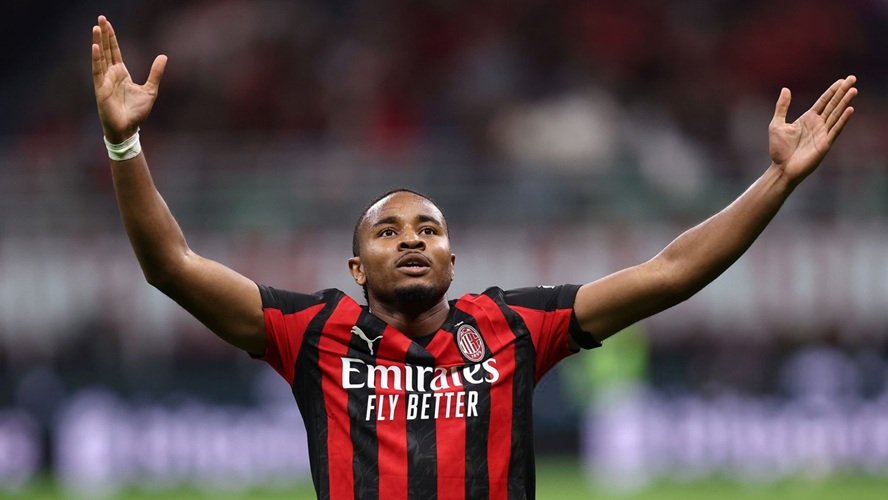
  • To Buy or Not to Buy: The Case for González and Nkunku at Jaissle’s Newcastle

    It’s late August 2026, and the mood around St. James’ Park is a volatile cocktail of anxiety and intrigue. The Eddie Howe era ended in late July, making way for the aggressive, high-octane philosophy of Matthias Jaissle.

    The squad has undergone severe “trauma,” to borrow the media’s phrasing. We have lost the beating heart of our midfield with the catastrophic dual exits of Bruno Guimarães and Sandro Tonali, and Anthony Gordon has also moved on. In their place, Ross Wilson has brought in younger, pressing-oriented profiles like Steur, Toure and Bamba.

    As we stare down the barrel of the new season, with Liverpool looming, the transfer rumor mill is entirely focused on two high-profile names: Nico González (Manchester City) and Christopher Nkunku (AC Milan).

    With Jaissle heavily favoring an aggressive 4-2-3-1 system defined by high pressing, verticality, and rapid transitions (the classic Red Bull DNA), let’s look at the actual facts, dive into the Opta stats from last season, and make a case for who Newcastle actually needs.

    The Case for Nico González

    The Profile: 24-year-old Central/Defensive Midfielder. Right-footed. The Rumor: Newcastle have reportedly held exploratory talks with Manchester City, looking at a potential £34m deal to pry the Spaniard away from the Etihad.

    The Stats & Tactical Fit: Make no mistake: Nico is a 24-year-old midfield metronome, built in the Spanish academy mold but hardened by the physical rigors of elite European football. When you look at his Opta data from last season at Manchester City, he doesn’t just pass the eye test; he defines the modern number six role.

    • Elite Press Resistance: Playing in Guardiola’s ecosystem requires flawless ball retention. Last season, Nico recorded an 88.4% pass completion rate while under active pressure. This places him securely in the top 1% of all midfielders across Europe’s top five leagues. He possesses the physical frame (6ft 2in) to shield the ball and the technical close control to pivot out of danger—the exact trait we desperately miss without Guimarães.
    • Progressive Passing: He operates brilliantly as a deep-lying progressor. He averaged 8.6 progressive passes per 90 minutes (ranking in the top 2%). His line-breaking passes into the final third are exactly what Jaissle needs to trigger rapid transitions.
    • Defensive Anchor: He isn’t just a luxury passer. Nico averaged 5.4 possessions won in the middle third per 90, sitting in the 98th percentile for defensive actions leading to a counter-attack.

    Why we should sign him: The exits of Bruno and Tonali have left a gaping, terrifying void in the center of the park. Jaissle’s 4-2-3-1 relies on a robust double pivot to protect the backline while pushing the attacking quartet forward. Partnering Nico González with a dynamic runner like Jacob Ramsey or a seasoned enforcer like Joelinton creates an instantly balanced midfield base. At 24, he fits the timeline perfectly: experienced enough to start immediately, but young enough to be a cornerstone for the next five years.

    The Case for Christopher Nkunku

    The Profile: 28-year-old Attacking Midfielder / Number 10. The Rumor: Newcastle have reportedly enquired about the Frenchman, with AC Milan valuing him at a highly accessible £30m.

    The Stats & Tactical Fit: Nkunku’s time since leaving Chelsea hasn’t always been a fairytale, but his revival in Serie A last season proved his underlying metrics remain absolutely frightening when he is fit and operating as a dedicated Number 10. Looking at his Opta data for AC Milan:

    • Elite Shot-Creating Actions (SCA): Nkunku averaged a staggering 6.3 shot-creating actions per 90 minutes. To put that in perspective, that places him in the top 1% of attacking midfielders globally. He is a relentless engine of offensive production.
    • The Half-Space Menace (xAG): He thrives operating in the pockets between the opposition’s midfield and defensive lines. He recorded 0.42 Expected Assisted Goals (xAG) per 90, ranking in the top 2%. He doesn’t just pass the ball; he puts teammates in mathematically highly probable scoring positions.
    • Dual-Threat Output: Beyond creating, Nkunku remains clinical. His combined Non-Penalty Expected Goals plus Expected Assists (npxG+xAG) sat at 0.88 per 90 last season. Operating in the 99th percentile for this metric means he is practically guaranteeing a goal contribution every time he steps onto the pitch.

    Why we should sign him: Quality. Pure, unadulterated, match-winning quality. Newcastle’s summer business has focused heavily on youth and raw potential. We are desperately short on established, Champions League-pedigree operators in the final third.

    Crucially, Jaissle’s 4-2-3-1 demands a dynamic number 10. You cannot play this system effectively without a primary creative hub linking the double pivot to the lone striker. Nkunku is tailor-made for that central attacking midfield role. At £30m, he represents a massive market inefficiency. He is the kind of signing that instantly raises the technical floor of the squad.

    The Verdict: Both, One, or Neither?

    The Recommendation: Sign Both. They solve two entirely different, critical problems.

    Here is the reality of Jaissle’s 4-2-3-1: it is currently a skeleton missing its spine.

    1. The Double Pivot: We cannot survive a Premier League season with a double pivot solely relying on youth (Miley, Steur, Ramsey) or shifting Joelinton out of his best destructive, box-to-box role. Nico González provides the 99th-percentile foundational stability, press resistance, and deep playmaking required to make the formation function from the back. At 24, he is the long-term solution to the Bruno/Tonali trauma.
    2. The Number 10: Without a creative force connecting that pivot to Isak, the system becomes blunt and predictable. Relying on wide players to do all the creating is a recipe for sterile possession. Christopher Nkunku, boasting top-1% shot-creating metrics, is the elite lock-picker this squad is crying out for.

    To say we should prioritize one over the other fundamentally misunderstands the tactical holes currently gaping in this squad. Nico provides the foundation; Nkunku provides the final product. If the new commercial revenues from SumUp and Coca-Cola have bought us SCR headroom, this is exactly where it needs to be spent.

    Get them both on a plane to Tyneside, David Hopkinson.

    What do you think? Either one, or both, or neither? Continue the conversation on X @mytoonarmy #NUFC
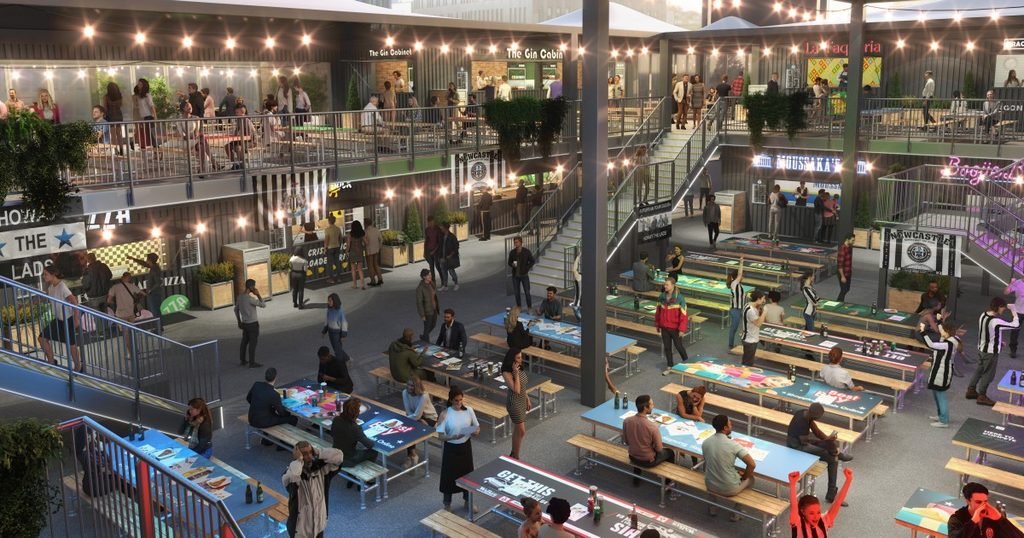
  • Beyond the Pitch: How Newcastle’s Blue-Chip Boardroom Blitz is Funding a £190m Future

    There was a time, not so deep in the annals of Newcastle United’s history, when the club’s commercial strategy amounted to plastering the Gallowgate End in the primary colors of a discount sportswear retailer. St James’ Park was a billboard for a stagnant regime; the club’s balance sheet a testament to managed decline.

    Today, the landscape in the shadow of the Milburn Stand is unrecognizable. The recent announcements of a £15 million training kit partnership with European fintech giant SumUp, alongside a lucrative alignment with global behemoth Coca-Cola for the STACK fan zone, are not just press release fodder. They are the roaring engines of a commercial vehicle designed to crash the Premier League’s established elite.

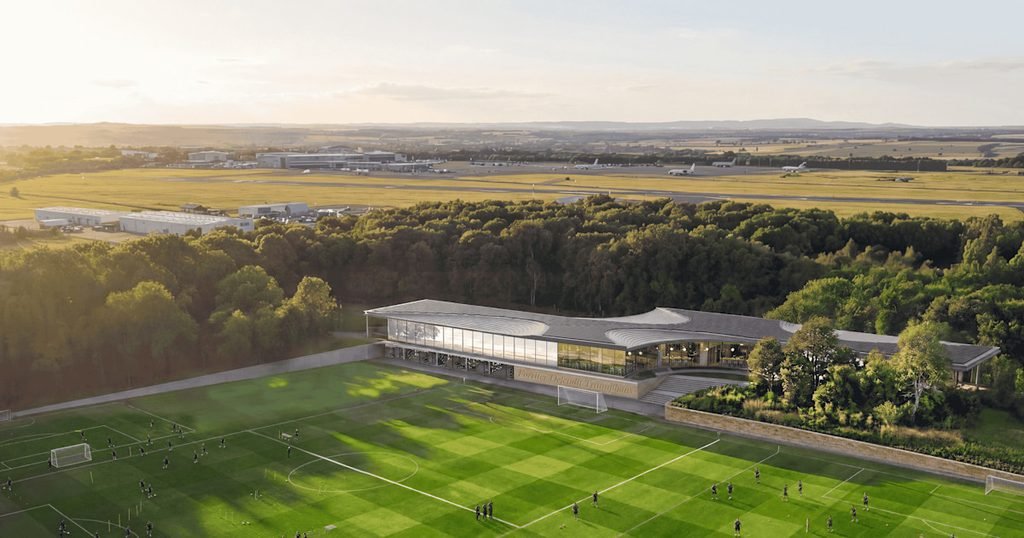
    Coupled with the staggering £190 million blueprint for a state-of-the-art training complex at Woolsington Hall, these boardroom victories dictate everything that happens on the grass. In the modern era, where financial “fair play” rules choke ambition, commercial revenue is the only true currency of progression.

    Here is what this corporate acceleration means for the club, the recruitment team, and the Geordie faithful in both the immediate and distant future.

    The Short-Term: The PSR Pressure Valve

    In the immediate term, Newcastle’s commercial pivot is about one thing: headroom.

    Every time Chief Revenue Officer David Hopkinson inks a new deal, he buys the recruitment department breathing space. The SumUp agreement—worth £5 million a season over three years—might seem like a drop in the ocean of modern football finance. But in the ruthless mathematics of player amortization, a new £5 million-a-year revenue stream equates to the annual accounting cost of a £25 million player signed on a five-year contract.

    Furthermore, these specific deals signal a vital tactical shift. In the early days of the PIF-led takeover, Newcastle relied heavily on Saudi-affiliated businesses—Sela, Noon, Saudia—to rapidly inflate their commercial baseline. While entirely legal and cleared by the Premier League, this approach drew intense scrutiny and triggered the tightening of Associated Party Transaction (APT) regulations.

    By pivoting to undisputed, blue-chip western brands like Coca-Cola and SumUp, Newcastle bypasses the bureaucratic quagmire of APT fair-market-value checks. The money flows faster, the optic is undeniably global, and the Premier League’s regulatory red tape is rendered irrelevant.

    The Coca-Cola alignment, deeply integrated into the wildly successful STACK fan zone outside St James’ Park, also immediately monetizes the matchday experience. It is a highly visible, instantly recognizable stamp of global credibility that signals to the market: Newcastle United is open for premium business.

    The Long-Term: Laying the Foundations at Woolsington Hall

    If the short-term impact of these deals is about greasing the wheels of the transfer market, the long-term reality is entirely about infrastructure.

    The current Benton training base, despite being retrofitted and polished to an impressive standard by the current ownership, remains a ceiling on the club’s potential. To consistently recruit elite, Champions League-caliber talent, a club must offer elite, Champions League-caliber facilities.

    Enter the £190 million Woolsington Hall project.

    You do not fund a nearly £200 million infrastructure project—one that promises to be among the most advanced athletic, medical, and recovery facilities in Europe—without a self-sustaining commercial ecosystem. The SumUp deal, crucially, extends across the men’s, women’s, and academy teams. It is a holistic partnership that, alongside Coca-Cola’s global backing, proves Newcastle can leverage its brand across all demographics and tiers of the club.

    In the next three to ten years, this commercial blueprint aims to close the staggering revenue gap between Newcastle and the “Big Six.” Internal club targets have long whispered about adding an additional £200 million per year to the commercial coffers by the turn of the decade. Diversifying the portfolio with fintech innovators and international beverage conglomerates proves that the club is not relying solely on the broadcast money or Champions League qualification windfalls to balance the books.

    The Verdict

    For decades, Newcastle United was a sleeping giant, anesthetized by a lack of vision. Now, it is awake, and it is hungry.

    The SumUp and Coca-Cola deals are the absolute antithesis of the Ashley era. They represent a club operating with forensic precision in the corporate sphere, utilizing global partnerships to fund local infrastructure like Woolsington Hall and the STACK.

    On Tyneside, fans rightly obsess over the number 9 shirt, the defensive high line, and the weekend’s points tally. But the brutal reality of modern football is that the trophies of tomorrow are financed by the commercial partnerships of today. Newcastle United isn’t just trying to buy a seat at the top table anymore; they are methodically building their own.

    What do you think of these developments? How will the new training ground supercharge our future? Continue the conversation on X @mytoonarmy #NUFC
  • Match Preview: Newcastle United v Liverpool — Isak’s Return, Iraola-Ball, and the Tactical Crucible Facing Newcastle 2.0

    Mohamed Salah is history at Anfield, replaced by a £125m former Gallowgate idol leading the line. As Andoni Iraola brings high-velocity gegenpressing to Tyneside, Matthias Jaissle’s rebuilt U-25 squad faces its ultimate opening-day stress test.

    The Scene: Atmospheric Opening at St. James’ Park

    If the Premier League fixture computer wanted to subject Newcastle United’s summer overhaul to an immediate, unforgiving stress test, it couldn’t have scripted a more dramatic opening scene. Recent seasons have seen this fixture to be quite explosive and almost always, very dramatic.

    When the team buses pull up outside the Milburn Stand this Sunday afternoon, the atmosphere along Strawberry Place will carry a sharp edge of intrigue mixed with raw anticipation. Just seven weeks after liquidating over £230m worth of international talent—bidding an emotional farewell to Eddie Howe and clearing out the established dressing-room leadership spine—38-year-old German tactician Matthias Jaissle takes his place in the home dugout for his first competitive English fixture.

    The summer of financial recalibration is officially over. The spreadsheets have been closed, the UEFA compliance forms submitted, and now the football takes center stage under the St. James’ Park lights. For a fan base that spent June and July watching iconic names depart, Sunday at 4:30 PM offers the first tangible look at “Newcastle 2.0″—a team rebuilt from the balance sheet up.

    The Emotional Crucible: Alexander Isak Returns to Tyneside

    Forget tactical chalkboards for a second—the emotional centerpiece of Sunday afternoon sits squarely on the shoulders of Liverpool’s number nine. Alexander Isak leads the line for the visiting Reds against his former club.

    Having departed St. James’ Park in a record-breaking £125 million transfer to Anfield, Isak arrives looking to anchor a brand-new era on Merseyside. With Mohamed Salah having called time on his legendary Liverpool career, Isak is now the undisputed focal point of a redesigned Liverpool attack.

    How the Gallowgate End greets their former talisman will set the atmospheric temperature early. Isak was idolized on Tyneside, and watching him line up in opposition red will cut deep for many in the stands. But inside the home dressing room, sentimentality won’t feature on the pre-match whiteboards. For Newcastle’s central defensive pairing of Dan Burn and Malick Thiaw, stopping Isak’s elite channel movement and explosive second-phase acceleration is priority number one.

    The Balance Sheet Subtext: Commercial Scale vs. Rebuilt SCR Agility

    From an executive suite perspective, Sunday’s clash isn’t merely a fight for three opening-day points—it is a head-on collision between two fundamentally different financial operating models in top-flight European football.

    Liverpool represent the benchmark for mature, global commercial scale. Operating with commercial revenues in the hundreds of millions of pounds more than Newcastle’s and an international fan monetization footprint cultivated over decades, Liverpool generate huge organic cash flows. This allows Fenway Sports Group to absorb heavy wage bills and premium amortized transfer fees while remaining comfortably within UEFA’s 70% Squad Cost Ratio (SCR) framework.

    Newcastle, by contrast, are executing a high-wire structural pivot. Operating under strict Premier League SCR rolling parameters and active UEFA settlement monitoring after recent fines, Chief Executive David Hopkinson and Sporting Director Ross Wilson made the cold, analytical decision to trade peak-value assets. Cashing in on Bruno Guimarães, Sandro Tonali, and Anthony Gordon reset squad cost ratios down to a healthy 68.5%.

    Newcastle’s new blueprint relies entirely on recruitment agility—buying sub-25 profiles like Bazoumana Touré (£42.8m), Aladji Bamba (£30m), Sean Steur (£19.6m), and Amar Dedić (£30m+) on managed salary tiers. Defeating Liverpool on Sunday wouldn’t just validate Jaissle’s pressing system; it would prove that sharp, agile asset building can disrupt established commercial heavyweights.

    Tactical Battlegrounds: Iraola-Ball vs. Jaissle’s High Press

    Following Andoni Iraola’s arrival to take the reins at Anfield after leaving Bournemouth, Liverpool have pivoted sharply away from controlled possession toward pure, high-velocity “gegenpressing” disruption. Iraola demands relentless physical output, rapid vertical progression, and immediate counter-pressing upon turnover. With Jaissle deploying an equally aggressive Red Bull pressing framework, Sunday promises an explosive, transition-heavy battle.

    The Central Engine Room: Bamba & Steur vs. MacAllister & Szoboszlai

    With Iraola demanding rapid ball progression to the front line the moment possession is won, 20-year-old Aladji Bamba will be crucial as Newcastle’s central enforcer. Forced early into action due to a mysterious injury to the impressive Joelinton, the former Monaco man dominated physical duels during pre-season, but facing Alexis MacAllister and Dominik Szoboszlai represents a significant step up in match cadence. Beside him, 18-year-old Sean Steur must maintain technical composure under Liverpool’s wave of central pressure. If Bamba and Steur can bypass Liverpool’s initial press, Newcastle can break into dangerous space behind their mid-block.

    Flank Overloads: Touré & Hall vs. Kerkez & Frimpong

    Iraola relies on ultra-attacking full-backs—Jeremie Frimpong and former Bournemouth star Milos Kerkez—to push high up the pitch. This leaves massive space in the wide channels during turnovers. Bazoumana Touré’s terrifying acceleration down Newcastle’s left flank, supported by Lewis Hall’s overlapping runs, will be Newcastle’s primary weapon to exploit Liverpool’s high defensive line.

    C. Sweeper-Keeper Under Pressure: Lukáš Horníček’s Debut

    Czech stopper Lukáš Horníček (£25.7m) makes his Premier League debut in goal. Jaissle’s system demands that the keeper play 20 yards off his line to sweep up balls played over Newcastle’s high defensive line. One misjudged charge or mistimed clearance against Isak’s sharp off-the-ball runs could prove fatal.

    Tactical Chalkboard & Projected XI

    Jaissle is expected to hand competitive debuts to four summer arrivals—Horníček, Dedić, Bamba, and Touré—while Iraola unleashes his new-look 4-2-3-1 setup featuring Florian Wirtz and Alexander Isak as the main thrusts of his team.

    Strategic Verdict & Looking Forward

    Opening-day fixtures are notoriously difficult to predict, doubly so when both clubs are stepping into new managerial paradigms. Iraola’s arrival guarantees a frantic, basketball-like transition game. While Liverpool possess formidable firepower through Isak and Wirtz, their high-risk defensive line will offer space to Newcastle’s fresh wingers.

    Under the St. James’ Park lights, Jaissle’s pressing machine can catch Liverpool before Iraola’s tactical automation fully settles. Expect noise, chaos, and a dramatic start to Newcastle 2.0.

    MTA Score Prediction: Score draw, Newcastle United 2–2 Liverpool.

    What are your tactical predictions for opening day at St. James’ Park? How do you think the Gallowgate should react to Isak’s return? Continue the conversation on X @mytoonarmy #NUFC
  • Inside Newcastle’s Summer Reset: Financial Sanity, A Dressing Room Vacuum, and Matthias Jaissle’s New Order

    Bruno, Tonali, and Gordon are gone. The old leadership spine has been dismantled. But behind the shock of a £230m fire sale lies a calculated, ruthless attempt to rebuild Tyneside from the balance sheet up.

    Walk down Strawberry Place this summer and the mood isn’t one of panic, but a grim, pragmatic acceptance. The fast-track dream of linear, frictionless progress from takeover to European royalty was always going to hit a wall of financial regulation eventually. That wall arrived in July 2026.

    Eddie Howe’s emotional departure after nearly five years—a tenure that brought the historic 2025 EFL Cup trophy to the Gallowgate end—marked the end of Newcastle’s first post-takeover chapter. In his place steps 38-year-old German manager Matthias Jaissle, armed with a Red Bull-honed tactical clipboard and a squad that looks radically different from the one that dragged this club back into Europe.

    Make no mistake: 2026/27 is a reset year, the start of a new era. The summer sale of Bruno Guimarães to Arsenal (£75m), Sandro Tonali to Tottenham (£92.5m), and Anthony Gordon to Barcelona (£69.3m) sent shockwaves through the fan base. But if you talk to senior figures inside the club, this wasn’t a fire sale born of weakness—it was a cold, mathematical necessity to keep the club compliant and liquid.

    The Balance Sheet Reality: Why the Fire Sale Happened

    For two years, Newcastle lived on a financial tightrope. Having pushed Profitability and Sustainability Rules (PSR) to the absolute margin during the initial squad build, the club entered UEFA’s formal settlement monitoring window. UEFA’s Squad Cost Ratio (SCR)—which caps player wages, agent fees, and transfer amortization at 70% of total revenue—left Chief Executive David Hopkinson and Sporting Director Ross Wilson with zero margin for error.

    Newcastle’s SCR had spiked near an uncomfortable 76%. Retaining elite stars on mega-wages while continuing to pay off massive amortized transfer installments was mathematically unsustainable without European prize money. Cashing in on Bruno, Tonali, and Gordon generated over £230m in gross sales, injecting over £100m in pure net trading gain. That single window slashed squad cost ratios back to a healthy 68.5% and saved Newcastle from severe UEFA squad-registration sanctions.

    An Empty Leadership Corridor at Darsley Park

    Balance sheets don’t step out onto the pitch at 3:00 PM on a Saturday. The real worry inside the training ground isn’t just about lost goals or progressive passes—it’s the sudden, dramatic gutting of Newcastle’s dressing room culture.

    Kieran Trippier was the standards-setter of the post-takeover era. Bruno Guimarães was the emotional beating heart. With both gone, alongside Tonali and Gordon, Newcastle have effectively stripped away their entire leadership group in the space of a few months.

    Look down the spine of the squad now, and the changing of the guard is stark:

    • The Goalkeeping Situation: Long-time number one Nick Pope finds himself on shaky ground. The arrivals of Czech international Lukáš Horníček (£25.7m) and French starlet Ewen Jaouen (£18.5m) signal a change towards a modern, proactive sweeper-keeper. Pope, a traditional shot-stopper, is no longer first choice and could even leave before deadline day.
    • Fabian Schär’s Role: Schär’s passing ability remains elite, but in Jaissle’s ultra-aggressive, high-line defense, his lack of recovery pace has pushed him out of the guaranteed starting XI in favor of Malick Thiaw and Sven Botman.
    • Midfield Hierarchy: The engine room of the team has been completely revamped with younger, more tactical profile fits for Jaissle’s pressing engine.

    When games turn chaotic or away trips become hostile, who calms the waters? Expecting 20-year-old Aladji Bamba or 18-year-old Sean Steur to manage Premier League game states under intense pressure is a major gamble.

    The Pre-Season Spark: Touré, Bamba, Steur & Dedić

    Yet, if you watched Newcastle during pre-season, it was impossible not to feel a surge of intrigue. The new recruitment model—focusing exclusively on sub-25 players with high ceiling potential—has introduced raw, exciting talent into Jaissle’s setup.

    Bazoumana Touré (£42.8m, Hoffenheim): The Ivorian winger was a revelation on the left flank during summer friendlies. Possessing terrifying acceleration and a willingness to commit full-backs 1v1, Touré showed glimpses that he can replicate Anthony Gordon’s direct counter-attacking threat. But pre-season space is very different from facing a packed Premier League low block on a wet rainy afternoon in November.

    Aladji Bamba (£30m, Monaco): A human wrecking ball in midfield. Bamba dominated central physical duels in pre-season, displaying incredible stamina, ball recovery metrics, and press-resistance under tight pressure. The big question: how quickly will he adjust to Premier League refereeing standards and the sheer speed of English transitions?

    Sean Steur (£19.6m, Ajax): At just 18, Steur plays with a calm poise that belies his age. Operating in central pockets, his body shape and progressive passing brought grace to Newcastle’s build-up play. But he will need time to adjust to the physical demands of English midfield battles.

    Amar Dedić (£30m+, Benfica): The newly signed Bosnian full-back gives Jaissle an instant tactical anchor. Having worked in similar pressing systems, Dedić’s ability to invert into midfield or overlap down the right adds tactical versatility Newcastle desperately lacked last term.

    The Tactical Chalkboard: Jaissle’s Likely XI

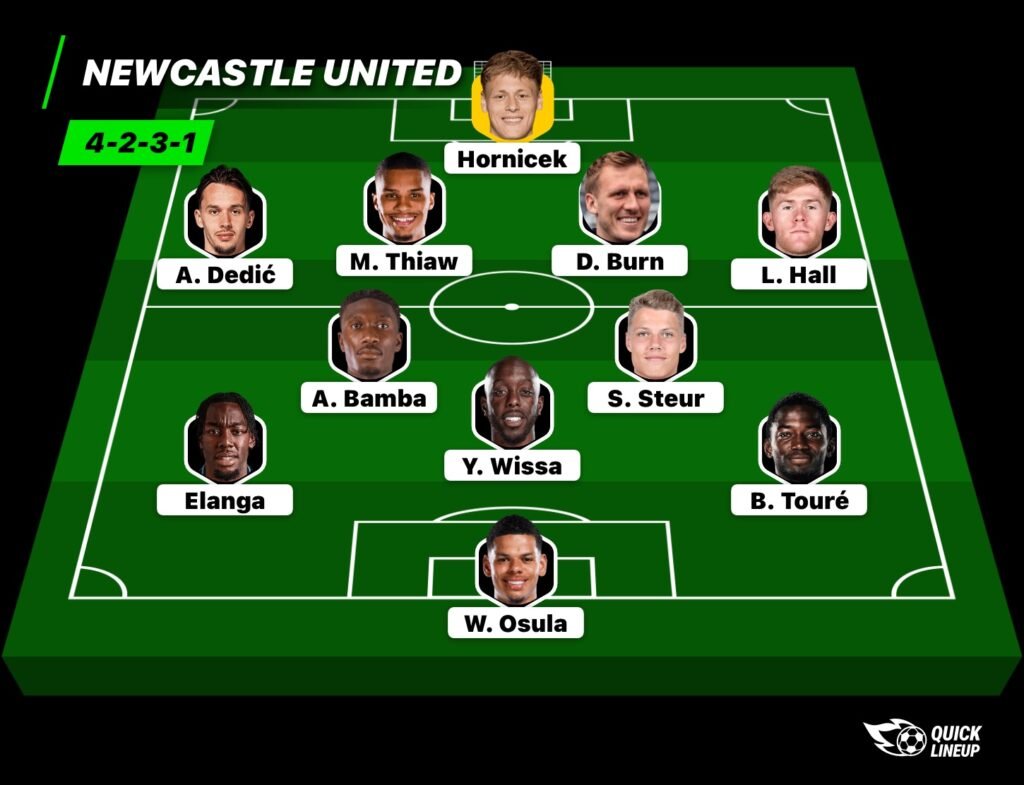
    Jaissle favors a vertical 4-2-2-2 / 4-2-3-1 hybrid that relies on intense counter-pressing and immediate forward passing. Based on pre-season dynamics, this is Newcastle’s projected best XI for Matchweek 1:

    Projected Best XI (4-2-3-1):

    Horníček (GK); Dedić (RB), Thiaw (CB), Burn (CB), Hall (LB); Bamba (DM), Steur (CM), Ramsey (CM); Elanga (RW), Wissa (ST), Touré (LW).

    The Top-8 Battle: Who Are We Fighting?

    Forget West Ham—they were relegated last season and are out of the picture. Newcastle’s real battle in 2026/27 is a dogfight for 6th to 10th position against a fiercely competitive mid-pack:

    • Nottingham Forest: Now under Oliver Glasner—fresh off leading Crystal Palace to European silverware—Forest look dangerous. Glasner has installed his well-drilled 3-4-2-1 system and added marquee defender Ousmane Diomande. They will be a major rival for European places.
    • Aston Villa: Unai Emery’s side maintained squad stability, strengthened their midfield depth with an impressive youngster of their own, Johan Manzambi, and remain a direct rival for the top six.
    • Brighton & Hove Albion: Brighton’s recruitment machine keeps churning out high-grade talent. Their pre-season results suggest another strong European push.
    • Spurs & Fulham: Spurs (armed with Sandro Tonali) are aiming higher, while Marco Silva’s Fulham remain a tough, tactically disciplined opponent.
    • Sunderland: Local rivals who beat us home and away last season. There are many who would be content for revenge this season. With an unchanged squad and a talented young manager, Régis Le Bris, they may once again push the Top 10.

    The Verdict: Playing the Long Game

    This will not be a season of seamless, beautiful victories every weekend. There will be frustrating stumbles, defensive miscommunications, and quiet afternoons as Jaissle’s young squad adapts to the brutal rhythm of the Premier League.

    A 6th to 10th place finish, European qualification, and a deep cup run would represent a successful year one of Newcastle 2.0. The big-name departures hurt, but for the first time in years, the club’s financial structure and sporting vision are finally working in harmony.

    Continue the conversation on X @mytoonarmy #NUFC