Fifty per cent. That’s how much David Hopkinson wants Newcastle United’s revenues to grow between now and 2030. He reckons the Premier League’s old aristocracy — the clubs Newcastle is chasing — will manage four, compounded, over the same stretch. It’s a wide gap to close, and under the division’s new financial rules, revenue isn’t just a boardroom concern any more. It’s the whole game. Newcastle’s plan, in Hopkinson’s own words, is to “catch them from behind.”
Why revenue is the whole game now
The Premier League swapped its old Profit and Sustainability Rules for a new system this season: Squad Cost Ratio, which caps what a club can spend on wages, transfers and agents’ fees at a fixed share of the revenue it generates — 85 per cent domestically, a tighter 70 per cent for anyone in Europe. It passed by the narrowest possible margin last November, fourteen votes to six, the exact minimum required. Newcastle was one of the fourteen.
Hopkinson, a year removed from Madison Square Garden Sports — the Knicks, the Rangers, leagues built on hard salary caps where every club fishes from “about the same size bag of money” — finds the contrast instructive. Under SCR, the correlation between wage bill and league position is, in his words, “incredibly tight,” almost one to one. And the size of the envelope a club can spend is “directly correlated to the revenues you generate.” The consequence is structural: clubs already earning more get bigger envelopes to earn even more from, while anyone starting behind inherits a gap that widens on its own. “It’s frustrating when it rains,” he said of a system his own club voted through — an admission that the rules he backed are also the rules now working against him.
It also explains why Public Investment Fund ownership doesn’t simply solve the problem. PIF capital can still build things outright — a new £190 million training complex is going up at Woolsington, near Newcastle Airport, funded as equity rather than revenue. What it cannot do, under SCR, is buy squad-cost headroom the way a benefactor once might have. What Newcastle is allowed to spend on players is a function of what Newcastle itself earns. Nothing else counts.
The self-help ledger
Hopkinson calls the response “self-help,” and some of it is already on the books. The training ground’s naming-rights partner, Knox Hydration, and the club’s newer training-kit sponsor, SumUp, between them now generate around £11 million a year in commercial income that didn’t exist twelve months ago — a figure Hopkinson cited himself and one independently reported elsewhere. Knox’s separate front-of-shirt agreement, worth roughly £60 million through to the end of the 2028-29 season, has replaced the outgoing Sela deal entirely. The next lever he’s pulling is retail: a “monobrand” operation in which Newcastle becomes both manufacturer and vendor of its own product, rather than licensing that margin away to a kit supplier.
The Europe feedback loop
The mechanism cuts both ways, and Newcastle already knows the downside. Finishing twelfth last season shrank this year’s SCR envelope directly — missing Champions League football costs revenue, and revenue is now the only currency that buys squad spending. The bill arrived quickly: Victor Muñoz chose Liverpool’s Champions League football over a Newcastle side with no European football at all this season, and Johan Manzambi picked Aston Villa’s £59.5 million bid over Newcastle’s own £49 million offer, for the same reason. Missing Europe doesn’t just cost prestige. Under SCR, it costs the money that buys the players who might get you back into it.
Growing outward, not upward
Crucially, Hopkinson doesn’t see existing supporters as where that fifty per cent has to come from. Asked directly about ticket prices, he was unambiguous that he isn’t looking there, citing near-daily contact with the Fan Advisory Board and the Newcastle United Supporters Trust as evidence the club knows exactly how sensitive that ground is. Instead, the growth target points outward: global retail, VIP hospitality, and revenue from supporters who live outside this market entirely. Eventually, stadium capacity becomes the biggest lever of all — more seats simply mean more revenue — though whether that means renovating St James’ Park or building new remains, in his telling, genuinely undecided. What he’s ruled out is any shortcut: an AI-generated stadium render, he said, “is not really a transactable option.”
David Hopkinson, interview 4 Sept
None of this arrives quickly. Hopkinson is explicit that 2030 is the checkpoint, not this season, and that the plan requires Newcastle to out-earn its way up a table it can no longer simply outspend its way up. But for a club whose finances have usually been discussed in terms of what the owners might inject, hearing the chief executive talk instead about training-kit sponsors and retail margins, in the same breath as fourteen-to-six regulatory votes, is itself the clearest sign of where Newcastle’s actual advantage is now expected to come from.
Does it sound like the club’s plan to increase revenues and catch the bigger teams work? What will it take for us to achieve success? Join the conversation on X @mytoonarmy #NUFC
Matias Fernandez-Pardo touched down at Newcastle Airport on deadline day eve with a medical to complete and a nation’s transfer trackers refreshing every ninety seconds. By the time St James’ Park’s summer business was done, the Belgian winger’s £51m arrival from Lille had pushed Newcastle’s outlay past £275m for the window — fourth-highest in the Premier League, behind only Manchester City, Chelsea and Tottenham. Multiply that scramble by twenty clubs, add in a World Cup year’s worth of urgency, and you arrive at the number now rippling through boardrooms from Tyneside to the City of London: Premier League clubs spent somewhere between £3.2bn and £3.48bn this summer, depending on which data house you trust, comfortably eclipsing last year’s record and confirming what anyone watching deadline day already suspected. English football’s transfer market no longer has a ceiling — only a series of records waiting to be broken by the following September.
A decade of compounding numbers
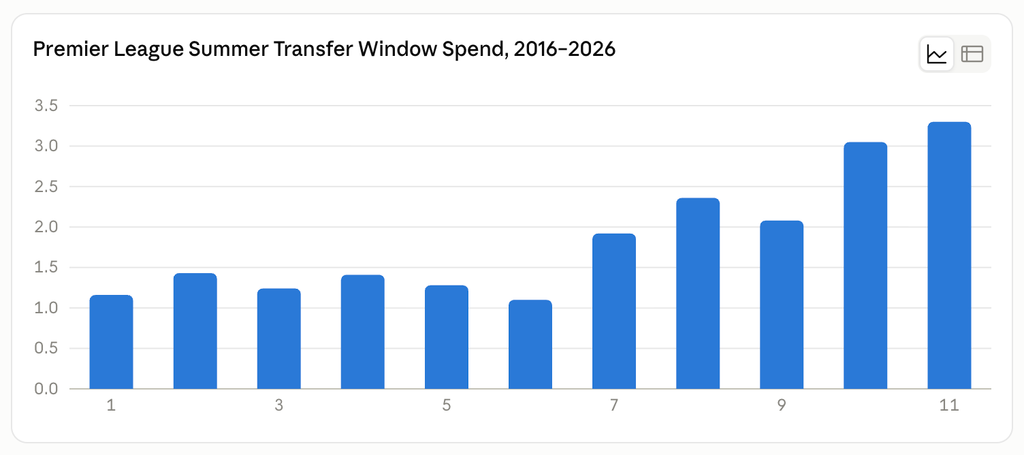
Ten years ago, the entire Premier League spent £1.16bn across a single summer window — a figure that felt seismic at the time, driven by the first instalment of a new £5.1bn domestic broadcast deal. Today, that sum wouldn’t cover Manchester City’s spending alone this window; the champions committed £440.3m on their own, more than the whole division managed in 2016. Sky Sports’ own analysis puts this summer’s outlay at “almost three times the amount clubs spent a decade ago” — and the shape of that growth curve tells its own story.
The climb wasn’t smooth. Summer 2017 pushed the record to £1.43bn on the back of another broadcast uplift. The pandemic years flattened the curve — as recently as 2021, the all-time single-window record stood at a comparatively modest £1.4bn. Then came the snap-back: £1.92bn in 2022, a leap to £2.36bn in 2023, a brief dip to £2.08bn in 2024 as clubs caught their breath under Profit and Sustainability Rules scrutiny, before the market detonated. Summer 2025 smashed through £3bn for the first time, propelled by Alexander Isak’s British-record £125m move from Newcastle to Liverpool. This summer did it again, breaking £3bn for a second consecutive year and, by some trackers, setting a fresh all-time high.
The steepness sits in the acceleration, not the average. Analysis from the football finance newsletter Swiss Ramble calculated that the Premier League spent more than £9.6bn across its four most recent transfer windows — nearly double the £5.1bn spent in the preceding four-year stretch. Put another way: it took the division roughly fourteen years, from the current transfer system’s introduction in 2003, to first crack £1bn in a single window. It has taken barely half that time to triple it.
Why the market keeps climbing
Three forces are compounding at once, and none of them show signs of easing.
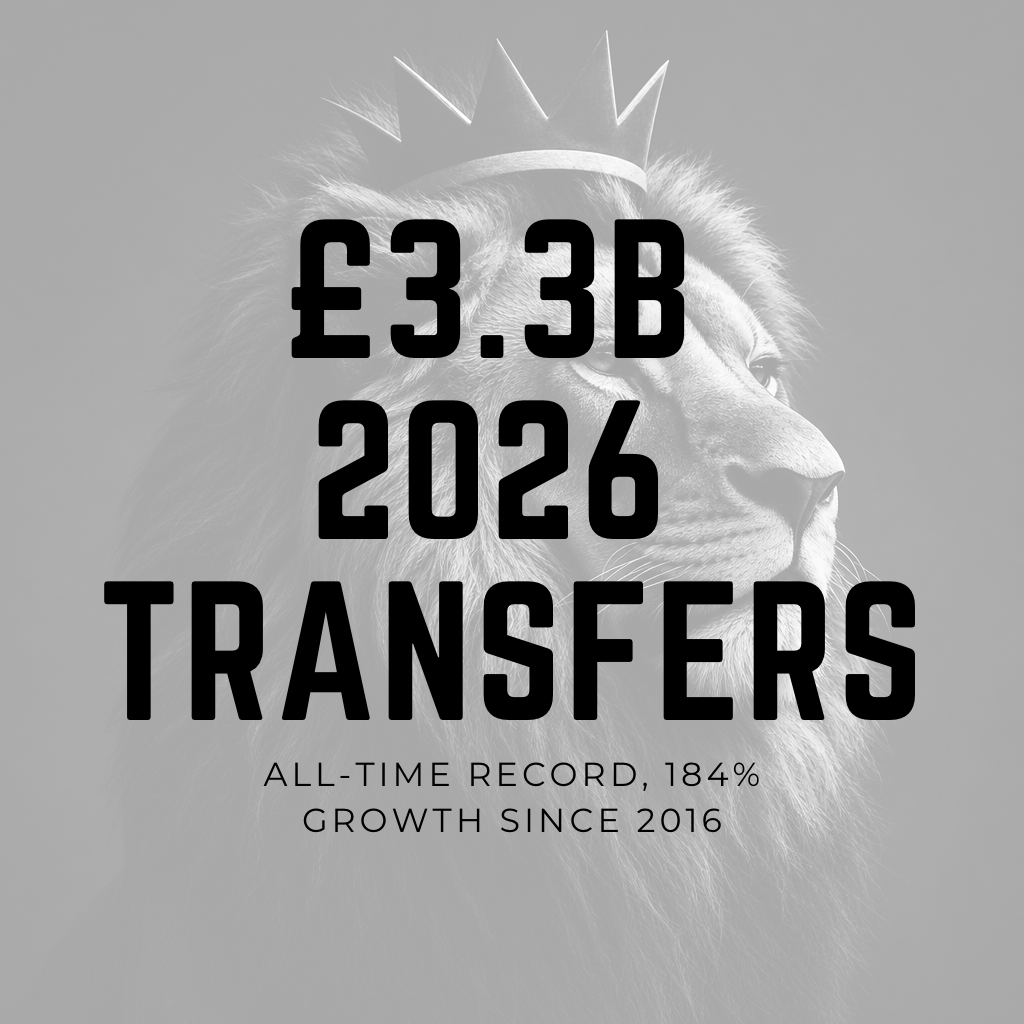
184% spending growth since 2016
The first is simple: broadcast and commercial revenue keeps growing, and clubs spend against what they expect to earn, not what they’ve already banked. Every uplift in the Premier League’s domestic and overseas rights packages since that original 2016 windfall has fed directly into transfer budgets, because clubs know rivals will spend theirs regardless.
The second is accounting mechanics. Under both the outgoing Profit and Sustainability Rules and the incoming Squad Cost Ratio system — replacing PSR from this season, 2026/27, after Premier League clubs voted through the change — transfer fees aren’t booked as one lump sum. They’re amortised, spread evenly across the life of a contract. A £100m signing on a five-year deal shows up as £20m a year on the books, which makes eye-watering headline fees far more palatable against annual revenue than the number itself suggests. Clubs have responded by lengthening contracts to soften the annual hit, which in turn makes bigger fees easier to justify upfront.
The third is regulatory transition itself. This is the first transfer window conducted with SCR on the horizon rather than PSR’s rolling three-year loss cap. SCR ties permitted spending on wages, transfers and agent fees to a fixed share of revenue — 85% for clubs playing only domestically, dropping to 70% for anyone in Europe. Crucially, that’s a percentage of turnover, which means a club’s spending ceiling rises automatically as its revenue does, with no equivalent brake on the biggest six clubs whose commercial and European income dwarfs the rest of the division. Unused allowance can even roll over between seasons, giving well-run clubs further incentive to spend up to the line rather than bank a surplus.
Layer on top of that what one football finance academic, Professor Rob Wilson of UCFB, described to City AM as a genuine fear of missing out — the calculation, increasingly explicit in boardrooms, that standing still while direct rivals strengthen costs far more in relegation risk or missed European qualification than overpaying by £10m or £20m on a targeted signing. And layer on sovereign and state-backed ownership models, of which Newcastle’s PIF-controlled structure is the most obvious Tyneside example, which have injected a different risk appetite into a market where cash-rich challengers can absorb short-term losses that traditional family or plc ownership structures could not.
Sustainable, or simply recycled?
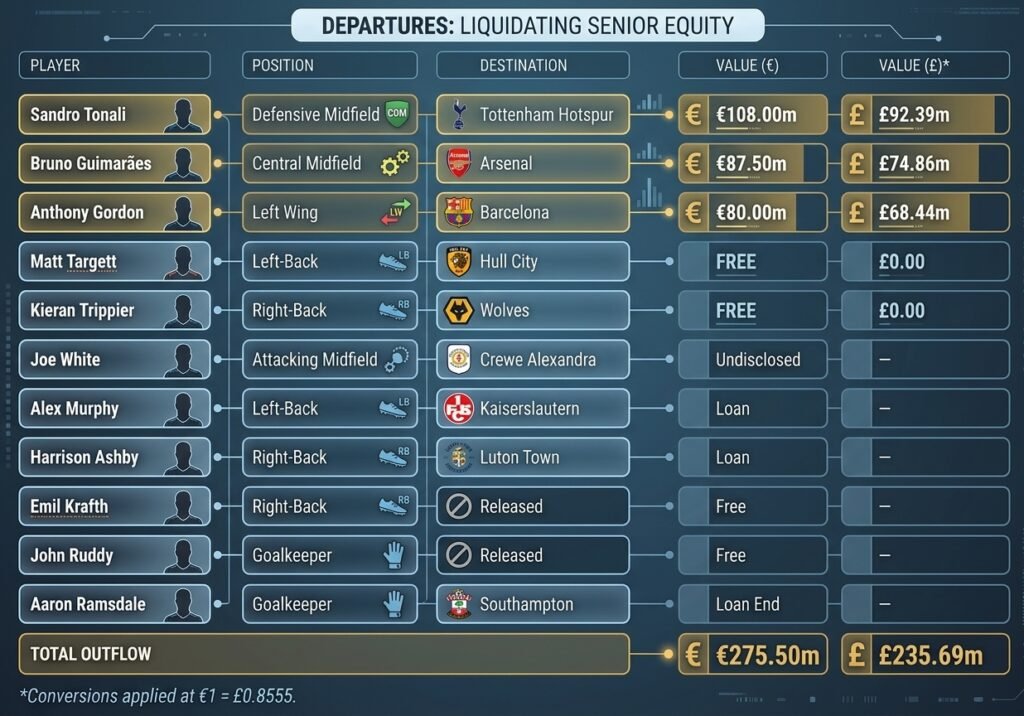
Here the picture gets more interesting than the headline figure suggests, and Newcastle’s own summer is the clearest illustration of it. This was not simply PIF money flowing outward. St James’ Park sold its spine to fund the rebuild: Sandro Tonali to Tottenham for £92.5m, Bruno Guimarães to Arsenal for £75m, Anthony Gordon to Barcelona for £68m — roughly £236m recouped from three of the dressing room’s most important players, reinvested largely in players under twenty-four. That is not the behaviour of a club with an open chequebook and no constraints; it is the behaviour of a club navigating PSR discipline right up until the rules change beneath it, forced to sell its best players to buy its next ones. Even state-backed ownership, in other words, still has to balance the books under the current framework — sustainability, for Newcastle at least, has meant painful player trading as much as reckless spending.
£125m, Enzo Fernandez is the most expensive transfer of the summer
That’s the case for optimism. The harder question is what the market looks like from outside the top of the table. Manchester City’s £440m gross outlay this summer, or Chelsea’s £342m, sits alongside Premier League new-boys and mid-table sides working with a fraction of that firepower and a £39m three-year PSR loss cap rather than the established clubs’ £105m ceiling. Crystal Palace co-owner John Textor put the underlying grievance bluntly at the Financial Times Business of Football summit earlier this year, arguing the financial rules are built to protect clubs that already generate significant revenue from being caught by those that don’t. SCR doesn’t resolve that tension so much as formalise it: tying spending power to existing revenue essentially locks in the current hierarchy, because the clubs already earning the most from global broadcast deals, Champions League football and commercial partnerships get to spend the most, while newly promoted or historically smaller clubs are permitted to compete only up to a ceiling defined by revenue they don’t yet have.
The macro risk for the division is one of its own making. The Premier League’s global commercial value rests on its billing as English football’s greatest asset — the most unpredictable top flight in world football, where mid-table sides can beat champions and a top-half finish is never guaranteed. A transfer market compounding at close to 20% a year, concentrated overwhelmingly among six or seven clubs with the deepest revenue bases, risks calcifying precisely the competitive uncertainty that makes the league worth £3bn a summer to broadcast in the first place. For a club like Newcastle — big enough in ambition and ownership to compete at the spending table, but still building toward the revenue base of the traditional elite — the coming SCR era will test whether Tyneside can keep trading its way up the table, or whether the accounting now simply confirms who was always going to stay at the top.
What it costs the fan on the Gallowgate
None of the £3.3bn moves through a supporter’s wallet directly. Transfer fees are financed by broadcast contracts, Champions League prize money and commercial deals struck in boardrooms far from Barrack Road, not by the price of a matchday pie. But ask a fan queuing at the turnstiles whether the arms race feels distant, and the honest answer is no.
Newcastle’s own season ticket price rose 5% for 2026/27, the fourth successive year of increases, drawing criticism alongside Manchester United even as the club spent £275m rebuilding the squad that same summer. Across the division, 13 of the 20 clubs raised prices again this season, and 115 supporter organisations and Fan Advisory Boards backed the Football Supporters’ Association’s “Stop Exploiting Loyalty” campaign for a two-year freeze — rejected almost everywhere, bar a handful of clubs including Manchester City, Nottingham Forest and Tottenham, who chose restraint rather than necessity. The average Premier League season ticket now sits at a record £535. None of that is transfer spending landing in a supporter’s bank statement as a line item, but it is the same clubs, flush with the same broadcast windfall, asking fans to absorb rising costs in the same window they spend nine figures on a winger barely out of his teens.
The subtler cost is emotional rather than financial. At £50m-£90m a head, a signing is rarely allowed to develop quietly — expectation arrives with the fee attached, and patience for a player finding his feet shrinks in proportion to what he cost. Newcastle said goodbye to Sandro Tonali, Bruno Guimarães and Anthony Gordon inside nine weeks this summer, three players supporters had watched grow into folk heroes since 2022, and absorbed that loss the way this era increasingly demands: quickly, and in service of a rebuild rather than treated as a betrayal. Attachment to a matchday XI now competes with the accounting reality that almost every player is, eventually, an asset waiting to be monetised.
Set against that is the football itself, which by most measures has never been better to watch. Four of the eleven most expensive transfers in history happened this summer alone, three of them Premier League deals, and the calibre arriving at St James’ Park — Woltemade, Elanga, Fernandez-Pardo — would have been unthinkable for a mid-table English club a decade ago. That is the trade a supporter is actually being asked to make: a faster, more disposable relationship with the players wearing the shirt, in exchange for a standard of football no previous generation of Geordies got to watch, even if the price of getting through the gate keeps climbing alongside it. Whether that trade feels worth it has less to do with the spreadsheet than with what a fan actually goes to St James’ Park for in the first place.
Do you think the massive spending has made the Premier League “better”? How much higher can it go? Join the conversation on X @mytoonarmy #NUFC
Eleven o’clock on Tuesday night, and the ledger finally closes: £266.4m spent, £236m banked, three full internationals sold inside nine weeks. By any measure that is one of the more violent squad turnovers English football has seen in a single window. That it happened without the finances buckling, without a manager-less panic, and without a single deal that reads as desperate on Wednesday morning, tells you rather more about Ross Wilson than any individual signing does.
Start with the conditions he was working under, because they matter more than the transfer graphics ever will.
The inheritance
Paul Mitchell walked out of the sporting director’s office in June 2025, eleven months after arriving to succeed Dan Ashworth. Newcastle went into last summer’s window — the one that delivered Woltemade at a club-record fee and saw Anthony Gordon fill in as an emergency centre-forward — without anyone formally holding that brief. Wilson didn’t arrive from Nottingham Forest until 11 October, by which point the season was already drifting toward the mid-table finish that eventually arrived: twelfth, five points off Europe, undone at Camp Nou by a Barcelona side that put seven past them in the second leg of a last-sixteen tie. Sunderland finished seventh. The optics were not kind.
So Wilson had less than eleven months in the building — most of it spent doing due diligence on a squad he hadn’t built — before he was asked to sell three of its best players, replace a head coach who resigned on 31 July with three weeks to the season opener, and execute the heaviest rebuild of the PIF era, all while a new Squad Cost Ratio and Sustainability and Systemic Resilience framework replaced the old Profit and Sustainability Rules and started tethering wages and amortisation directly to football revenue. A Scot who cut his teeth at Huddersfield and Southampton before winning Rangers their first league title in a decade doesn’t scare easily, by all accounts. He needed not to.
What went out the door
Sandro Tonali left for Tottenham at £92.5m, a fee that made him Spurs’ record signing on arrival. Bruno Guimarães — the armband, the goals, the player who kissed the badge on the way out — followed to Arsenal for £75m. Anthony Gordon, fresh off a World Cup with England, went to Barcelona for £68m. Kieran Trippier left for Wolves on a free transfer; Matt Targett and Emil Krafth were released outright. Add it up and roughly £236m came in across the summer, three of the dressing room’s most senior voices gone inside a fortnight in June and July.
For a fanbase that had spent four years being asked to trust a process, watching the removal van reverse up to St James’ Park stung. It was meant to. Selling three peak-value, fully amortised assets in the same window a club-record striker was already struggling for form is not a sequence any sporting director enjoys explaining to supporters. What it is, in the coldest accounting terms, is textbook: crystallise the profit on mature registrations before it depreciates, and do it while three separate buyers were prepared to pay top of market for proven Premier League and Champions League output. Newcastle’s FY25 accounts show intangible assets — the book value of the squad — falling from £350.0m to £281.2m across the year to 30 June 2025, even as net assets climbed from £248.3m to £333.0m and retained losses narrowed from £221.1m to £186.4m. That is a club that had already begun trading down its playing assets before this window opened. The summer just finished the sentence.
What came back in
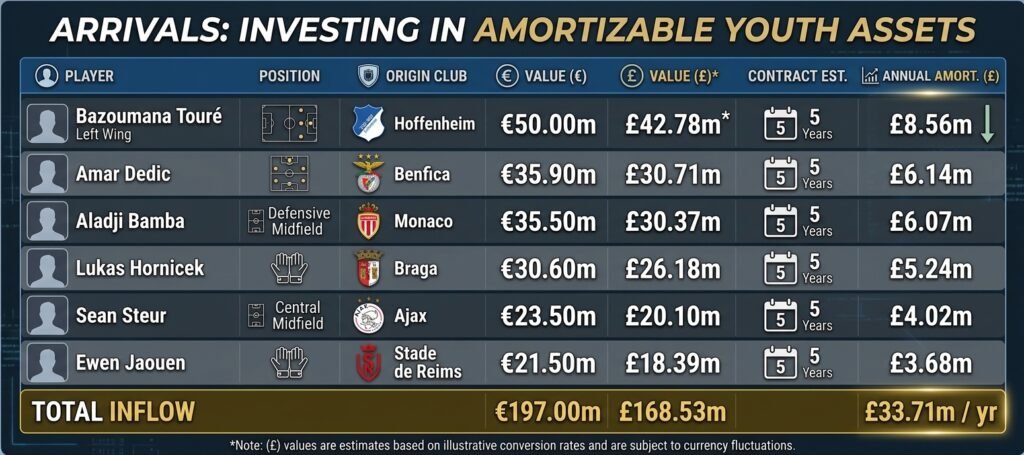
Roughly £215m went straight back out across seven signings before deadline day, and the profile discipline is the tell. Nico González arrived from Manchester City for £48m as the one ready-made starter of the intake, an experienced midfield anchor who was, by most accounts, the best player on the pitch in the 2-0 win at Tottenham. Around him: Bazoumana Touré from Hoffenheim (£43m), Amar Dedić from Benfica (£30m) — a full-back who played under incoming head coach Matthias Jaissle at Red Bull Salzburg — Aladji Bamba from Monaco (£30m), goalkeeper Lukáš Horníček from Braga (£26m), Sean Steur from Ajax (£20m) and a second young goalkeeper, Ewen Jaouen, from Reims (£18m). Bamba and Jaouen are twenty. Steur is eighteen.
Nico Gonzales, dominant No. 6
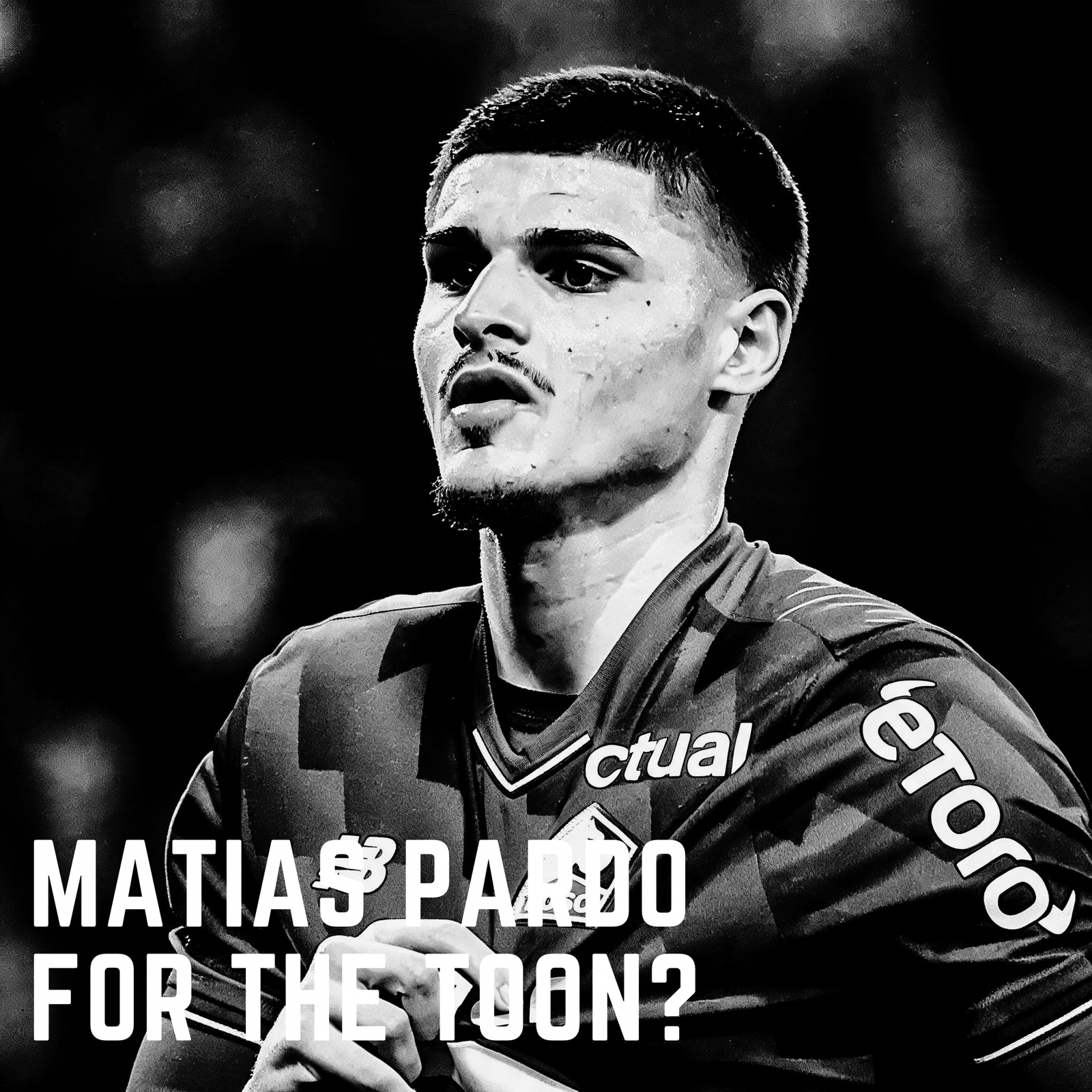
Then, on deadline day itself, the domino that made sense of everything else fell: Matias Fernandez-Pardo, twenty-one, from Lille for £51.4m on a five-year deal, taking the summer’s total spend to £266.4m. This was not a panic buy dressed up as ambition. Lille had frozen him out of training for the better part of a week rather than risk their asset before a deal closed; Newcastle’s opening bid near €40m in early August was returned unopened, and it took a final offer around €60m plus add-ons — with the player’s own resolve softening on his earlier insistence on Champions League football — to get it over the line. A Belgian international who plays off either flank or through the middle, comfortable receiving and carrying into the box, he is the closest thing this squad has to Gordon’s departed creativity, bought a full year younger and on a fee that will amortise gently across five seasons rather than sit as a single painful line in next year’s accounts.
Net spend across the whole window: a little over £30m. Compare that with the £141m net cost of transfers Newcastle contracted for in the twelve months to last summer, against £20m the year before that, and the shape of Wilson’s discipline becomes obvious. This was the heaviest squad overhaul of the PIF era, and it was very nearly self-funding.
The deadline-day edges
The signing explains only half of a good window; what a sporting director declines to do explains the other half. Nottingham Forest had a £10m bid for Jacob Murphy rejected over the weekend, returned with £15m on deadline day, and were rejected again — twice, in the space of a day, for a thirty-one-year-old entering the final year of his contract. Social media did not love the decision. But Jaissle had already spoken of a leadership “vacuum” in a dressing room that lost Bruno, Trippier and Tonali inside one summer, and Murphy is the club’s longest-serving player, 267 appearances deep since arriving from Norwich in 2017. Selling your most experienced pro for late-window cash, with no replacement lined up and a right-hand side already carrying Livramento and Dedić as each other’s only cover, is the kind of “good business” that reads well in a spreadsheet and terribly in a February relegation six-pointer. Wilson and Jaissle judged the football risk correctly, even if it leaves a contract question to resolve before next summer.
Nick Woltemade’s exit tells the same story from the other direction. Newcastle’s club-record signing a year ago at an initial £65m, he had fallen behind Osula, Wissa and Willock in the pecking order under the new head coach and was heading for a loan for weeks — but the move was made contingent on Fernandez-Pardo’s arrival first. Nobody leaves until somebody arrives, was the internal line, and it held: the Belgian’s signature cleared the way for Woltemade to fly to Turin hours later, joining Luciano Spalletti’s Juventus on a season-long loan worth £3.5m to Newcastle, with no obligation to buy. That is asset preservation, not a fire sale — Newcastle get a struggling striker’s wages off the books for a season and retain full control of his valuation heading into next summer, rather than accepting a discounted permanent fee under deadline pressure. Sean Neave, nineteen, was also cleared to find senior football elsewhere on loan, the kind of minor squad-tidying that barely registers against nine-figure fees but matters to a development pathway.
The balance sheet underneath it all
None of this happened in isolation from the boardroom. The club refinanced in July 2025 into a £50m term loan and a £50m revolving credit facility at SONIA plus 2.15 and 2.1 per cent respectively, secured against Premier League central funds and St James’ Park ticket revenue, running to 2028. A further £106.5m of equity funding arrived from PZ Newco in September 2025, on top of £50m raised through the share premium account during the financial year. Record commercial revenue — up 44 per cent to £120.1m, contributing to £335.3m in total turnover — is beginning to look like the off-field engine this ownership always promised rather than a line in an ambition deck. Put simply: Wilson wasn’t just managing a football rebuild this summer. He was managing it inside a financing structure that had just been rebuilt underneath him, against a regulatory framework that changed its rules on the same afternoon the season kicked off, for a chairman’s boardroom that is separately trying to work out how to fund a stadium project north of £1bn.
That he delivered a coherent, positionally sensible, five-years-younger squad within all of that — average age twenty-one among the new intake, a goalkeeping succession plan quietly assembled behind Nick Pope’s thirty-four-year-old frame, a genuine like-for-like creative replacement for Gordon bought at a discount to Lille’s opening valuation — is the kind of execution that doesn’t often get the credit it deserves, because it shows up as an absence of chaos rather than a highlight reel.
What still creaks
Credit isn’t the same as immunity from scrutiny, and a fair review owes the reader the cracks as well as the ceiling. The back four is the oldest part of an otherwise adolescent squad — Botman and Thiaw are asked to carry a season between them, with Schär and Burn both thirty-four behind them. Central midfield, rebuilt more aggressively than anywhere else, now leans on a twenty-year-old, an eighteen-year-old and a twenty-year-old alongside González, Ramsey and an ageing Joelinton with a recent surgical history. A squad cost ratio does not care about a five-year plan when three of your midfielders are teenagers in a February relegation scrap. And the Murphy contract situation — rejecting £15m for a player who could yet walk for nothing next summer — will need resolving with a new deal or a January sale, not left to drift.
The verdict
Early days, green shoots
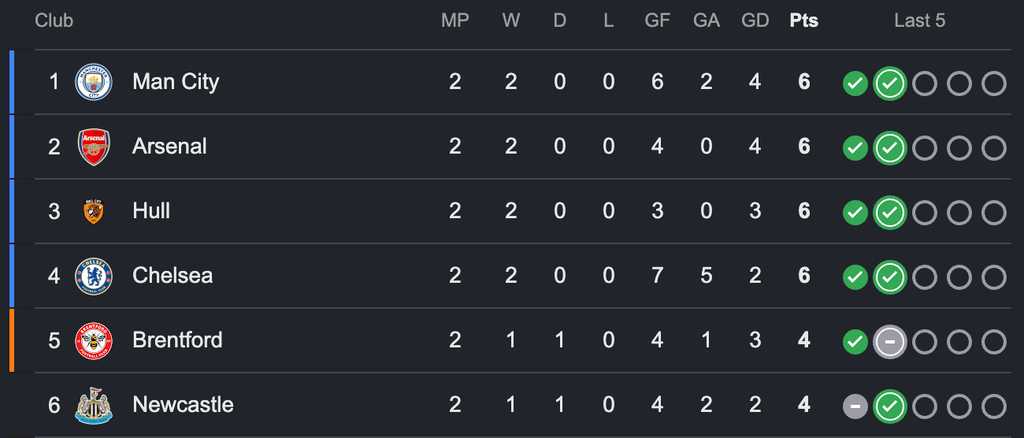
Three unbeaten league and cup performances to open the season — a battling 2-2 with Liverpool, a fightback past West Brom in the Carabao Cup, a proper away win at Tottenham — is a small sample, but it is not nothing for a head coach a month into the job with half his midfield still learning English pitches. The pieces Wilson assembled are, on the balance of the evidence so far, coherent rather than merely expensive.
Victory at Spurs
Judge this window against what it actually was — not a transfer window in isolation, but a sporting director eleven months into the job, replacing a head coach mid-preparation, selling three internationals into a market that wanted them badly, buying eight replacements at a discipline of youth the club has rarely shown, and doing it all for a net outlay smaller than what Newcastle spent on Bruno Guimarães alone back in 2022 — and it stops looking like a chaotic summer. It looks like the first window since October 2021 in which the football department, the finance department and the head coach’s office were all reading from the same page. That it happened during the most turbulent hundred days this ownership has overseen is not a coincidence worth glossing over. It is, on the evidence in front of us, rather the point.
What do you think of the job Ross Wilson has done this summer? Are you satisfied with the recruits who have joined the cause? Join the conversation on X @mytoonarmy #NUFC
At Domaine de Luchin, on the flat farmland south-east of Lille, a 21-year-old Belgian has been training away from the first team for the better part of a week. Matias Fernandez-Pardo has not been dropped for form. He has been quarantined for accounting reasons — a €70m asset that Olivier Létang would rather not damage while three European clubs circle the price tag.
By eleven o’clock on Tuesday night, that stand-off resolves one way or the other. And so, in large part, does Newcastle United’s summer.
Ross Wilson’s phone has been the busiest object on Tyneside for a fortnight. Matthias Jaissle admitted as much before the trip to north London, describing the daily push for reinforcements as the first message he sends each morning. Then, in the same breath, the corrective: the German said the club want to be smart and refuse to act in panic. Both halves of that sentence matter. The first is the head coach protecting himself against a thin squad. The second is a sporting department protecting itself against a fee it will still be amortising in 2031.
The arithmetic of a sold spine
Start with what left, because everything downstream is a consequence of it.
Sandro Tonali to Tottenham for £92.5m. Bruno Guimarães to Arsenal for £75m. Anthony Gordon to Barcelona for £68m. Roughly £244m raised across the window once the smaller exits and the released contracts of Kieran Trippier, Matt Targett and Emil Krafth are folded in. Three players who between them started the club’s first Champions League knockout campaign, gone inside nine weeks.
The reinvestment tells you what kind of institution PIF now believes it is running. Around £220m has gone back out — Nico González from Manchester City at £50m, Bazoumana Touré from Hoffenheim at £43m, Amar Dedić from Benfica at £30m, Aladji Bamba from Monaco at £30m, Lukáš Horníček at £26m, Sean Steur at £20m, Ewen Jaouen at £18m — and the median age of that intake sits at twenty-two. Steur is eighteen. Bamba and Jaouen are twenty.
Sources familiar with the club’s planning describe it as the only route available under the league’s new architecture. From this season, Profitability and Sustainability Rules have given way to the Squad Cost Ratio and the Sustainability and Systemic Resilience framework, which tether wages, agents’ fees and transfer amortisation directly to football revenue and net profit on player trading. Sell high, buy young, keep the wage bill flat: that is a club optimising for a ratio, not a transfer window.
The FY25 accounts, signed off by Yasir Al-Rumayyan on 9 November last year, show the machinery underneath. Intangible assets — the book value of player registrations — fell from £350.0m to £281.2m across the year to 30 June 2025, an unusual contraction for a club supposedly building. Net assets climbed from £248.3m to £333.0m. Retained losses narrowed from £221.1m to £186.4m, implying something close to £35m of profit in a season the strategic report describes, with admirable understatement, as mid-table.
None of that happened by accident. Fifty million pounds of fresh equity flowed through the share premium account during the year, with a further £106.5m arriving from PZ Newco in September 2025. In July of that year the group refinanced into a £50m term loan and a £50m revolving facility at SONIA plus 2.15%, secured against Premier League central funds and ticket revenue, running to July 2028.
That last detail is the one worth sitting with. Newcastle United have pledged the money that comes through the Gallowgate turnstiles as collateral. Every season ticket sold on Barrack Road is, in the most literal sense, security for the club’s working capital.
Three strikers, one of them injured
Now bring the ledger down to the grass.
The squad list Jaissle is working from contains three recognised centre-forwards. Yoane Wissa is twenty-nine. William Osula is twenty-three and hobbling, forced off before the hour against Liverpool on the opening day with a foot problem that will keep him out for weeks. Nick Woltemade is twenty-four, still the club’s record signing at an initial £65m, and has spent most of August being discussed as though he were surplus.
Napoli have asked about a loan. Interest has surfaced from Germany. Manchester United were, at one stage, offered the chance to take him. And Newcastle’s position has hardened into something close to an ultimatum aimed at their own recruitment team: nobody leaves until somebody arrives.
Jaissle would not be drawn after Saturday night’s win in north London, where Woltemade came off the bench and laid the second goal on a plate. Nick is part of the squad, he said, before noting that the club still intend to be active. A head coach who wants a player retained does not phrase it that way. A head coach hedging against a deal that may or may not close by Tuesday night does.
So the permutations stack up, and they are genuinely open.
If Fernandez-Pardo signs — Foot Mercato reported the gap narrowing sharply on Sunday morning, after an opening bid of around €45m was dismissed and a second at €60m tested Lille’s resolve — Newcastle have a 21-year-old who can play both flanks and through the middle, the profile Gordon used to fill, and Woltemade’s loan exit becomes viable within hours. If Lille hold at €70m and Newcastle walk, as they briefly did last week, the German stays, Osula’s foot becomes the most scrutinised metatarsal in the North East, and the attack goes into September one injury from Joe Willock playing as a false nine.
Behind the Belgian sit two names, and one of them arrived in the gossip columns overnight.
Bilal El Khannouss – The Backup?
Bilal El Khannouss at Stuttgart, twenty-two, a creator rather than a runner, already familiar to the recruitment department from his Leicester years, has been under consideration for a fortnight. Matías Soulé has not. TEAMtalk reported last night that Newcastle have joined the pursuit of the Roma winger, twenty-three, an Argentina international whose future in the Eternal City depends on whether Gian Piero Ghisolfi lands the attacking reinforcements he has been chasing. Fulham, Everton and Brighton are watching. AC Milan have talked to his representatives.
And so, inevitably, have Sunderland.
Is Matias Soule the quiet target?
The Black Cats approached Roma for Soulé in July and could not agree terms. They have circled back in the closing hours, with Igor Paixão at Marseille the parallel track, and they will make a late offer if Roma soften. Which means the most likely late signing of Newcastle’s window is a player their neighbours have wanted since midsummer, in the first season since 2016 that both clubs have shared a division, with a derby at the Stadium of Light already inked into the calendar.
Nobody at Benton will admit that changes the calculus. It changes the calculus.
Soulé would also stretch the age policy that has governed everything else. At twenty-three he would arrive older than Touré, Bamba, Steur and Fernandez-Pardo, and level with the band occupied by Dedić and Horníček — hardly a veteran, but evidence that the discipline of the early window loosens as the clock runs down. Deadline day has a way of turning a recruitment philosophy into a set of available options.
Where the shape still creaks
Look past the forward line and the gaps are structural rather than cosmetic.
At right-back, Tino Livramento and Amar Dedić are cover for one another, with 19-year-old Leo Shahar the only other listed option. In central defence, the club is asking Sven Botman and Malick Thiaw to carry a season on their own; behind them sit Fabian Schär and Dan Burn, both thirty-four, the latter now wearing the armband in a dressing room that lost Bruno, Trippier and Tonali inside a single summer. The average age of that back line, weighted by likely minutes, is the oldest part of an otherwise adolescent squad.
Midfield is where the rebuild has been most aggressive and is therefore most exposed. González arrived from City as the one ready-made starter in the entire intake, and he was, by the reckoning of most who watched Saturday, the best player on the pitch — a fact rendered slightly cruel by the identity of the man he outplayed. Around him: Bamba at twenty, Steur at eighteen, Lewis Miley at twenty. Jacob Ramsey and Joelinton are the only senior ballast, and Joelinton is thirty and has a surgical history in that thigh.
Figures close to PIF’s strategy have long argued that the plan was never a two-year plan. Fair enough. But a squad cost ratio does not care about your five-year horizon, and neither does a Tuesday-night fixture in February when three of your midfielders are still teenagers.
What Tuesday actually decides
There is a version of this window that closes tomorrow night looking coherent. Eight signings. A Belgian winger with a decade of resale ahead of him. A German striker gaining minutes in Serie A while Osula heals. A wage bill materially lighter than the one Eddie Howe left behind.
And a net spend that barely registers. Run the two columns: £244m banked from the sales, roughly £220m committed on the seven arrivals to date, plus something near £52m if Lille finally take the money for Fernandez-Pardo. That leaves the club about £28m lighter across the whole summer — a rounding error against a squad that has been rebuilt almost from the spine outwards. Newcastle will have replaced three established internationals, changed their head coach, cut the average age of the first team by years, and spent, in cash terms, less than they paid for Bruno Guimarães in 2022.
There is another version where Lille hold firm, the alternatives prove unreachable inside twenty-four hours, and Newcastle enter the international break having sold £244m of proven Premier League output and replaced it with promise, a hospital wing and a coach who has been on Tyneside for four weeks.
The gap between those two outcomes is roughly €10m and one phone call.
Down at St James’, the flags are already going up for the next home fixture. The wind coming off the Tyne has that early-September edge to it, the one that tells you the summer’s arguments are about to become the season’s results. Somewhere above the Milburn Stand, in an office with the blinds half-drawn, someone is doing sums against a clock.
Twenty-four hours. Then the ledger closes, and the football starts telling us whether the accountants were right.
Is Pardo the answer Jaissle is looking for? Are you happy with the summer transfer window? Join the conversation on X @mytoonarmy #NUFC
Inside the corridors of St James’ Park, the thrill of sovereign wealth has met the cold, unyielding mechanics of modern football regulation. While headlines fixate on the unfathomable depth of Saudi Arabia’s Public Investment Fund (PIF) balance sheet, Newcastle United operates inside a financial straitjacket defined by UEFA’s Squad Cost Rule (SCR) and the Premier League’s evolving financial guardrails.
To understand how a modern football powerhouse is built in the 2020s, one must look past oil reserves and focus on balance sheet accounting.
1. Understanding the Regulatory Ceiling: UEFA’s Squad Cost Rule (SCR)
The traditional era of unconstrained owner funding is dead. Under UEFA’s Financial Sustainability Regulations, clubs participating in European competition are bound by the Squad Cost Rule (SCR), which limits aggregate squad expenditure to a maximum of 70% of total club revenue (plus net transfer profit).
How does SCR work?
With Newcastle United’s latest turnover reaching a record £335.3 million (boosted by a 44% surge in commercial revenues to £120.2 million), the mathematical limit becomes immediately apparent:
Baseline Turnover: ~£335m – £360m
70% Hard SCR Cap: ~£235m – £252m maximum allowable squad spend.
Prior to recent squad restructuring, Newcastle’s staff costs alone stood at £243.5 million (72.6% of turnover), while annual player amortization hovered near £99.9 million. Without player sales or dramatic commercial growth, Newcastle had effectively hit their regulatory ceiling—leaving zero operational space for gross transfer spending.
2. The Balance-Sheet Reset: Summer Transfer Audit
To break through this structural bottleneck, Newcastle executed a deliberate, high-stakes portfolio rebalancing during the transfer window.
Players out Season 2026-27Players in Season 2026-27
3. The Accounting Asymmetry: How Much Can Newcastle Spend Now?
The financial genius of this window lies in the structural asymmetry between player sales and player acquisitions on a club’s Profit & Loss (P&L) statement.
What’s left to spend? A lot.
Amortization vs. Instant Profit Realization
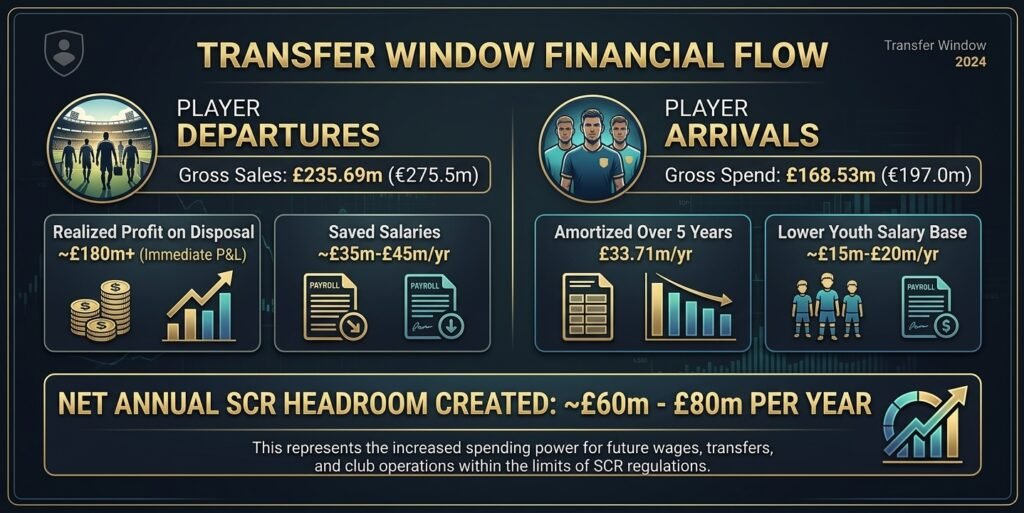
Immediate P&L Credit: The £235.69m generated from selling Tonali, Bruno, and Gordon hits the accounting books as an immediate profit on disposal (minus any unamortized remaining book values).
Deferred Expense: The £168.53m spent on incoming players is divided equally over 5-year contracts, resulting in an annual amortization charge of just £33.71m.
Wage Cleansing: Offloading senior star wages (Tonali, Bruno, Trippier, Targett) clears an estimated £35m+ per year, easily offsetting the lighter wage requirements of younger recruits like Touré, Dedic, and Bamba.
Real Transfer Capacity Under the 70% SCR Cap
With the wage bill re-anchored and £180m+ in book profits feeding the SCR denominator, Newcastle has created roughly £60m to £80m of fresh annual headroom within their 70% threshold.
Because transfer fees are amortized over five years, every £20m of annual SCR headroom supports £100m in gross transfer spending capacity (assuming modest wages).
Available SCR Headroom: £60m–£80m / year
Gross Spending Capacity Unlocked:£200m – £280m in future transfer outlays, without breaching UEFA limits.
4. The 5-Year Roadmap: Patiently Growing Turnover
The next 5 years, Newcastle 2.0
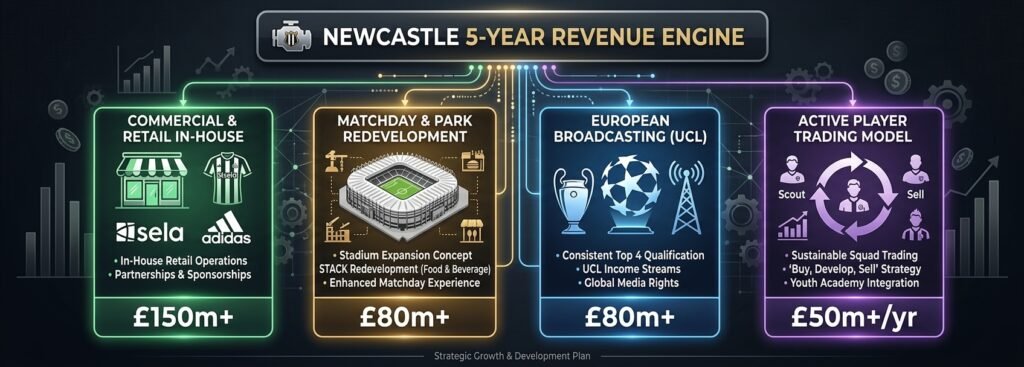
Sustained competitive success cannot rely indefinitely on liquidating key assets. To achieve permanent parity with European super-clubs, Newcastle must organically expand the SCR denominator (Total Revenue) over the next five years through four core pillars:
Commercial & Retail Expansion (£150m+ Target): Bringing retail and licensing back in-house, coupled with the success of the St. James’ STACK powered by Sela (soon to be Coca-Cola) drove commercial revenue up 44% to £120.2m. Expanding tier-one global sponsorships (adidas, SumUp, Noon) will push this baseline beyond £150m annually.
Matchday & Infrastructure Yield (£80m+ Target): With matchday revenue lingering at ~£51.6m due to stadium capacity constraints, long-term plans to expand St James’ Park or modernize hospitality offerings will be crucial to increasing matchday yield toward the £80m–£100m figures seen at Arsenal and Tottenham.
Consistent European Qualification (£70m–£100m / season): Champions League distribution fees and UEFA prize money provide an instant 20–25% lift to total turnover, expanding the 70% SCR expenditure cap organically.
Normalized Player Trading Flywheel: Selling Bruno, Tonali, and Gordon proves that Newcastle has embraced the “buy-develop-sell” flywheel. Developing prospects like Touré (£42.78m) or Steur (£20.10m) into £80m+ players ensures a recurring stream of player-disposal profits to supplement operating revenue.
Conclusion: The New Tyneside Blueprint
The £235.69m summer sell-off was not a step backward—it was the mandatory execution of modern football finance. By trading high-wage senior stars for amortizable youth talent, Newcastle United reset their squad cost ratio, unlocked over £200m in forward spending capacity, and protected themselves against regulatory sanctions.
As commercial revenues continue their upward trajectory toward £400m+ turnover, Newcastle’s balance sheet will evolve from a compliance constraint into an unstoppable, self-sustaining financial engine.
Do you think the plan will work? Will Newcastle become a financial powerhouse in the years to come? Join the conversation on X @mytoonarmy #NUFC