There was a time, not so deep in the annals of Newcastle United’s history, when the club’s commercial strategy amounted to plastering the Gallowgate End in the primary colors of a discount sportswear retailer. St James’ Park was a billboard for a stagnant regime; the club’s balance sheet a testament to managed decline.
Today, the landscape in the shadow of the Milburn Stand is unrecognizable. The recent announcements of a £15 million training kit partnership with European fintech giant SumUp, alongside a lucrative alignment with global behemoth Coca-Cola for the STACK fan zone, are not just press release fodder. They are the roaring engines of a commercial vehicle designed to crash the Premier League’s established elite.
Coupled with the staggering £190 million blueprint for a state-of-the-art training complex at Woolsington Hall, these boardroom victories dictate everything that happens on the grass. In the modern era, where financial “fair play” rules choke ambition, commercial revenue is the only true currency of progression.
Here is what this corporate acceleration means for the club, the recruitment team, and the Geordie faithful in both the immediate and distant future.
The Short-Term: The PSR Pressure Valve
In the immediate term, Newcastle’s commercial pivot is about one thing: headroom.
Every time Chief Revenue Officer David Hopkinson inks a new deal, he buys the recruitment department breathing space. The SumUp agreement—worth £5 million a season over three years—might seem like a drop in the ocean of modern football finance. But in the ruthless mathematics of player amortization, a new £5 million-a-year revenue stream equates to the annual accounting cost of a £25 million player signed on a five-year contract.
Furthermore, these specific deals signal a vital tactical shift. In the early days of the PIF-led takeover, Newcastle relied heavily on Saudi-affiliated businesses—Sela, Noon, Saudia—to rapidly inflate their commercial baseline. While entirely legal and cleared by the Premier League, this approach drew intense scrutiny and triggered the tightening of Associated Party Transaction (APT) regulations.
By pivoting to undisputed, blue-chip western brands like Coca-Cola and SumUp, Newcastle bypasses the bureaucratic quagmire of APT fair-market-value checks. The money flows faster, the optic is undeniably global, and the Premier League’s regulatory red tape is rendered irrelevant.
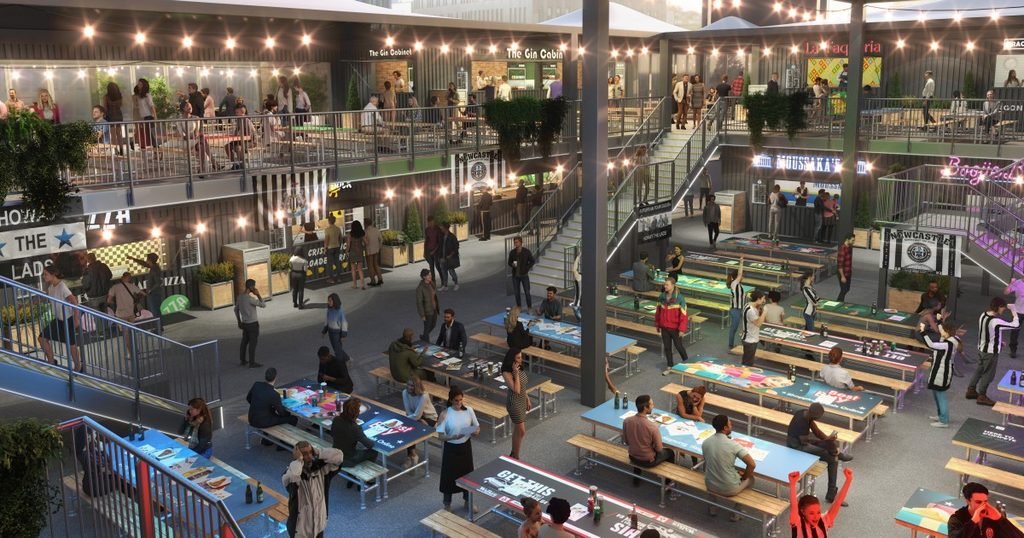
The Coca-Cola alignment, deeply integrated into the wildly successful STACK fan zone outside St James’ Park, also immediately monetizes the matchday experience. It is a highly visible, instantly recognizable stamp of global credibility that signals to the market: Newcastle United is open for premium business.
The Long-Term: Laying the Foundations at Woolsington Hall
If the short-term impact of these deals is about greasing the wheels of the transfer market, the long-term reality is entirely about infrastructure.
The current Benton training base, despite being retrofitted and polished to an impressive standard by the current ownership, remains a ceiling on the club’s potential. To consistently recruit elite, Champions League-caliber talent, a club must offer elite, Champions League-caliber facilities.
Enter the £190 million Woolsington Hall project.

You do not fund a nearly £200 million infrastructure project—one that promises to be among the most advanced athletic, medical, and recovery facilities in Europe—without a self-sustaining commercial ecosystem. The SumUp deal, crucially, extends across the men’s, women’s, and academy teams. It is a holistic partnership that, alongside Coca-Cola’s global backing, proves Newcastle can leverage its brand across all demographics and tiers of the club.
In the next three to ten years, this commercial blueprint aims to close the staggering revenue gap between Newcastle and the “Big Six.” Internal club targets have long whispered about adding an additional £200 million per year to the commercial coffers by the turn of the decade. Diversifying the portfolio with fintech innovators and international beverage conglomerates proves that the club is not relying solely on the broadcast money or Champions League qualification windfalls to balance the books.
The Verdict
For decades, Newcastle United was a sleeping giant, anesthetized by a lack of vision. Now, it is awake, and it is hungry.
The SumUp and Coca-Cola deals are the absolute antithesis of the Ashley era. They represent a club operating with forensic precision in the corporate sphere, utilizing global partnerships to fund local infrastructure like Woolsington Hall and the STACK.
On Tyneside, fans rightly obsess over the number 9 shirt, the defensive high line, and the weekend’s points tally. But the brutal reality of modern football is that the trophies of tomorrow are financed by the commercial partnerships of today. Newcastle United isn’t just trying to buy a seat at the top table anymore; they are methodically building their own.
What do you think of these developments? How will the new training ground supercharge our future? Continue the conversation on X @mytoonarmy #NUFC