Data Driven Insights. Fearless Opinions.

Jaissle

  • Nine and Not Out: The Bournemouth Hoodoo Survives, But Newcastle’s Soft Centre Doesn’t

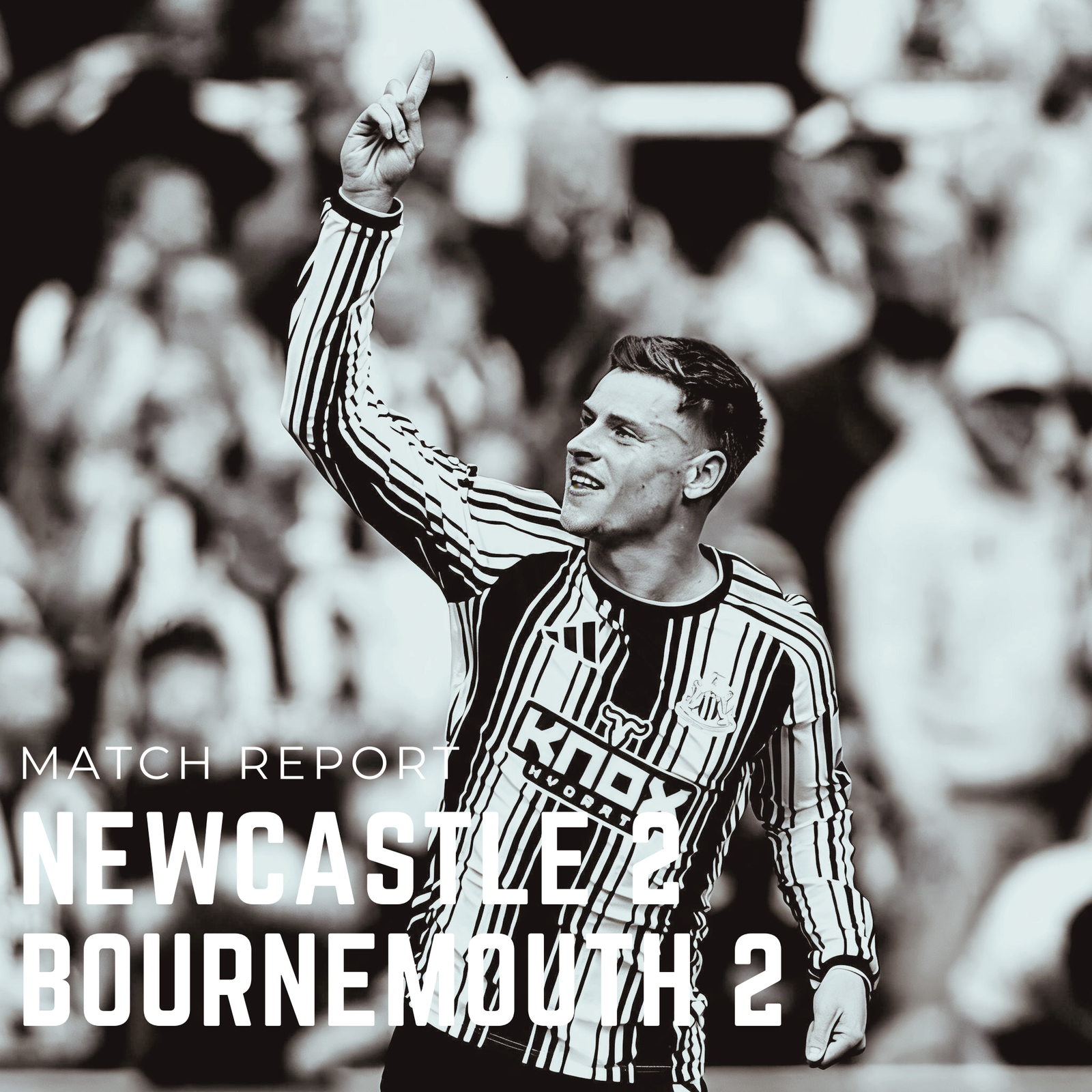
    Newcastle 2 Bournemouth 2

    Twelve yards out, eighty-eighth minute, Jacob Ramsey took one touch to settle a half-cleared ball and side-footed it low past Djordje Petrovic. St James’ Park did not so much roar as exhale — fifty-two thousand people releasing eighty-eight minutes of accumulated grievance in one go.

    It was Newcastle’s second shot on target all afternoon. Their second. Against a side who had managed five.

    That single statistic tells you almost everything about the shape of Saturday lunchtime, and almost nothing about what actually mattered. Because the question posed in this column on Friday was never whether Newcastle would out-pass or out-create Bournemouth. It was whether this team, carrying the sudden and uncomfortable weight of expectation, could handle a fixture they were supposed to win against opposition they cannot beat. The answer arrived in two parts, and the second part was more revealing than the first.

    The First Half That Proved the Warning and Missed the Point

    Friday’s preview flagged the number that should have frightened everyone: no side in the Premier League had faced more shots than Newcastle across the opening two rounds. Jaissle’s system creates through aggression and concedes through it, and Bournemouth — pacey, direct, built to punish an open midfield — looked like precisely the wrong opponent to test it against.

    Forty-five minutes later that warning looked prophetic. Thirteen Bournemouth shots to Newcastle’s three. An expected goals reading of 1.29 to 0.14. Marco Rose’s side did not merely start brightly; they arrived at St James’ Park with the clarity of a team who had watched the Liverpool and Tottenham tapes and decided that Newcastle’s high line was an invitation.

    But the mechanism was not the one predicted. Both goals traced back to the same right boot, and it belonged to Newcastle’s own right-back.

    The ninth minute: Alex Scott’s shot deflected off a Newcastle body and spun loose at the back post, and Amar Dedić stood watching it as though the phase of play had ended when the shot was struck. Marcus Tavernier did not stand watching. He arrived, and he finished, and Newcastle’s players surrounded referee Rob Jones insisting Anthony Elanga had been fouled in the build-up. VAR looked. VAR declined. Former PGMOL chief Keith Hackett has since backed the non-intervention as a legitimate refereeing judgement, and on the replays it is hard to argue otherwise — but the mood of the afternoon was set in that opening exchange, and it never fully recovered.

    The thirty-fifth was worse, and it was worse because it was structural rather than accidental. Dedić lost the ball high up the pitch, in the advanced position his attacking instincts keep dragging him towards. Tavernier skipped past Nico González in the space that Dedić had vacated. Justin Kluivert’s shot smashed against the post and rebounded off Lukáš Horníček’s back; Scott collected the loose ball on a desperately tight angle and clipped a low cross that ricocheted off Malick Thiaw and looped over his own goalkeeper.

    Call it misfortune if you like. The scoresheet does — Thiaw’s name sits there with the letters OG beside it, and he will not enjoy seeing them. But the dominoes fell in a very particular order, and the first one was pushed by a twenty-four-year-old full-back who has been outstanding going forward and repeatedly caught out coming back.
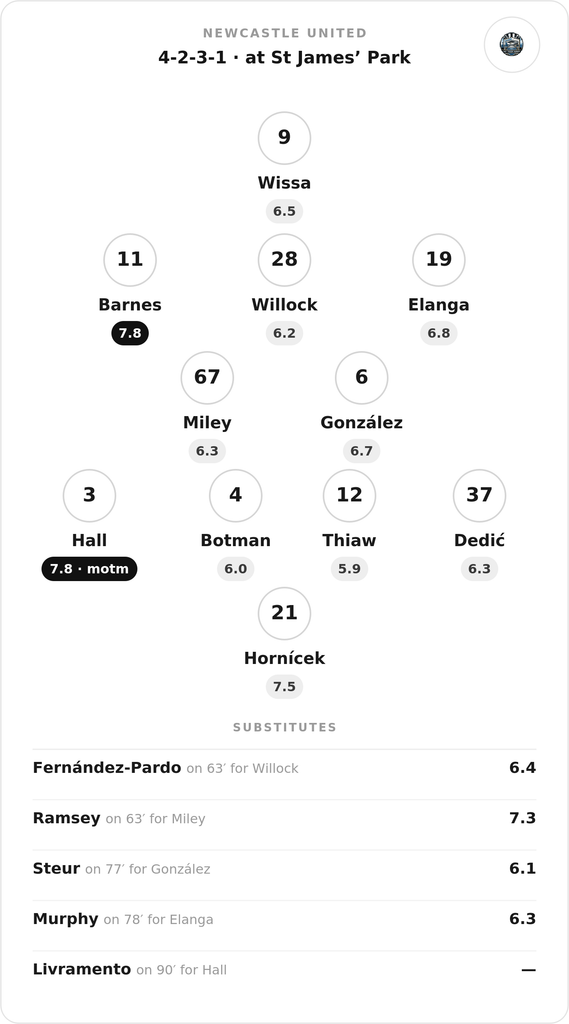
    Here is the complication, and it is the reason this is a character study rather than a hanging. Dedić’s delivery into the box is what led to the equaliser. He also curled a late free-kick high over the crossbar chasing a winner. Three of the four goals in this match had his fingerprints on them, in both directions. Ross Wilson signed a right-back whose attacking threat and defensive naivety are not two separate traits but the same trait, pointed in opposite directions. That is a coaching problem, not a recruitment error — but it is a problem, and Leeds away is not the place you want it unresolved.

    The Boy Newcastle Let Go

    There is a small, sour piece of poetry buried in the identity of Bournemouth’s scorer.
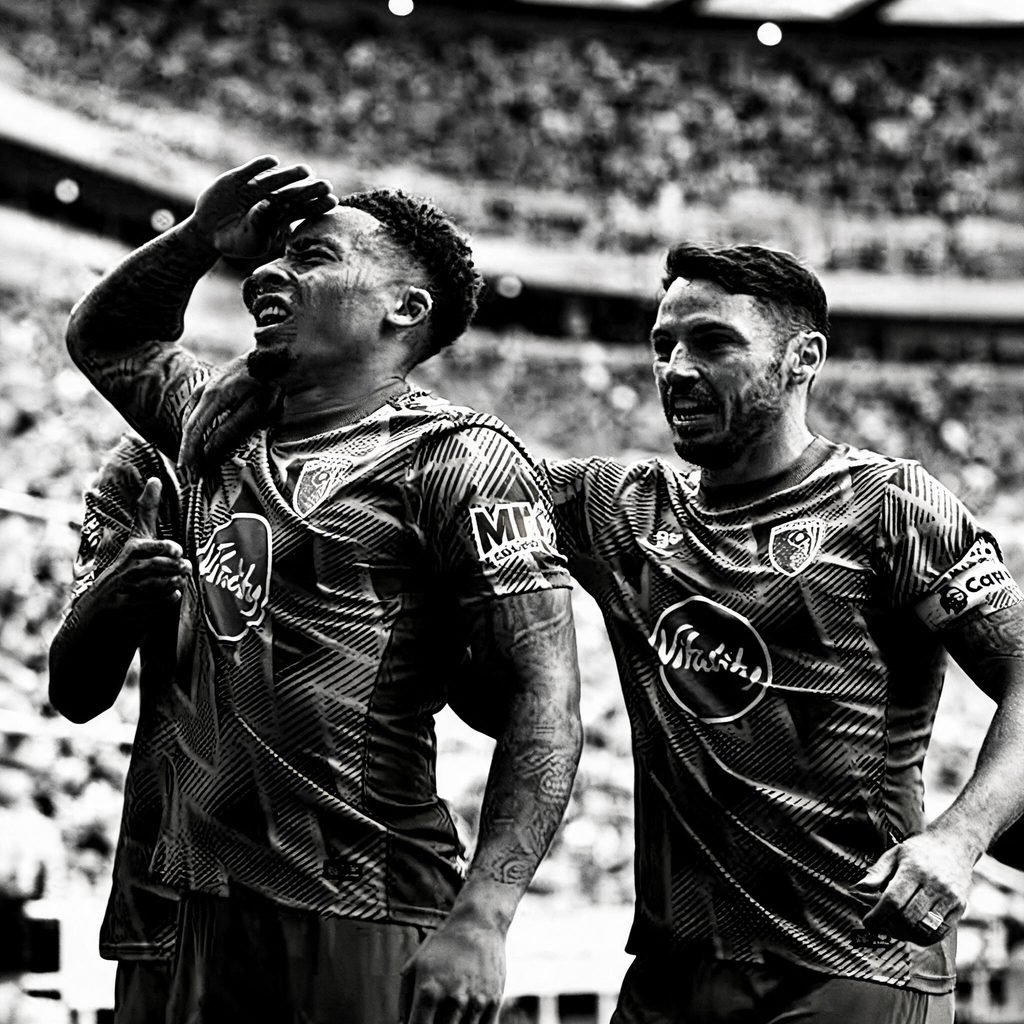
    Marcus Tavernier grew up in Newcastle’s academy. He was released as a boy, picked up by Middlesbrough at under-14 level a fortnight later, and has spent the years since building a career that keeps intersecting with the club that decided he was not good enough. Saturday’s opener was, by the Press Association’s count, his fourth goal in five appearances against Newcastle United.

    Which brings us to the harder question this column promised to answer: why can’t we beat them?

    The lazy explanation is that Bournemouth are a bogey side and bogey sides defy analysis. The better explanation is that the Cherries possess a specific structural weapon that has now survived a complete change of managerial philosophy. Andoni Iraola built a team around fast, direct wide players who attack space behind a committed defensive line. Marco Rose — Leipzig, Dortmund, Mönchengladbach — coaches a different game in most respects, but he inherited Kluivert, Tavernier and Rayan, and he did not have to be taught what they were for.

    Nine Premier League matches without a Newcastle win, stretching back to July 2020. Two Bournemouth managers, four Newcastle ones. The dugouts keep changing. The puzzle piece that unlocks us does not.

    What Bournemouth Actually Are

    And here we should be honest about the opposition, because “mid-table side Newcastle should beat” undersells them badly.

    The summer of 2026 was, on paper, the summer Bournemouth were supposed to be dismantled. Alex Scott — twenty-three, England-capped, refusing a new contract — was chased by Manchester United, Chelsea, Arsenal and Liverpool, with a late Chelsea bid rejected outright. Rayan, the Brazilian teenager they paid Vasco da Gama £30m for in January, drew Real Madrid’s attention. Eli Junior Kroupi, thirteen Premier League goals in his first full season, was watched by Arsenal and Paris Saint-Germain.

    None of them left.

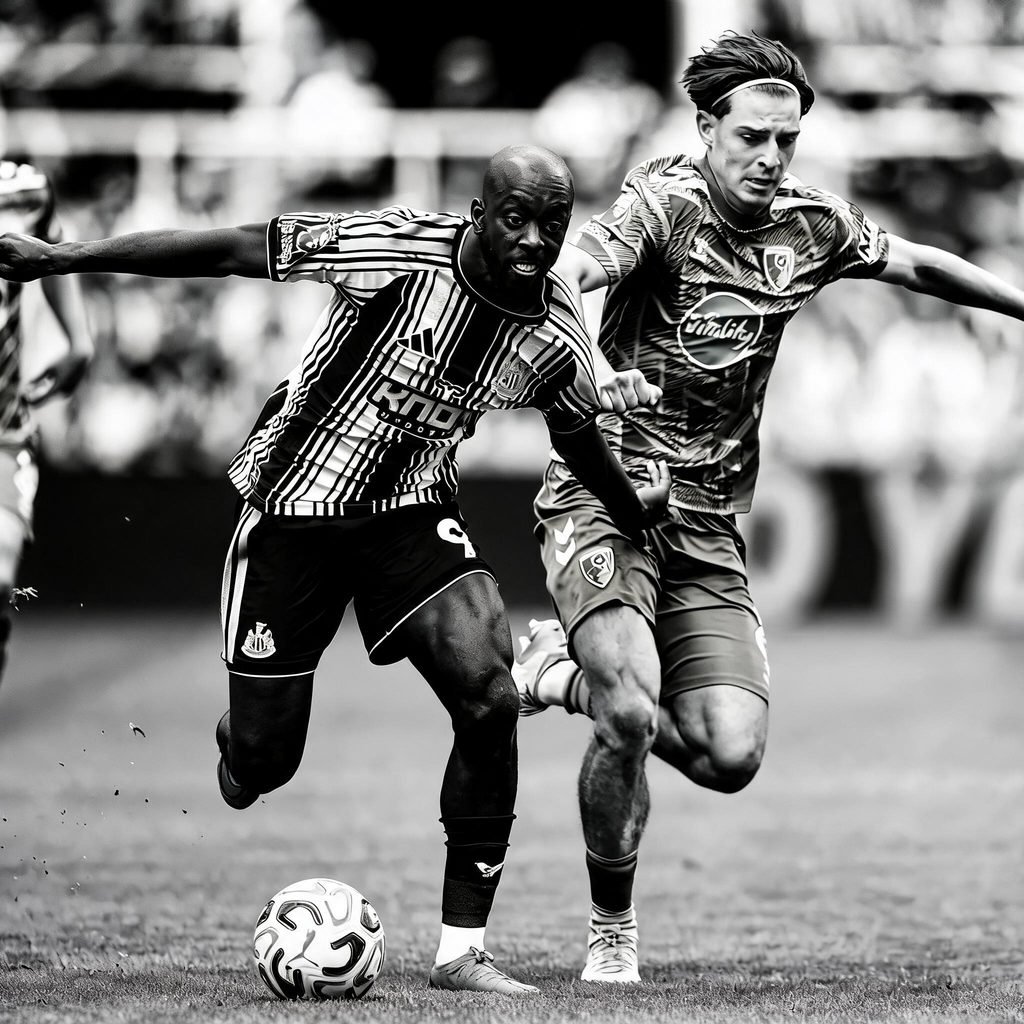
    For a finance-literate readership this is the detail worth sitting with. Bournemouth did not merely wish their players would stay; they had built the contractual architecture to make refusal credible — long deals, release clauses set at levels (£87m for Rayan, roughly £86.5m for Kroupi) that price out opportunism rather than invite it. They sold Marcos Senesi, a defender approaching the end of his deal, and reinvested. António Silva, the man who replaced him, won nine duels on Saturday and eight of eleven in the air, more than any player on the pitch in either shirt.
    That is not a plucky small club. That is a properly run one, refusing to accept the role of feeder club that the league’s economics keep pressing on everybody outside the top six. Newcastle, of all clubs, should recognise the achievement — we spent the summer watching Bruno Guimarães and Sandro Tonali walk out of the door.

    Twenty Yards, Two Minutes, One Moment

    Newcastle were drowning. And then Harvey Barnes decided they weren’t.
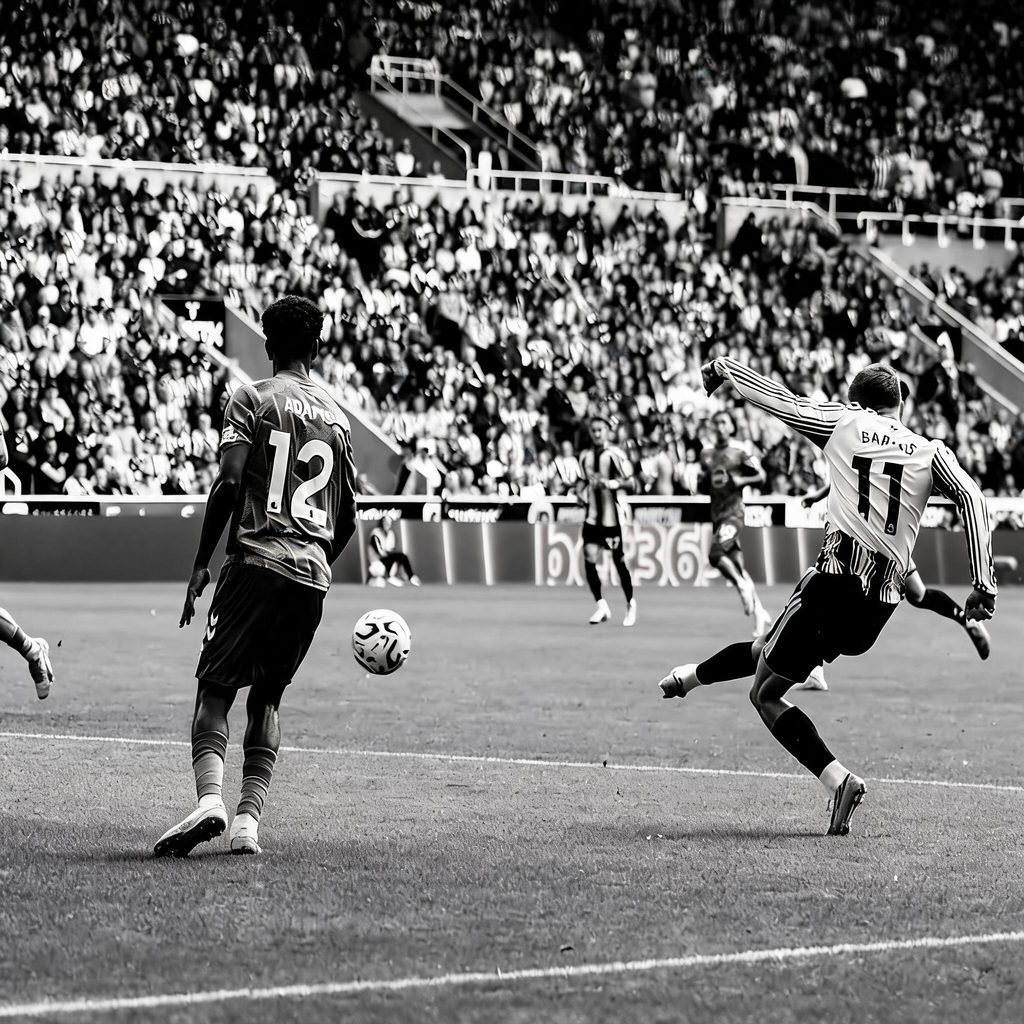
    Less than two minutes after Thiaw’s own goal, Lewis Hall slid the ball down the left channel, Barnes collected it, cut inside onto his right foot and curled a shot into the far top corner from the edge of the box. The underlying numbers rate the chance at 0.11 expected goals. The execution rated 0.83 on target. In plain English: nobody scores that shot, and he scored it.

    Football is not usually decided by moments of individual defiance. It just is often enough that teams keep believing in them. Had that ball gone two feet wider, Newcastle go in three down or two down and dead, Jaissle’s substitutions become damage limitation rather than intervention, and this article is about a very different afternoon.

    The Referee, and a Problem the League Has Not Solved

    The second half is where the argument starts.

    Newcastle came out quicker, sharper and with a settled idea of where the game was to be won. They did not get the chance to build any rhythm — and that was by design, though not solely Bournemouth’s.

    Thirty-five fouls were awarded across ninety minutes. Rob Jones’s own season average coming into this fixture ran at 22.7 fouls per game, itself flagged as above the Premier League norm. This match ran hotter and choppier than his usual, and it ran that way at exactly the moment Newcastle needed continuity. Bournemouth’s players, comfortably ahead, discovered a succession of ailments requiring attention. Physios came on in rotation. Every restart took a beat longer than it needed to.

    One passage captures it precisely. Shortly after coming on, Matias Fernandez-Pardo won a free-kick thirty-four yards from goal — the sort of set-piece that keeps a siege alive. The whistle went again for something else, and the moment evaporated. Jaissle, whose reading of the situation was entirely correct, collected the first booking of his Premier League managerial career in the seventy-first minute for saying so. Six minutes were added at the end.

    Let us be precise about the complaint, because it is not the tired one. Bournemouth were entitled to manage the game; every side ahead in the eighty-second minute does the same, and Newcastle would have done it too. The issue is that the Premier League spent years introducing stopwatch timekeeping specifically to make this behaviour unprofitable — precise added time for treatment, substitutions, celebrations, delay. Howard Webb promised the clampdown was not a matter of “days and weeks.” Three seasons on, a visiting side slowed a match to a crawl at St James’ Park and it worked, right up until it didn’t.

    The pre-season assessment of the 2026-27 officiating pool framed the coming year’s real test not as new technology or fresh guidance, but as whether the same foul, the same holding offence, the same threshold for stopping play is judged identically in August and in May. Saturday was a data point. It will not be the last, and it will not only ever fall against us.

    Jaissle’s Hour

    Now the part that should genuinely encourage you.

    At sixty-three minutes, still 1-2 down, still creating little, Jaissle removed Joe Willock and Lewis Miley and sent on Fernandez-Pardo and Ramsey together. Not a late throw of the dice — a considered intervention with nearly half an hour left, from a manager who had watched the first half and concluded that the problem was not effort but structure.

    The numbers either side of that change are stark. Bournemouth outshot Newcastle 13-3 before the break; after it, Newcastle edged the shot count 5-4 and the expected goals 0.57 to 0.08. The Cherries, who looked genuinely unplayable for half an hour, simply stopped being able to reach Newcastle’s box. Possession shifted, but more importantly the shape of possession shifted — quicker, straighter, forward.

    Twenty-five minutes after arriving, Ramsey scored.
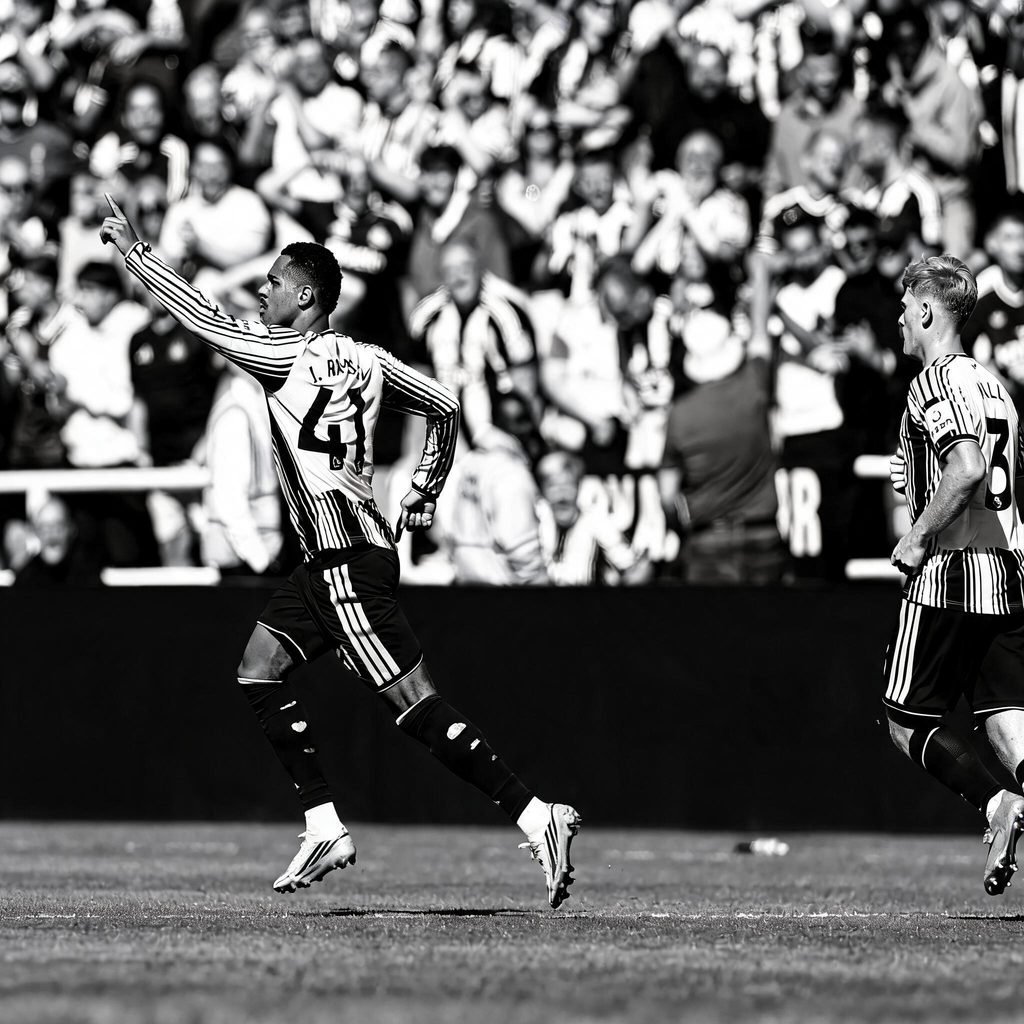
    And the crowd, it must be said, did as much of the work as the tactics board. Fifty-two thousand six hundred and forty-three inside a full house, and by the closing quarter they had turned St James’ Park into something Bournemouth visibly did not want to be standing in. Speaking to Match of the Day afterwards, Jaissle said: “I have mixed feelings. But after that start, you should be happy. But if we could have performed at the best level over 90 minutes, we could have had all three points. We couldn’t match Bournemouth’s intensity in the first half and conceded twice.”

    That is the correct read. This was not a good performance. It was, however, evidence of a thing this club has conspicuously lacked. Last season Newcastle led the division in points thrown away from winning positions. On Saturday they were the ones doing the clawing.

    The Best Player Was Not the One Who Scored

    Harvey Barnes produced the moment. Lewis Hall produced the performance.

    Both were rated 7.8, but the composition differs entirely. Hall supplied the assist for Barnes’s goal, made thirteen ball recoveries — more than any player on the pitch, in either shirt — completed 87 per cent of his passes and played nine line-breaking passes from left-back. When Newcastle were being overrun, he was the one repeatedly winning the ball back and pointing it forward. When they were chasing, he was the platform underneath the chase.

    Yoane Wissa ran ten kilometres and hit 33.7 km/h without registering a single shot, which is its own kind of thankless. Nico González played more line-breaking passes than anyone on the pitch — twelve — while also conceding six fouls and being dribbled past three times, a rookie’s afternoon in an English midfield.

    But Hall is the answer. Barnes won the highlights reel; Hall won the hour.

    Twenty-Seven Minutes of a £51m Question

    Friday’s preview predicted Jaissle would introduce Fernandez-Pardo gradually, from the bench, rather than disturb a functioning front line. That is precisely what happened, and the Belgian’s afternoon lasted twenty-seven minutes.

    He did not score, did not assist, and was thoroughly upstaged by the man who came on alongside him. What he did do was cover 875 metres at running pace and register nine sprints in under half an hour, take three touches inside the Bournemouth box, and beat his man the one time he tried. He also won the free-kick that the referee’s whistle promptly buried.

    Flashes, then. Nothing more, and nothing to worry about. Jaissle called it “a lot of quality” and stressed the need to manage a young player carefully. Judgement deferred, which is exactly where it should sit.


    What’s Next

    Newcastle travel to Millwall on Tuesday for a Carabao Cup third-round tie that will hand minutes to the players who did not get them here — and Tino Livramento, who Friday’s preview said would not be risked, has already returned for a stoppage-time cameo. Then Leeds away on Monday the fourteenth, and Hull City at St James’ Park the following Saturday. Five points from three games with a trip to Elland Road next is a perfectly respectable platform; it is also a schedule with no more free passes in it.

    Bournemouth host Lincoln City on Tuesday and Brentford next Saturday, and Rose’s problem is now a matter of public record. His side became the first team in Premier League history to score first in each of their opening three fixtures and win none of them. They have dropped seven points from winning positions already this season and twenty-nine since the start of the last — a figure they share, with some irony, with Newcastle. Four of the five goals they have conceded this term arrived after the eightieth minute. “If we can’t finish the games,” Rose said afterwards, “we need to defend our goal like it’s the last game of our lives.”

    The hoodoo stands at nine. We still cannot beat them.

    But for the first time in a long while, the story on the way back down Barrack Road was not about what Newcastle let slip. It was about what they refused to. Friday’s column asked whether this team could handle the sudden, uncomfortable presence of expectation. They failed the first half of that examination badly, and then they answered it in the only currency that has ever mattered on Tyneside.

    They did not give in.

    What do you think about the fightback from 2 goals down? Shall Pardo start the next league game against Leeds? Join the conversation on X @mytoonarmy #NUFC
  • The Real Test: Why Bournemouth, Not Liverpool or Spurs, Will Define Jaissle’s Newcastle

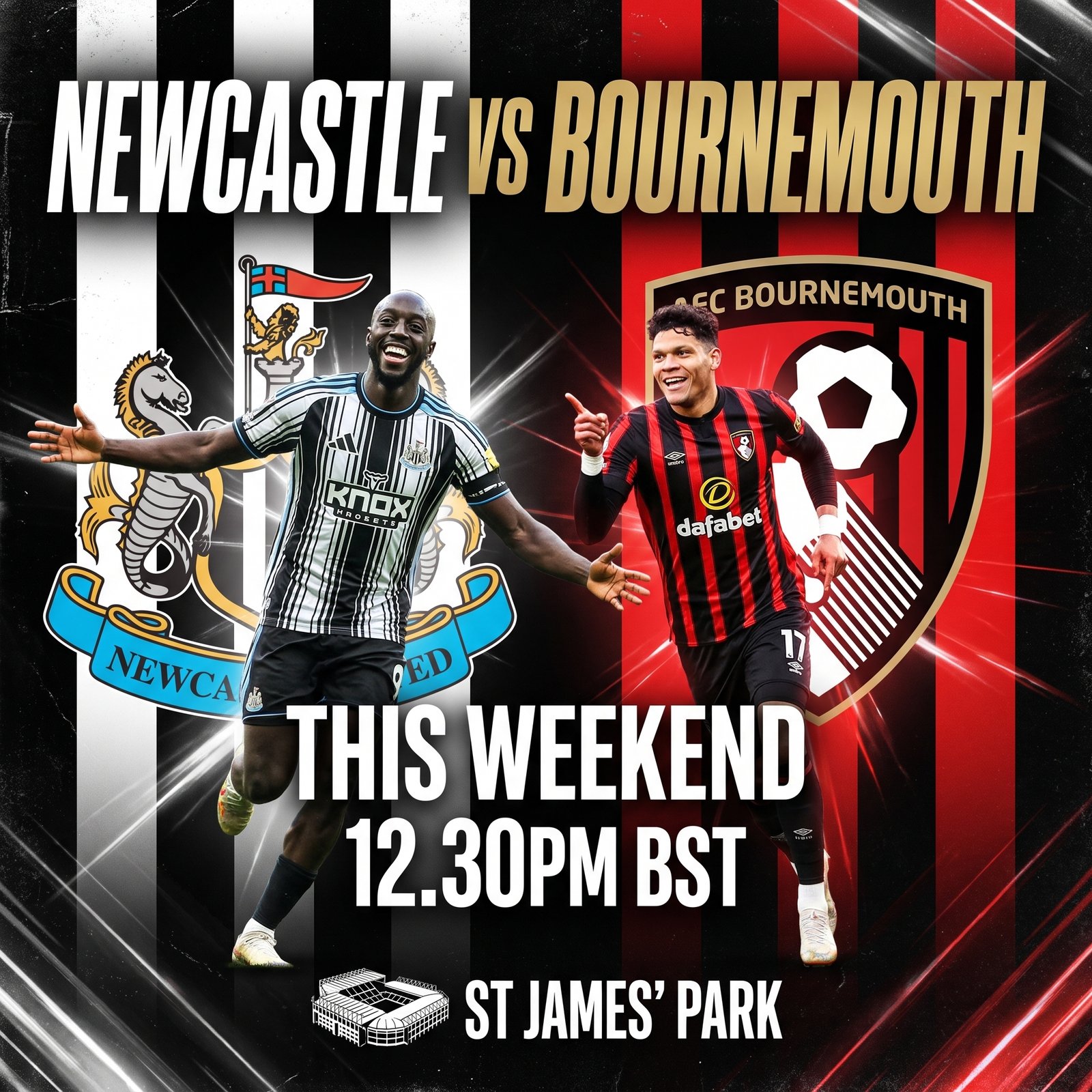
    Newcastle v Bournemouth, 5 Sept

    Twelve-thirty on Saturday, low September light slanting across the Gallowgate End, and Newcastle United are about to face the fixture that actually matters. Not Anfield, where a point arrived against Liverpool with nobody demanding more. Not Tottenham Hotspur Stadium, where a 2-0 win away from home was pure bonus, the kind of result that earns a head coach goodwill rather than scrutiny. Bournemouth at St James’ Park is different in kind, not degree. This is the game Newcastle are supposed to win, against the one mid-table side that has spent five years making a mockery of that supposition.

    That is what makes it the most revealing fixture of Matthias Jaissle’s young reign so far. Liverpool and Spurs told us Newcastle could compete with superior opposition when written off in advance. Bournemouth will tell us whether this team can convert raised expectations into three points against a side they traditionally cannot beat — whether the German’s vertical, high-intensity system holds up not against talent gaps that flatter it, but against the low-block, ambush-counter version of Premier League football that has undone Newcastle again and again on Tyneside.

    The Hoodoo

    Eight matches. Three defeats, five draws, not a single win. That is Newcastle’s Premier League record against Bournemouth since a 4-1 victory in July 2020, back when the visitors were managed by a young Eddie Howe — the same Eddie Howe who would go on to spend four years in the home dugout and now, following his summer departure, manages neither club in this fixture. Howe shares the record for the most Premier League games a manager has gone without beating a former employer, and the currency of that statistic has not devalued since he left St James’ Park.

    The most recent instalment offered no relief. April this year, St James’ Park, and Newcastle were 85 minutes from ending the run when Adrien Truffert found space at the back post and buried a winner that sent Bournemouth back down the A1 with all three points. It capped a run in which the Cherries have won their last two top-flight visits to Tyneside and now average 1.75 points per game at St James’ Park across eight visits — a return bettered, among grounds where they have played at least five times, only at Wolverhampton’s Molineux. Newcastle have spent parts of two decades building a fortress on Barrack Road. Bournemouth, unaccountably, hold a key.

    Jaissle’s Opening Statement, Interrupted

    Three games into the German’s competitive life in English football, the shape of his intentions is already legible. Newcastle pressed Liverpool into a stalemate they were unfortunate not to win outright, then travelled to north London and beat Tottenham 2-0 with goals from Anthony Elanga and Yoane Wissa, a result Jaissle afterwards called a “step in the right direction,” insisting that his squad’s underlying “DNA” is a “good fit” for the vertical, front-footed approach he has installed. There is substance behind the framing: Newcastle have won three of their last six league matches, a marked upturn on the one victory managed in the thirteen fixtures before that.

    But the same two matches expose the cost of the method. No side in the Premier League this season has faced more shots than Newcastle’s 44 — a startling reversal for a team that allowed only eight shots across its opening two league fixtures twelve months ago, itself the fewest they had conceded to open a campaign since 2003-04. Jaissle’s Newcastle create through aggression and concede through it too, inviting transition moments by committing bodies forward and pressing high up the pitch. Against Liverpool’s individual quality and Tottenham’s toothless finishing, that trade-off paid for itself. Bournemouth, built by Marco Rose around precisely the kind of direct, transitional football that punishes an open midfield, represent a sterner examination of whether the approach can survive contact with a side that knows how to exploit it.

    A Midfield Rebuilt From the Ground Up

    Context matters here, and it runs deeper than results. Newcastle lost both first-choice central midfielders this summer — Bruno Guimarães to Arsenal, Sandro Tonali to Tottenham — a departure of authority and control that would have derailed most rebuilding projects launched simultaneously with a managerial change. Sporting director Ross Wilson’s response was Nico González, a £50 million-plus deal struck with Manchester City for a 24-year-old La Masia graduate who had already won a Carabao Cup and an FA Cup at the Etihad. González made his debut at Tottenham and looked entirely unbothered by the occasion, screening the back four and dictating tempo in a manner Newcastle have missed since Guimarães departed. He is expected to retain his place alongside Lewis Miley, the academy graduate whose passing range increasingly resembles a player several seasons his senior.

    The rebuild is not finished. Matias Fernandez-Pardo, a deadline-day, £51 million arrival from Lille, is available for selection but Jaissle has signalled he intends to introduce the Belgian gradually, most likely from the bench, rather than throw him into a settled front line. That patience says something about the head coach’s confidence in what he already has: Elanga, Wissa and Harvey Barnes have combined for the goals that have carried Newcastle’s start, and none of the three appears likely to make way this weekend.

    Bournemouth’s Own Reinvention

    The visitors arrive mid-transition themselves. Andoni Iraola’s departure to Liverpool this summer — the same Liverpool who held Newcastle to a draw on the opening weekend — left Bournemouth needing a fresh identity, and the club turned to Marco Rose, formerly of RB Leipzig, Borussia Dortmund and Borussia Mönchengladbach, to provide it. Two German head coaches now face each other in a fixture that a decade ago would have been unthinkable in south coast and north-east dugouts alike.

    Rose’s start has been shakier than his opposite number’s. Bournemouth are one of eight Premier League clubs yet to register a win, having conceded twice in the closing ten minutes of a 2-1 defeat at Manchester City before James Tarkowski’s stoppage-time header rescued a point for Everton at Dean Court. The underlying pattern is troubling for the Cherries: they have surrendered 28 points from winning positions since the start of last season, a fragility that suggests a team capable of matching anyone for an hour but not yet equipped to see games out. Rose, for his part, has been at pains to stress the value of continuity, expressing satisfaction that the club retained Alex Scott, Rayan and Junior Kroupi through the window rather than cashing in — “we need these type of players,” he said this week, framing squad stability as deliberate strategy rather than accident.

    That continuity brings genuine menace in behind Newcastle’s high line. Justin Kluivert, Marcus Tavernier and the increasingly influential Rayan give Bournemouth pace and directness in the transition exactly where Jaissle’s system is most exposed, with Evanilson leading the line to occupy Newcastle’s centre-backs and create the space in which the front three like to operate. It is not difficult to see how Saturday could unfold as a version of last season’s collapse: control for long spells, chances created, and then a sting in a game Newcastle should have already put to bed.

    Team News

    Jaissle’s selection headache is more about absence than doubt. Captain Dan Burn remains sidelined with an ankle injury and, along with William Osula’s foot problem, is not expected back until October. Joelinton (thigh) and Tino Livramento (calf) are both closing on returns but will not be risked this weekend, meaning Lewis Hall continues at left-back and the midfield engine room stays as it has been. Bournemouth, by contrast, report no fresh fitness concerns, giving Rose a full complement to choose from.

    Predicted Line-ups

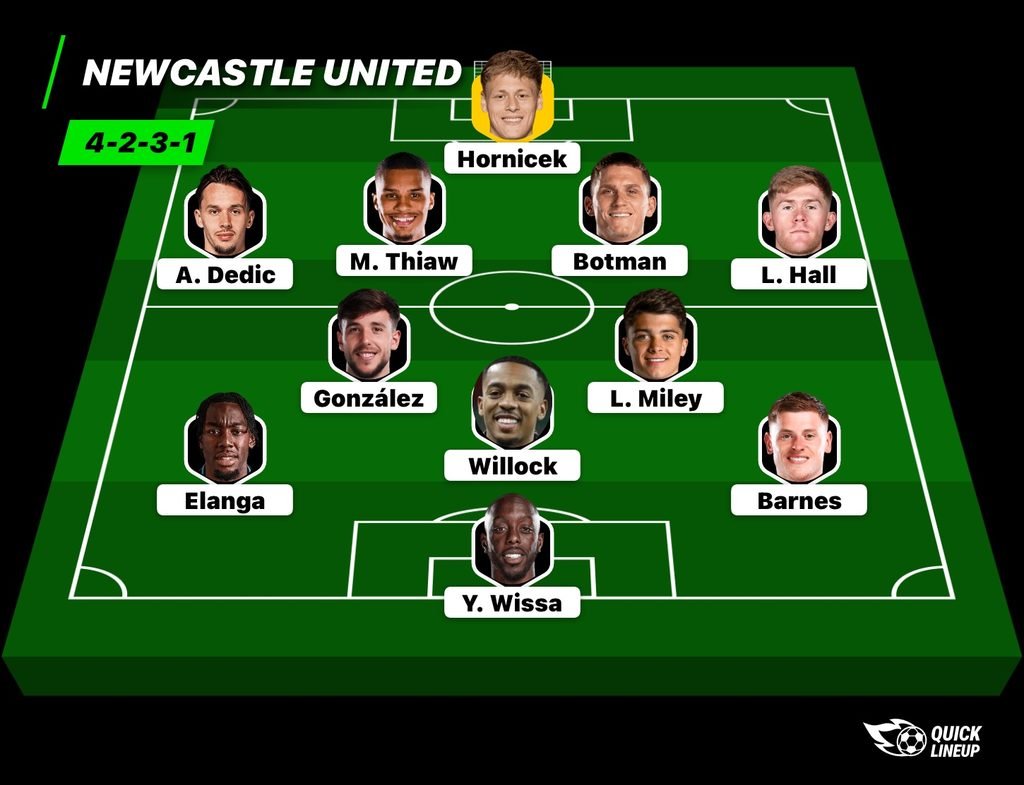
    Newcastle United (4-2-3-1): Horníček; Dedić, Thiaw, Botman, Hall; Miley, González; Elanga, Willock, Barnes; Wissa

    AFC Bournemouth (4-2-3-1): Petrović; Smith, Silva, Hill, Truffert; Cook, Scott; Kluivert, Rayan, Tavernier; Evanilson

    The Verdict Awaiting

    Nobody at St James’ Park expected much from the trips to Anfield and Tottenham, which is precisely why both results felt like pure gain. Saturday offers no such shelter. This is a fixture Newcastle are favoured to win, against opposition they have not beaten in the league for half a decade, with a system that has already shown both its teeth and its soft underbelly across two matches. How Jaissle’s team handles that pressure — not the absence of expectation but its sudden, uncomfortable presence — will say more about the direction of this project than anything Liverpool or Spurs could offer. The Gallowgate End will find out by half past two.

    Score Prediction: 2-1 victory to Newcastle.

    What’s your score prediction? Will Pardo start? Join the conversation on X @mytoonarmy #NUFC
  • The Brave Way

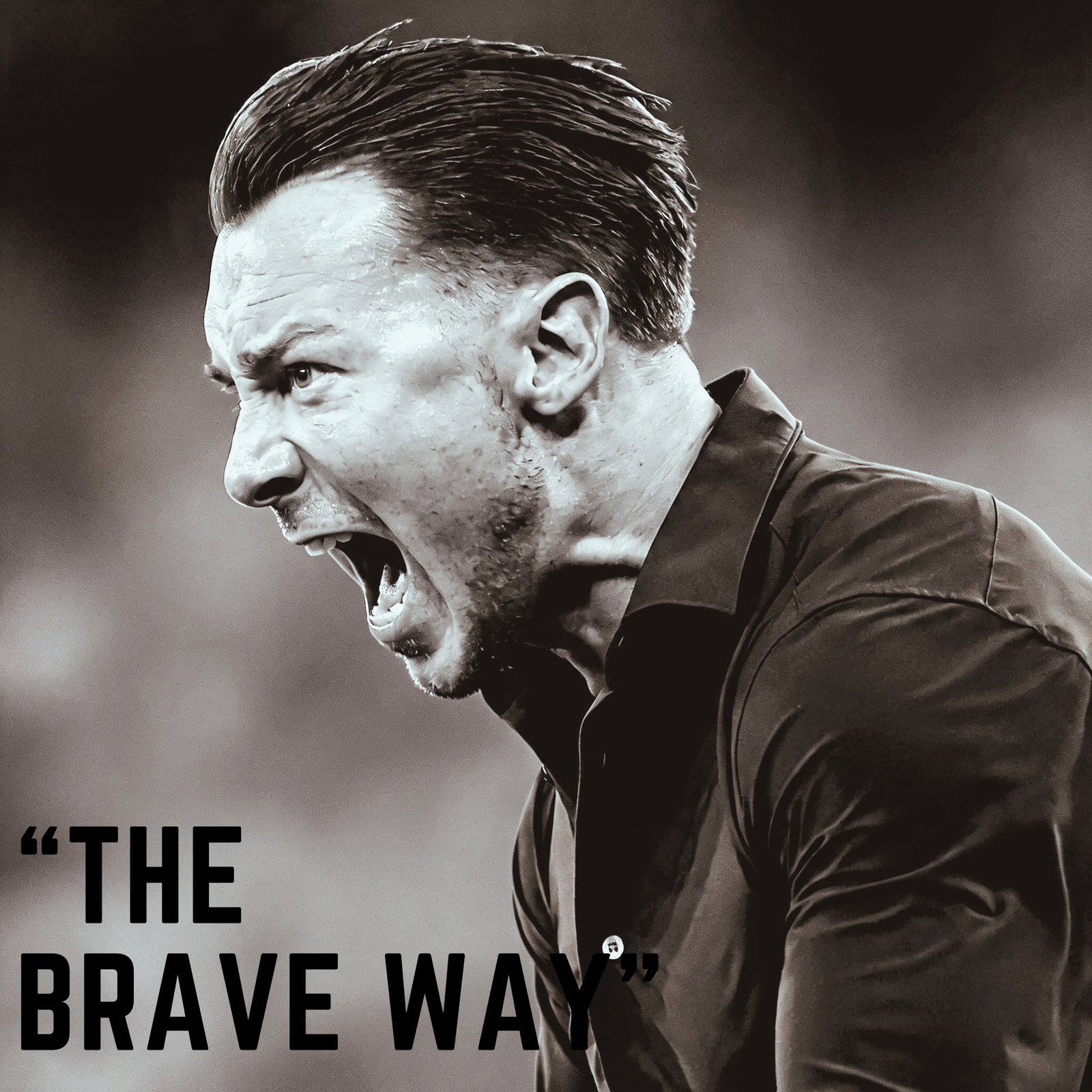
    Matthias Jaissle - The Brave Way

    Four times in twenty minutes, Matthias Jaissle reached for the same two words — and between them sits the clearest account yet of how he means to run Newcastle United.

    He said it rating a transfer window he refused to rate. He said it explaining a balance sheet he refused to itemise. He said it defending a squad he refused to over-promise on. And he said it again, gently, warning supporters not to expect too much too soon from a twenty-one-year-old signed on deadline day. The brave way. Not a slogan pushed out by the club’s media team, not a line borrowed from a press release — a phrase Jaissle kept returning to unprompted, in a training-ground media suite on Thursday, as though it were the only honest answer available to four different questions.

    It is worth sitting with why he needed it four times.


    The first came from a straightforward ask: rate the transfer window out of ten. Jaissle declined the number, then explained the refusal. “I won’t rate it, but I’m happy — a great job from Ross and his team,” he said. “A clear idea with all the signings: a young squad in general, young signings with huge potential. That’s a brave way, but this is the way we want to go here in Newcastle.” Eight arrivals across the window, five of them summer signings, five of the club’s fresh faces born after January 2005 — young enough that they do not even occupy a place on Newcastle’s 25-man Premier League squad list, because the rules do not require it. That is not incidental colour. It is the clearest possible evidence that the words match the recruitment: a sporting director building a squad so structurally youthful that half a dozen of its newest members are, on paper, still developmental cover.

    The second use came wrapped in numbers he wouldn’t give. Asked about the £100m-plus spent on marquee arrivals this year, Jaissle pivoted to the ledger rather than the fee. “When you see the balance in what we spent and what we earned, it’s interesting — a great step from the club,” he said. “It’s exactly the description of that transition phase right now, and bringing the average age heavily down compared to last season — all these things are so consistent with our brave way for the future, and that will be successful.” He would not put a figure on net spend. He didn’t need to. Nick Woltemade, the club’s own £69m record signing from thirteen months ago, left for Juventus on loan this week for a fee amounting to roughly a twentieth of what Newcastle paid for him — while Matias Fernandez-Pardo, twenty-one and untested in the Premier League, arrived on deadline day to effectively do his job. That is what “brave way” costs when you say it out loud on a balance sheet: write-downs, patience, and faith that the next twenty-one-year-old is a better bet than the last twenty-four-year-old.

    The third use was pure temperature control. Dan Burn had talked before the season about the squad challenging for Europe; asked whether that was realistic, Jaissle didn’t dismiss it, but he did contain it. “I like that Dan is ambitious, I like that players are ambitious — but we are realistic,” he said. “We’re clear that we have one of the youngest squads in the Premier League right now. This is a brave way, but we see a lot of potential. After last season and the 12th-place finish, we know about the transition phase, we know about the challenges ahead.” Here, the phrase stopped being about recruitment and started being about expectation management — a coach drawing a line between what his squad might become and what it currently is, three games into his tenure, unbeaten but hardly the finished article: a 2-2 draw with Liverpool salvaged only by a stoppage-time Szoboszlai penalty against them, then a battling 2-0 win away at Tottenham built on second-half substitute impact from Elanga and Wissa.

    The fourth use was the quietest, and perhaps the most telling. Pressed on whether Fernandez-Pardo’s age called for caution from supporters, Jaissle didn’t hedge. “Yes, this is always needed. This is the brave way, like I said, with these signings, with young players — they need time to adapt,” he said. “Yes, some players adapt really fast, but usually there will be ups and downs, and this is something I’m aware of, hopefully the fans too.” No coach enjoys pre-loading an excuse for a signing before that signing has kicked a ball in anger. But Jaissle did it anyway, calmly, because the phrase had already done the work across three previous answers — the fans in that room had heard “brave way” enough times by then to understand it as a standing disclaimer rather than a soundbite.


    “The Brave Way” – Jaissle’s Mantra?

    Put the four together and a coaching philosophy comes into focus that owes as much to risk management as it does to tactics. Amar Dedić, plucked from Benfica specifically because Jaissle already trusts him from their Salzburg days, started the season fit and sharp inside a fortnight. Joe Willock and Jacob Murphy, both linked with exits all summer, were kept and immediately rewarded with a goalscoring impact off the bench against Liverpool. Nico González was handed his debut inside the Tottenham back four. None of this is accidental man-management — it is the operational expression of “brave way”: trust the graft of players already inside the building, absorb the occasional loss on a record signing who hasn’t clicked, and accept that youth means volatility before it means value.

    Bournemouth arrive at St James’ Park on Saturday as the next examination of that patience — a side unbeaten against Newcastle in five, still carrying the scars of a 4-1 mauling the last time these two met at a 12:30 kick-off. Jaissle will not be rating this one out of ten either. He does not need to. He has already told everyone, four times over, exactly what kind of result he is building towards, and exactly how long he is prepared to wait for it.

    What do you think about Jaissle’s “brave way”? Is this the new recipe for success in a Newcastle 2.0? Join the conversation on X @mytoonarmy #NUFC
  • The Sporting Director’s Window: Ross Wilson and the £266m Reset Nobody Saw Coming

    The Wizard of Toon

    Ross Wilson, take a bow.

    Eleven o’clock on Tuesday night, and the ledger finally closes: £266.4m spent, £236m banked, three full internationals sold inside nine weeks. By any measure that is one of the more violent squad turnovers English football has seen in a single window. That it happened without the finances buckling, without a manager-less panic, and without a single deal that reads as desperate on Wednesday morning, tells you rather more about Ross Wilson than any individual signing does.

    Start with the conditions he was working under, because they matter more than the transfer graphics ever will.

    The inheritance

    Paul Mitchell walked out of the sporting director’s office in June 2025, eleven months after arriving to succeed Dan Ashworth. Newcastle went into last summer’s window — the one that delivered Woltemade at a club-record fee and saw Anthony Gordon fill in as an emergency centre-forward — without anyone formally holding that brief. Wilson didn’t arrive from Nottingham Forest until 11 October, by which point the season was already drifting toward the mid-table finish that eventually arrived: twelfth, five points off Europe, undone at Camp Nou by a Barcelona side that put seven past them in the second leg of a last-sixteen tie. Sunderland finished seventh. The optics were not kind.

    So Wilson had less than eleven months in the building — most of it spent doing due diligence on a squad he hadn’t built — before he was asked to sell three of its best players, replace a head coach who resigned on 31 July with three weeks to the season opener, and execute the heaviest rebuild of the PIF era, all while a new Squad Cost Ratio and Sustainability and Systemic Resilience framework replaced the old Profit and Sustainability Rules and started tethering wages and amortisation directly to football revenue. A Scot who cut his teeth at Huddersfield and Southampton before winning Rangers their first league title in a decade doesn’t scare easily, by all accounts. He needed not to.

    What went out the door

    Sandro Tonali left for Tottenham at £92.5m, a fee that made him Spurs’ record signing on arrival. Bruno Guimarães — the armband, the goals, the player who kissed the badge on the way out — followed to Arsenal for £75m. Anthony Gordon, fresh off a World Cup with England, went to Barcelona for £68m. Kieran Trippier left for Wolves on a free transfer; Matt Targett and Emil Krafth were released outright. Add it up and roughly £236m came in across the summer, three of the dressing room’s most senior voices gone inside a fortnight in June and July.

    For a fanbase that had spent four years being asked to trust a process, watching the removal van reverse up to St James’ Park stung. It was meant to. Selling three peak-value, fully amortised assets in the same window a club-record striker was already struggling for form is not a sequence any sporting director enjoys explaining to supporters. What it is, in the coldest accounting terms, is textbook: crystallise the profit on mature registrations before it depreciates, and do it while three separate buyers were prepared to pay top of market for proven Premier League and Champions League output. Newcastle’s FY25 accounts show intangible assets — the book value of the squad — falling from £350.0m to £281.2m across the year to 30 June 2025, even as net assets climbed from £248.3m to £333.0m and retained losses narrowed from £221.1m to £186.4m. That is a club that had already begun trading down its playing assets before this window opened. The summer just finished the sentence.

    What came back in

    Roughly £215m went straight back out across seven signings before deadline day, and the profile discipline is the tell. Nico González arrived from Manchester City for £48m as the one ready-made starter of the intake, an experienced midfield anchor who was, by most accounts, the best player on the pitch in the 2-0 win at Tottenham. Around him: Bazoumana Touré from Hoffenheim (£43m), Amar Dedić from Benfica (£30m) — a full-back who played under incoming head coach Matthias Jaissle at Red Bull Salzburg — Aladji Bamba from Monaco (£30m), goalkeeper Lukáš Horníček from Braga (£26m), Sean Steur from Ajax (£20m) and a second young goalkeeper, Ewen Jaouen, from Reims (£18m). Bamba and Jaouen are twenty. Steur is eighteen.

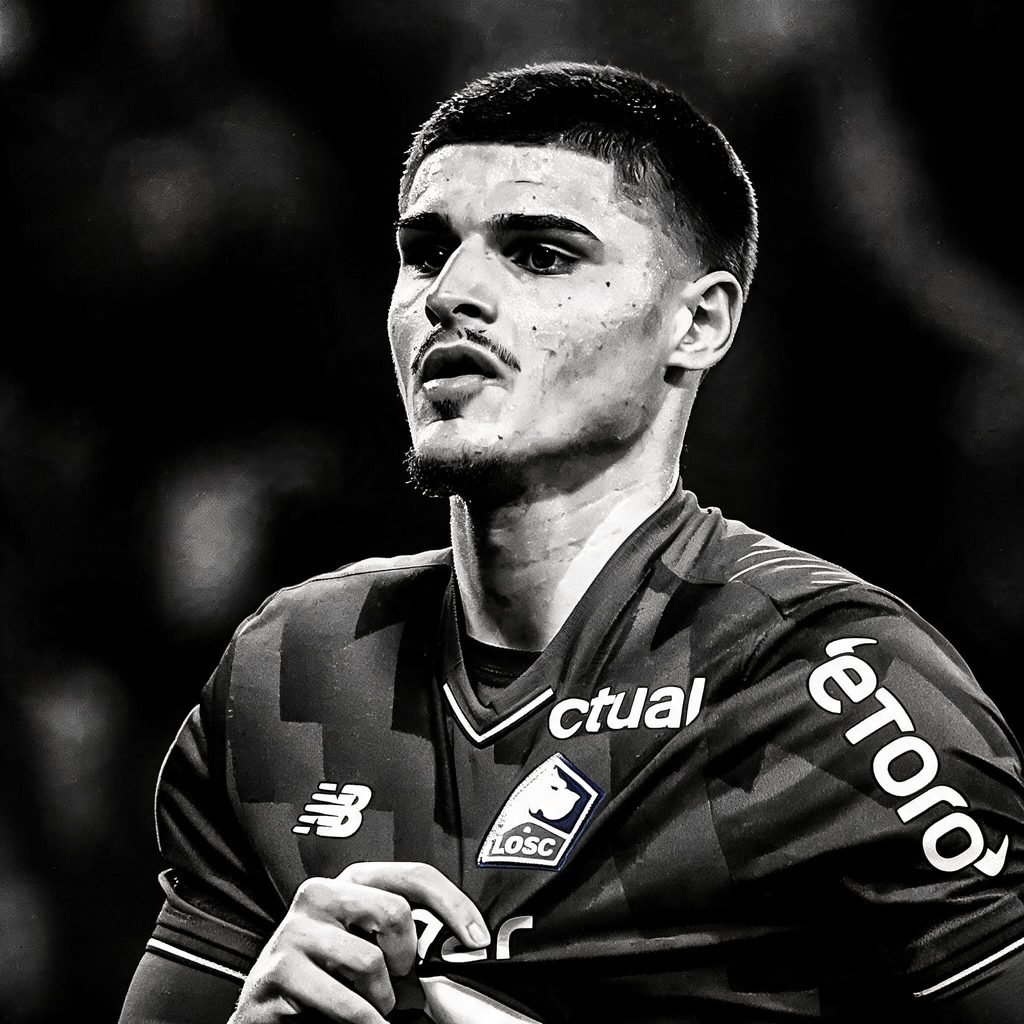
    Then, on deadline day itself, the domino that made sense of everything else fell: Matias Fernandez-Pardo, twenty-one, from Lille for £51.4m on a five-year deal, taking the summer’s total spend to £266.4m. This was not a panic buy dressed up as ambition. Lille had frozen him out of training for the better part of a week rather than risk their asset before a deal closed; Newcastle’s opening bid near €40m in early August was returned unopened, and it took a final offer around €60m plus add-ons — with the player’s own resolve softening on his earlier insistence on Champions League football — to get it over the line. A Belgian international who plays off either flank or through the middle, comfortable receiving and carrying into the box, he is the closest thing this squad has to Gordon’s departed creativity, bought a full year younger and on a fee that will amortise gently across five seasons rather than sit as a single painful line in next year’s accounts.

    Net spend across the whole window: a little over £30m. Compare that with the £141m net cost of transfers Newcastle contracted for in the twelve months to last summer, against £20m the year before that, and the shape of Wilson’s discipline becomes obvious. This was the heaviest squad overhaul of the PIF era, and it was very nearly self-funding.

    The deadline-day edges

    The signing explains only half of a good window; what a sporting director declines to do explains the other half. Nottingham Forest had a £10m bid for Jacob Murphy rejected over the weekend, returned with £15m on deadline day, and were rejected again — twice, in the space of a day, for a thirty-one-year-old entering the final year of his contract. Social media did not love the decision. But Jaissle had already spoken of a leadership “vacuum” in a dressing room that lost Bruno, Trippier and Tonali inside one summer, and Murphy is the club’s longest-serving player, 267 appearances deep since arriving from Norwich in 2017. Selling your most experienced pro for late-window cash, with no replacement lined up and a right-hand side already carrying Livramento and Dedić as each other’s only cover, is the kind of “good business” that reads well in a spreadsheet and terribly in a February relegation six-pointer. Wilson and Jaissle judged the football risk correctly, even if it leaves a contract question to resolve before next summer.

    Nick Woltemade’s exit tells the same story from the other direction. Newcastle’s club-record signing a year ago at an initial £65m, he had fallen behind Osula, Wissa and Willock in the pecking order under the new head coach and was heading for a loan for weeks — but the move was made contingent on Fernandez-Pardo’s arrival first. Nobody leaves until somebody arrives, was the internal line, and it held: the Belgian’s signature cleared the way for Woltemade to fly to Turin hours later, joining Luciano Spalletti’s Juventus on a season-long loan worth £3.5m to Newcastle, with no obligation to buy. That is asset preservation, not a fire sale — Newcastle get a struggling striker’s wages off the books for a season and retain full control of his valuation heading into next summer, rather than accepting a discounted permanent fee under deadline pressure. Sean Neave, nineteen, was also cleared to find senior football elsewhere on loan, the kind of minor squad-tidying that barely registers against nine-figure fees but matters to a development pathway.

    The balance sheet underneath it all

    None of this happened in isolation from the boardroom. The club refinanced in July 2025 into a £50m term loan and a £50m revolving credit facility at SONIA plus 2.15 and 2.1 per cent respectively, secured against Premier League central funds and St James’ Park ticket revenue, running to 2028. A further £106.5m of equity funding arrived from PZ Newco in September 2025, on top of £50m raised through the share premium account during the financial year. Record commercial revenue — up 44 per cent to £120.1m, contributing to £335.3m in total turnover — is beginning to look like the off-field engine this ownership always promised rather than a line in an ambition deck. Put simply: Wilson wasn’t just managing a football rebuild this summer. He was managing it inside a financing structure that had just been rebuilt underneath him, against a regulatory framework that changed its rules on the same afternoon the season kicked off, for a chairman’s boardroom that is separately trying to work out how to fund a stadium project north of £1bn.

    That he delivered a coherent, positionally sensible, five-years-younger squad within all of that — average age twenty-one among the new intake, a goalkeeping succession plan quietly assembled behind Nick Pope’s thirty-four-year-old frame, a genuine like-for-like creative replacement for Gordon bought at a discount to Lille’s opening valuation — is the kind of execution that doesn’t often get the credit it deserves, because it shows up as an absence of chaos rather than a highlight reel.

    What still creaks

    Credit isn’t the same as immunity from scrutiny, and a fair review owes the reader the cracks as well as the ceiling. The back four is the oldest part of an otherwise adolescent squad — Botman and Thiaw are asked to carry a season between them, with Schär and Burn both thirty-four behind them. Central midfield, rebuilt more aggressively than anywhere else, now leans on a twenty-year-old, an eighteen-year-old and a twenty-year-old alongside González, Ramsey and an ageing Joelinton with a recent surgical history. A squad cost ratio does not care about a five-year plan when three of your midfielders are teenagers in a February relegation scrap. And the Murphy contract situation — rejecting £15m for a player who could yet walk for nothing next summer — will need resolving with a new deal or a January sale, not left to drift.

    The verdict

    Three unbeaten league and cup performances to open the season — a battling 2-2 with Liverpool, a fightback past West Brom in the Carabao Cup, a proper away win at Tottenham — is a small sample, but it is not nothing for a head coach a month into the job with half his midfield still learning English pitches. The pieces Wilson assembled are, on the balance of the evidence so far, coherent rather than merely expensive.

    Judge this window against what it actually was — not a transfer window in isolation, but a sporting director eleven months into the job, replacing a head coach mid-preparation, selling three internationals into a market that wanted them badly, buying eight replacements at a discipline of youth the club has rarely shown, and doing it all for a net outlay smaller than what Newcastle spent on Bruno Guimarães alone back in 2022 — and it stops looking like a chaotic summer. It looks like the first window since October 2021 in which the football department, the finance department and the head coach’s office were all reading from the same page. That it happened during the most turbulent hundred days this ownership has overseen is not a coincidence worth glossing over. It is, on the evidence in front of us, rather the point.

    What do you think of the job Ross Wilson has done this summer? Are you satisfied with the recruits who have joined the cause? Join the conversation on X @mytoonarmy #NUFC

  • The Hundred Days That Reset Newcastle United

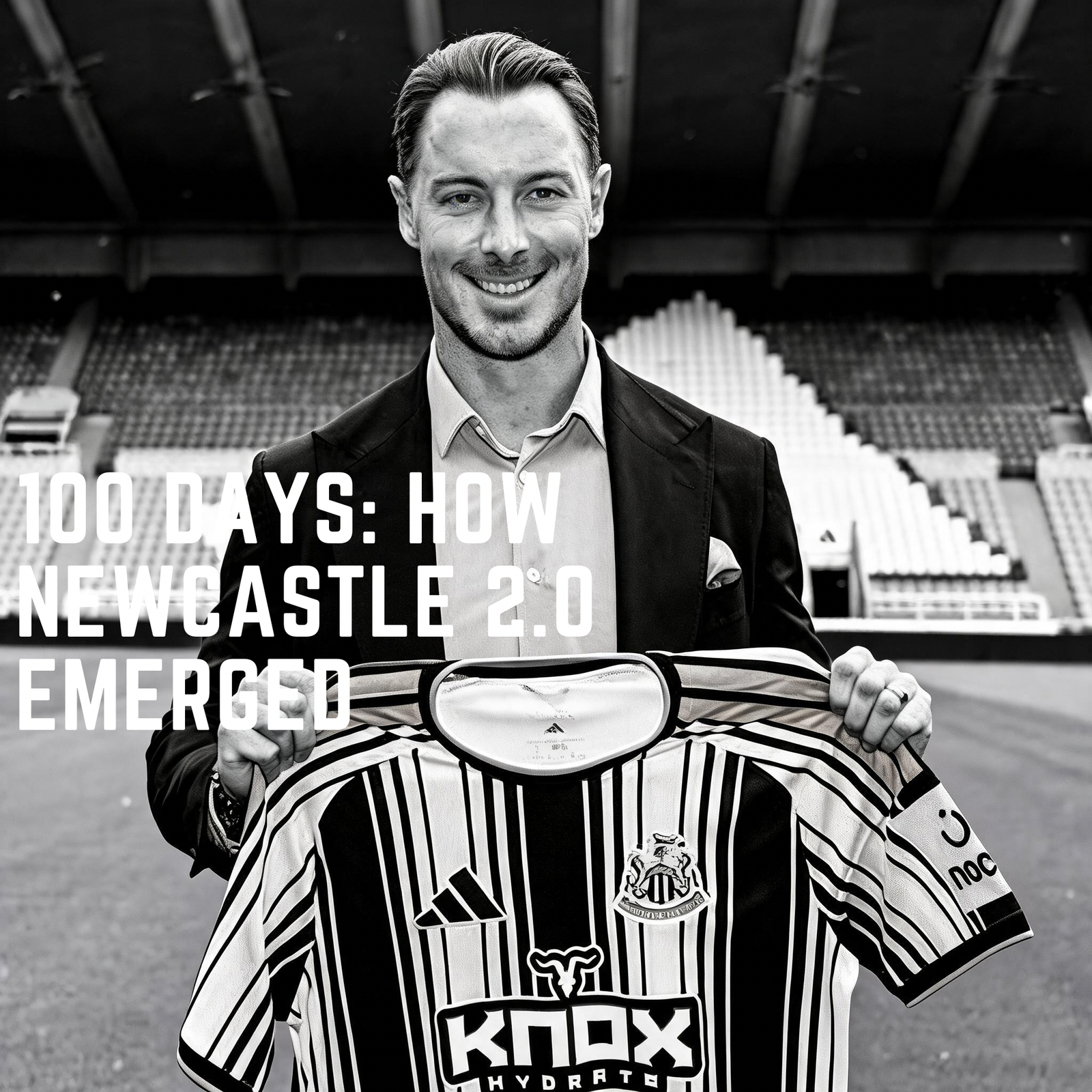
    100 Days of Change at Newcastle

    Seven goals. Barcelona put seven past Newcastle United at Camp Nou on the eighteenth of March, a 7-2 rout that turned a tie level at 1-1 after the first leg into an 8-3 aggregate defeat — a scoreline that read less like a football result than a coroner’s finding. The Champions League run was over at the last sixteen. What followed was a slow bleed of a spring: a 12th-place finish, five points adrift of Europe, and the particular Tyneside indignity of watching Sunderland close the season seventh. The expected-goals table said Newcastle should have finished tenth. They didn’t even manage the mediocrity they’d earned.

    And yet. Look at the attendance column for that miserable campaign and something strange appears. Average home league gate: 52,161. Highest: 52,514, against Everton in February. Lowest: 51,109, for an FA Cup tie against Manchester City that Newcastle lost 1-3. In a season with almost nothing to recommend it, in a stadium holding a shade over 52,000, they filled it. Every week. The football was rotten and the queue on Barrack Road never shortened.

    That is where this story actually starts. Not with a signing or a sacking, but with a fanbase that kept turning up through the worst of it — and with a club that spent the winter looking dead while, underneath, everything was being rearranged.

    The unmaking

    June and July took the spine out. Sandro Tonali to Tottenham for £92.5m, becoming that club’s record signing on arrival. Bruno Guimarães — the heartbeat, the top league scorer, the man who kissed the badge — to Arsenal for £75m. Anthony Gordon, England’s man at the World Cup and the closest thing this squad had to one of their own, to Barcelona for £68m. Kieran Trippier gone on a free to Wolves. Matt Targett and Emil Krafth released.

    Some £236m out of the door in nine weeks, and three of the best players in black and white walking through it. For supporters who’d been asked for four years to trust a process, it felt for a fortnight like the removal men had been given a key.

    Then, on the last day of July, Eddie Howe resigned. Four years and eight months — nearly the whole PIF era in one man. He had taken this club off the floor in November 2021 and put a trophy in its hands at Wembley for the first time in seventy years. Whatever you thought of his final season, his leaving felt like the end of something that wasn’t supposed to end yet.

    By the first week of August, Newcastle United had no manager, no Bruno, no Tonali, no Gordon, and a Premier League opener against Liverpool three weeks out.

    The chrysalis

    Here is where the club moved faster and more decisively than at any point in its modern history.

    Matthias Jaissle — thirty-eight, an Austrian double at Red Bull Salzburg, back-to-back AFC Champions League titles at Al-Ahli, the first coach ever to manage that feat — signed a four-year deal. Al-Ahli didn’t want to lose him; Newcastle paid £9.5m to make the objection academic. Paperwork delays meant he joined the squad mid-camp in La Manga rather than at St James’ Park, coaching players he’d barely met, a fortnight before the season.

    When he finally walked out onto the pitch on Barrack Road, he turned to his assistants and found them doing the same thing he was: smiles and goosebumps, in his words. Within days he was on Instagram — the first Newcastle head coach since Rafa Benítez to bother with it — thanking supporters for the welcome and saying he could feel the right energy in the place. A small thing. But this is a city with a long memory for managers who talked down to it, and Jaissle, in careful, excellent English, did the opposite.

    He also refused to lie. Asked what he’d achieve this season, he wouldn’t promise anything, described the squad as being in a transition phase, and said plainly that none of it would happen overnight. His message to supporters was four words: “keep the optimism.” Coming from a man who’d just inherited a demolition site, it landed as honesty rather than spin — and on Tyneside, honesty buys more goodwill than a press-conference guarantee ever has.

    The rebuild, in numbers

    Roughly £215m of that £236m went back out into the market on seven signings — and then, on deadline day itself, a further £51.4m on an eighth, taking total spend past what the summer’s sales brought in. The shape of the business tells you everything about the plan.

    Nico González arrived from Manchester City for £48m — the experienced midfield anchor supporters had been begging for, and the statement that steadied the whole window. Bazoumana Touré came from Hoffenheim for £43m. Amar Dedić, a full-back who’d played under Jaissle at Salzburg and can operate on either flank, from Benfica for £30m. Then Aladji Bamba from Monaco (£30m), Lukáš Horníček from Braga (£26m), Sean Steur from Ajax (£20m) and goalkeeper Ewen Jaouen from Reims (£18m). And finally, completed today: Matias Fernandez-Pardo, the 21-year-old Belgium international, arriving from Lille for £51.4m on a five-year deal — a front-line forward who started 27 league games for a Lille side that finished third in Ligue 1 last season, and a player Newcastle had tracked for well over a year before finally landing him.

    Eight signings, an average age of twenty-one among them, layered onto a spine — Burn, Schär, Murphy, Botman, Thiaw — that isn’t going anywhere. This is sporting director Ross Wilson’s thesis made flesh: he has said openly that the club expects to find more value outside the Premier League than inside it, and he has now spent a summer proving he meant it. Sell at peak, buy before the peak, and back the difference with fresh conviction when the right player appears. Newcastle finished this window having spent more than they sold, on a squad five years younger in its most important positions.

    Bricks, mortar and a balance sheet

    The part that will outlast any transfer window is happening away from the pitch.

    Newcastle posted record revenue of £335.3m last year, with commercial income up 44% to £120.1m — the first time this club’s off-field engine has looked remotely like its ambitions. That money is already visible. Around £30m has gone into St James’ Park, the academy, Cochrane Park and the training centre, which has been rebuilt to roughly double its previous footprint and rebranded as The KNOX for this season. Supporters will notice smaller things too: screens on the concourses, more clocks around the stands. Trivial, until you remember that Amanda Staveley once described the training ground she inherited from Mike Ashley as, simply, a joke.

    And the biggest question of all is finally moving. PIF is reportedly prepared to dilute its 85% holding to around 63.75% to bring in outside equity — capital pointed at either a redeveloped St James’ Park or a new ground at Leazes Park, a project that runs past £1bn. Nothing is signed. But after four years of the stadium question being kicked down the road, the machinery is turning.

    Nine days in August

    None of which would matter without a football team, and the football team has been quietly magnificent.

    Liverpool at home on the opening weekend: 2-2, Newcastle the braver side for long stretches, undone only by a Dominik Szoboszlai penalty in the ninety-ninth minute. Three days later, West Brom in the Carabao Cup, and a proper test of character — a goal down inside twenty minutes at St James’ Park before Touré scored on his debut and substitute Harvey Barnes struck twice, the winner on 81 minutes, for 3-2 and Jaissle’s first win. Four days after that, Tottenham Hotspur Stadium: 2-0, Yoane Wissa and Anthony Elanga, three points on the road against a top-six side.

    Three games, nine days, unbeaten. A rebuilt squad with an average age of twenty-one in its new intake, a coach who’d been in the country a month, and not a single collapse when the pressure came.

    What happens now

    Today is deadline day, and the window shuts at 11pm. The Fernandez-Pardo deal is already done and dusted — the headline arrival of the window, signed, sealed, medical passed. What’s still live as the clock runs down is the other end of it: Nick Woltemade’s future, with Juventus understood to be closing in on a loan. By midnight, Jaissle will know the final shape of the squad he’s building his first season around.

    Be clear-eyed about this season. Jaissle has said the word “transition” more often than any other, and he means it. The realistic ambition is a top-half finish, a coherent identity, and young signings surviving their first English winter. Europe would be a bonus and nobody should treat it as a birthright after a 12th-place finish.

    But three to five years out, the shape is unmistakable. A coach whose entire career has been built on making sides greater than the sum of their transfer fees. A recruitment model that sells high, buys early and stays within the rules. Record commercial revenue. A training ground reborn. A stadium decision finally in motion. Five separate strands, for the first time since October 2021, pulling in the same direction at once.

    Newcastle spent last winter looking finished. What was actually happening was the slower, uglier, more necessary work of a thing dismantling itself in order to become something else. Walk up towards the Gallowgate now, on a September evening with the cold coming up off the Tyne, and you can hear it in the noise before you reach the turnstiles.

    They never stopped coming. Now they’ve got something to come for.

    How do you feel about the club after a roller coaster summer? Where do you think the club will finish in the league this season? What are your expectations? Join the conversation on X @mytoonarmy #NUFC