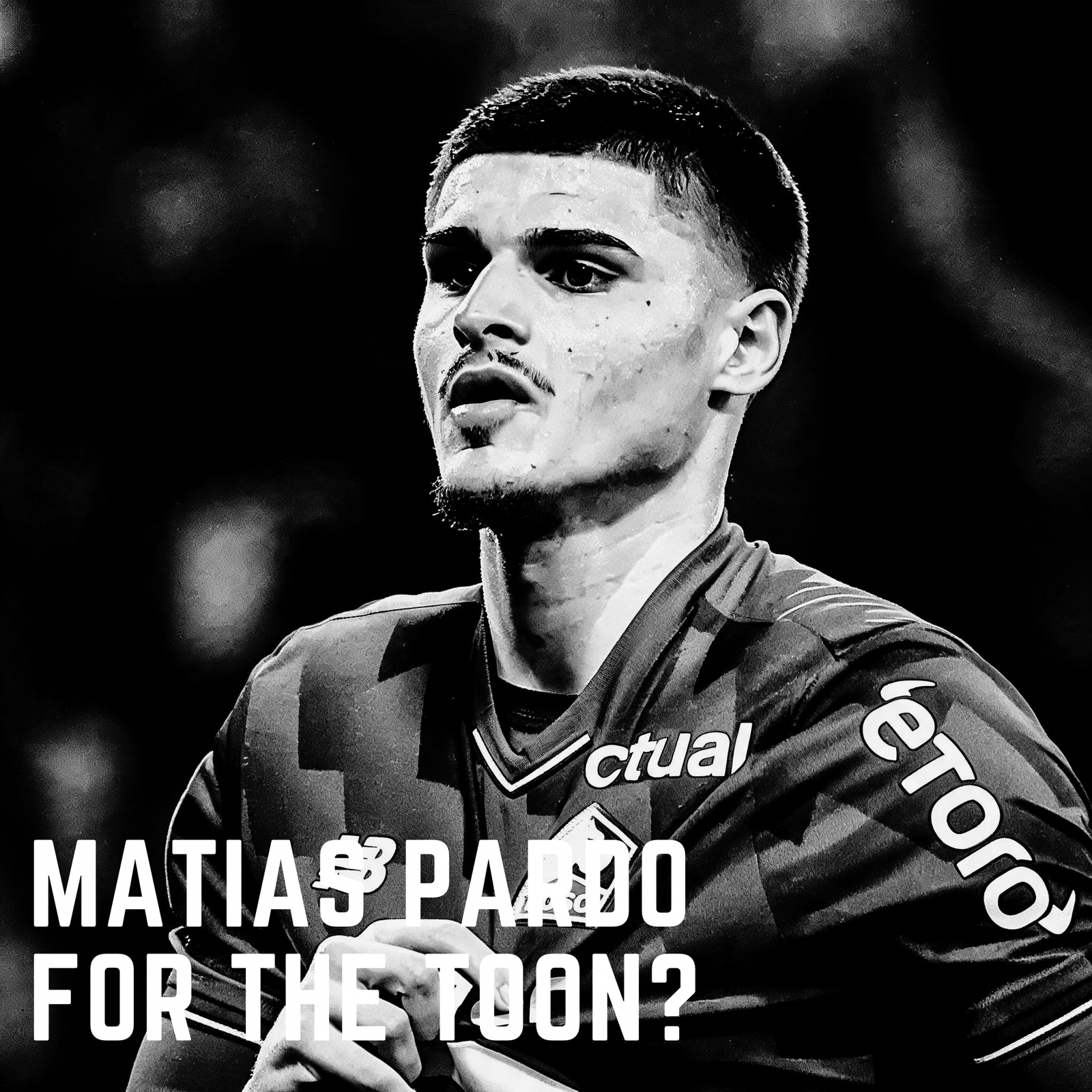
At Domaine de Luchin, on the flat farmland south-east of Lille, a 21-year-old Belgian has been training away from the first team for the better part of a week. Matias Fernandez-Pardo has not been dropped for form. He has been quarantined for accounting reasons — a €70m asset that Olivier Létang would rather not damage while three European clubs circle the price tag.
By eleven o’clock on Tuesday night, that stand-off resolves one way or the other. And so, in large part, does Newcastle United’s summer.
Ross Wilson’s phone has been the busiest object on Tyneside for a fortnight. Matthias Jaissle admitted as much before the trip to north London, describing the daily push for reinforcements as the first message he sends each morning. Then, in the same breath, the corrective: the German said the club want to be smart and refuse to act in panic. Both halves of that sentence matter. The first is the head coach protecting himself against a thin squad. The second is a sporting department protecting itself against a fee it will still be amortising in 2031.
The arithmetic of a sold spine
Start with what left, because everything downstream is a consequence of it.
Sandro Tonali to Tottenham for £92.5m. Bruno Guimarães to Arsenal for £75m. Anthony Gordon to Barcelona for £68m. Roughly £244m raised across the window once the smaller exits and the released contracts of Kieran Trippier, Matt Targett and Emil Krafth are folded in. Three players who between them started the club’s first Champions League knockout campaign, gone inside nine weeks.
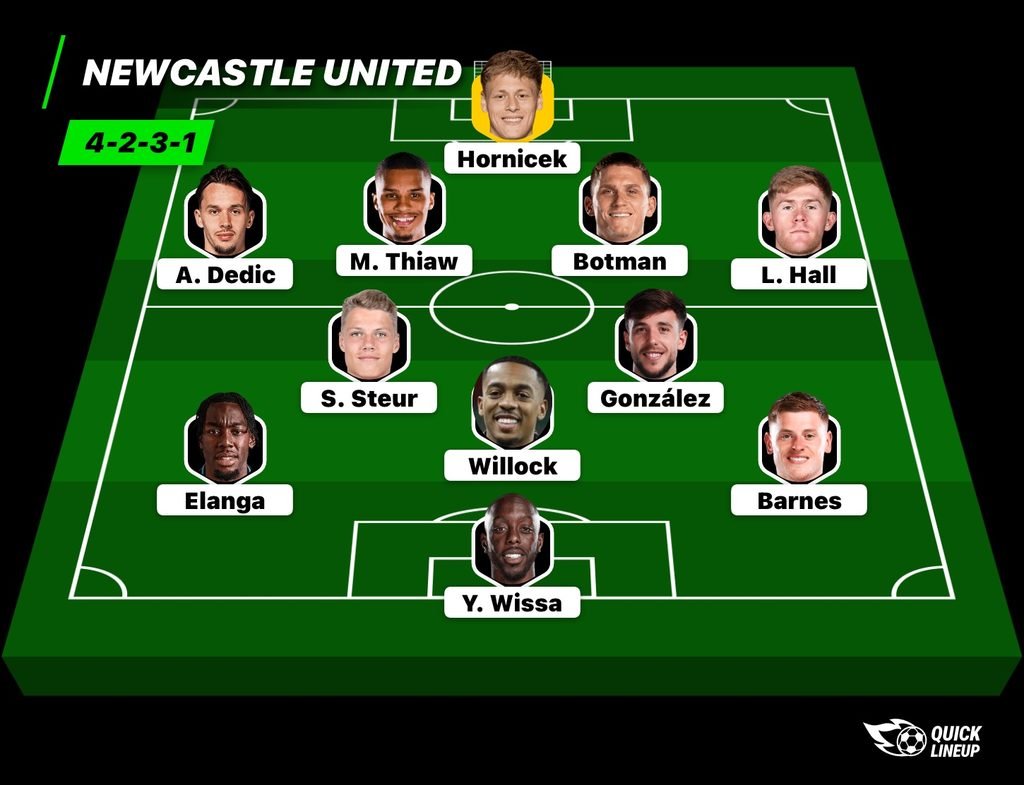
The reinvestment tells you what kind of institution PIF now believes it is running. Around £220m has gone back out — Nico González from Manchester City at £50m, Bazoumana Touré from Hoffenheim at £43m, Amar Dedić from Benfica at £30m, Aladji Bamba from Monaco at £30m, Lukáš Horníček at £26m, Sean Steur at £20m, Ewen Jaouen at £18m — and the median age of that intake sits at twenty-two. Steur is eighteen. Bamba and Jaouen are twenty.
Read those two columns side by side and the strategy stops being a mystery. Newcastle have converted three mature, fully-amortised assets into cash at the top of their valuation curve and redeployed the proceeds into registrations with five, six, seven years of residual value ahead of them. The profit on the sales lands in a single accounting period. The cost of the arrivals is smeared across the length of their contracts. It is, in the crudest terms, a balance-sheet trade dressed as a football rebuild.
Sources familiar with the club’s planning describe it as the only route available under the league’s new architecture. From this season, Profitability and Sustainability Rules have given way to the Squad Cost Ratio and the Sustainability and Systemic Resilience framework, which tether wages, agents’ fees and transfer amortisation directly to football revenue and net profit on player trading. Sell high, buy young, keep the wage bill flat: that is a club optimising for a ratio, not a transfer window.
The FY25 accounts, signed off by Yasir Al-Rumayyan on 9 November last year, show the machinery underneath. Intangible assets — the book value of player registrations — fell from £350.0m to £281.2m across the year to 30 June 2025, an unusual contraction for a club supposedly building. Net assets climbed from £248.3m to £333.0m. Retained losses narrowed from £221.1m to £186.4m, implying something close to £35m of profit in a season the strategic report describes, with admirable understatement, as mid-table.
None of that happened by accident. Fifty million pounds of fresh equity flowed through the share premium account during the year, with a further £106.5m arriving from PZ Newco in September 2025. In July of that year the group refinanced into a £50m term loan and a £50m revolving facility at SONIA plus 2.15%, secured against Premier League central funds and ticket revenue, running to July 2028.
That last detail is the one worth sitting with. Newcastle United have pledged the money that comes through the Gallowgate turnstiles as collateral. Every season ticket sold on Barrack Road is, in the most literal sense, security for the club’s working capital.
Three strikers, one of them injured
Now bring the ledger down to the grass.
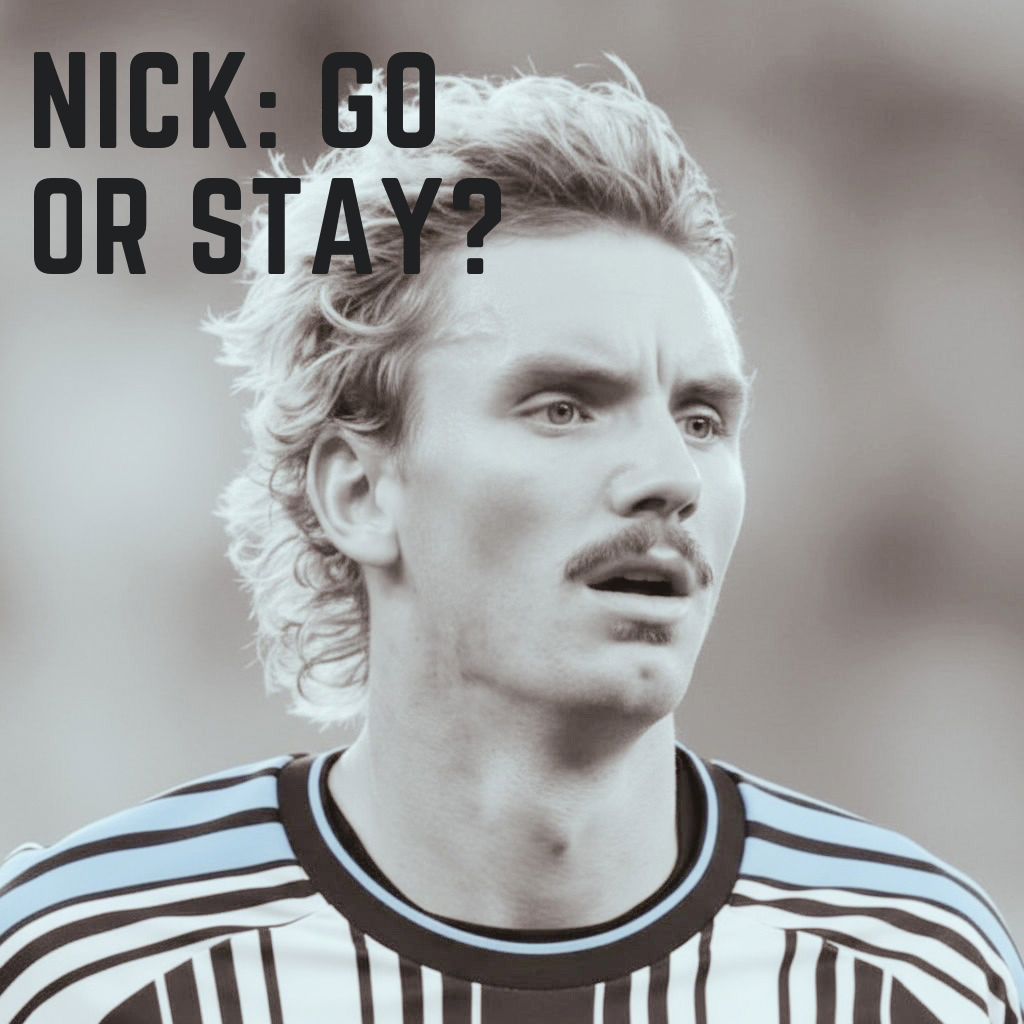
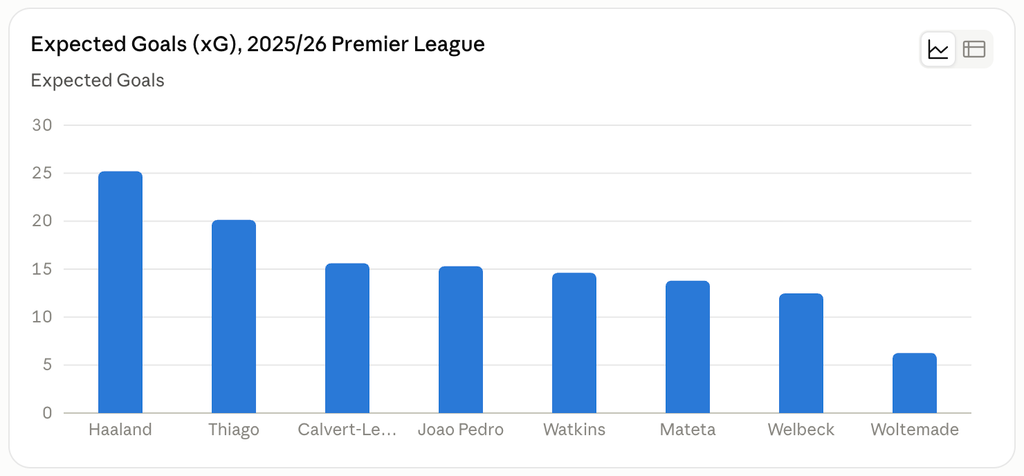
The squad list Jaissle is working from contains three recognised centre-forwards. Yoane Wissa is twenty-nine. William Osula is twenty-three and hobbling, forced off before the hour against Liverpool on the opening day with a foot problem that will keep him out for weeks. Nick Woltemade is twenty-four, still the club’s record signing at an initial £65m, and has spent most of August being discussed as though he were surplus.
Napoli have asked about a loan. Interest has surfaced from Germany. Manchester United were, at one stage, offered the chance to take him. And Newcastle’s position has hardened into something close to an ultimatum aimed at their own recruitment team: nobody leaves until somebody arrives.
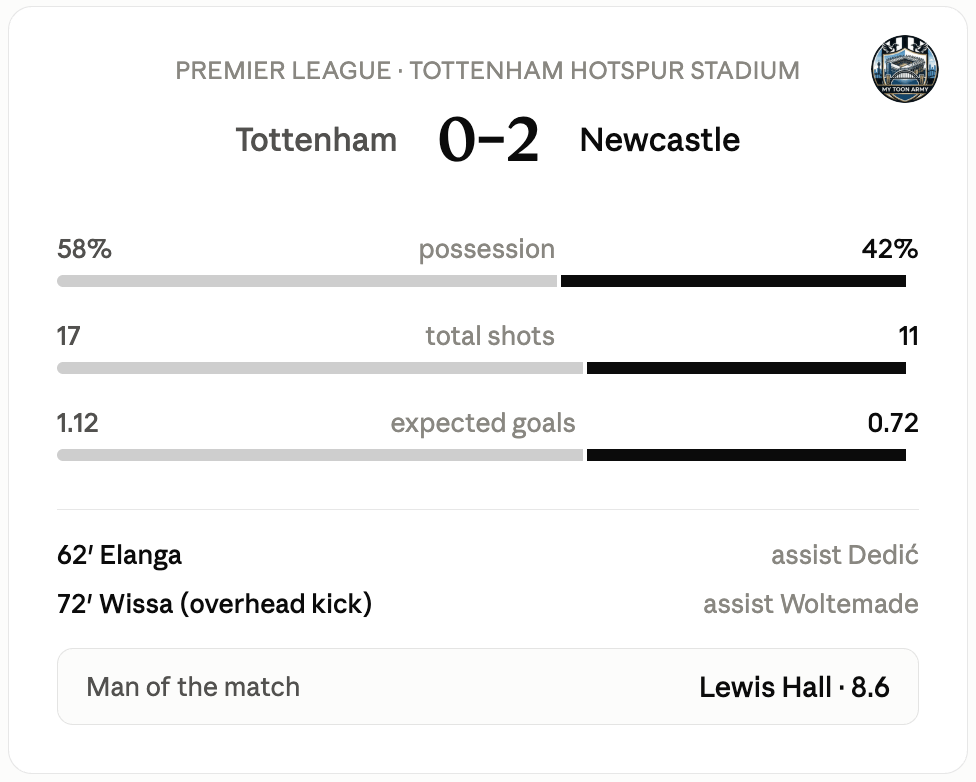
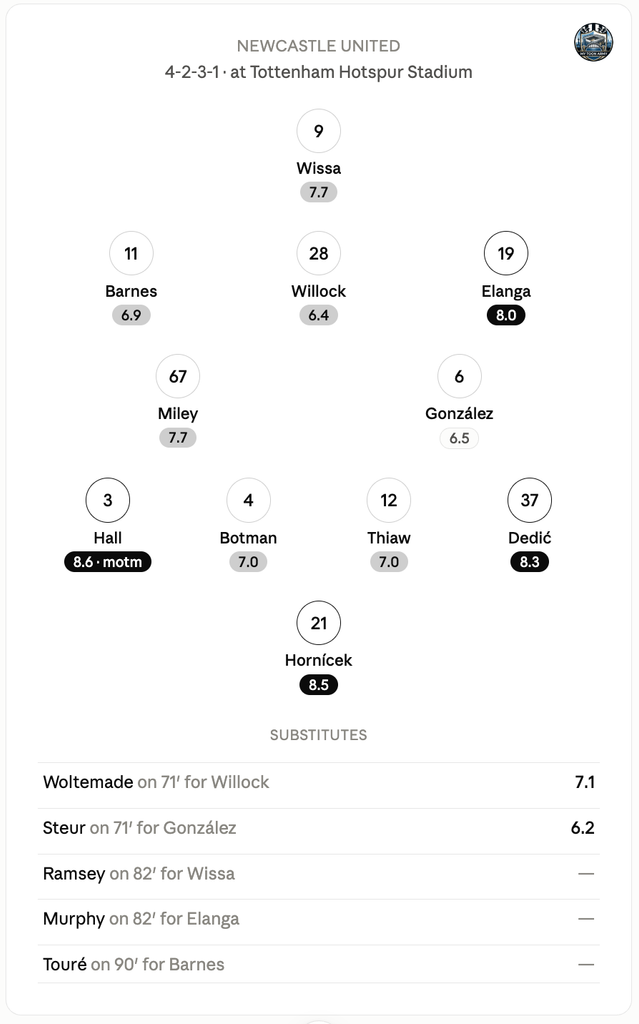
Jaissle would not be drawn after Saturday night’s win in north London, where Woltemade came off the bench and laid the second goal on a plate. Nick is part of the squad, he said, before noting that the club still intend to be active. A head coach who wants a player retained does not phrase it that way. A head coach hedging against a deal that may or may not close by Tuesday night does.
So the permutations stack up, and they are genuinely open.
If Fernandez-Pardo signs — Foot Mercato reported the gap narrowing sharply on Sunday morning, after an opening bid of around €45m was dismissed and a second at €60m tested Lille’s resolve — Newcastle have a 21-year-old who can play both flanks and through the middle, the profile Gordon used to fill, and Woltemade’s loan exit becomes viable within hours. If Lille hold at €70m and Newcastle walk, as they briefly did last week, the German stays, Osula’s foot becomes the most scrutinised metatarsal in the North East, and the attack goes into September one injury from Joe Willock playing as a false nine.
Behind the Belgian sit two names, and one of them arrived in the gossip columns overnight.

Bilal El Khannouss at Stuttgart, twenty-two, a creator rather than a runner, already familiar to the recruitment department from his Leicester years, has been under consideration for a fortnight. Matías Soulé has not. TEAMtalk reported last night that Newcastle have joined the pursuit of the Roma winger, twenty-three, an Argentina international whose future in the Eternal City depends on whether Gian Piero Ghisolfi lands the attacking reinforcements he has been chasing. Fulham, Everton and Brighton are watching. AC Milan have talked to his representatives.
And so, inevitably, have Sunderland.

The Black Cats approached Roma for Soulé in July and could not agree terms. They have circled back in the closing hours, with Igor Paixão at Marseille the parallel track, and they will make a late offer if Roma soften. Which means the most likely late signing of Newcastle’s window is a player their neighbours have wanted since midsummer, in the first season since 2016 that both clubs have shared a division, with a derby at the Stadium of Light already inked into the calendar.
Nobody at Benton will admit that changes the calculus. It changes the calculus.
Soulé would also stretch the age policy that has governed everything else. At twenty-three he would arrive older than Touré, Bamba, Steur and Fernandez-Pardo, and level with the band occupied by Dedić and Horníček — hardly a veteran, but evidence that the discipline of the early window loosens as the clock runs down. Deadline day has a way of turning a recruitment philosophy into a set of available options.
Where the shape still creaks
Look past the forward line and the gaps are structural rather than cosmetic.
At right-back, Tino Livramento and Amar Dedić are cover for one another, with 19-year-old Leo Shahar the only other listed option. In central defence, the club is asking Sven Botman and Malick Thiaw to carry a season on their own; behind them sit Fabian Schär and Dan Burn, both thirty-four, the latter now wearing the armband in a dressing room that lost Bruno, Trippier and Tonali inside a single summer. The average age of that back line, weighted by likely minutes, is the oldest part of an otherwise adolescent squad.
Midfield is where the rebuild has been most aggressive and is therefore most exposed. González arrived from City as the one ready-made starter in the entire intake, and he was, by the reckoning of most who watched Saturday, the best player on the pitch — a fact rendered slightly cruel by the identity of the man he outplayed. Around him: Bamba at twenty, Steur at eighteen, Lewis Miley at twenty. Jacob Ramsey and Joelinton are the only senior ballast, and Joelinton is thirty and has a surgical history in that thigh.
Figures close to PIF’s strategy have long argued that the plan was never a two-year plan. Fair enough. But a squad cost ratio does not care about your five-year horizon, and neither does a Tuesday-night fixture in February when three of your midfielders are still teenagers.
What Tuesday actually decides
There is a version of this window that closes tomorrow night looking coherent. Eight signings. A Belgian winger with a decade of resale ahead of him. A German striker gaining minutes in Serie A while Osula heals. A wage bill materially lighter than the one Eddie Howe left behind.
And a net spend that barely registers. Run the two columns: £244m banked from the sales, roughly £220m committed on the seven arrivals to date, plus something near £52m if Lille finally take the money for Fernandez-Pardo. That leaves the club about £28m lighter across the whole summer — a rounding error against a squad that has been rebuilt almost from the spine outwards. Newcastle will have replaced three established internationals, changed their head coach, cut the average age of the first team by years, and spent, in cash terms, less than they paid for Bruno Guimarães in 2022.
There is another version where Lille hold firm, the alternatives prove unreachable inside twenty-four hours, and Newcastle enter the international break having sold £244m of proven Premier League output and replaced it with promise, a hospital wing and a coach who has been on Tyneside for four weeks.
The gap between those two outcomes is roughly €10m and one phone call.
Down at St James’, the flags are already going up for the next home fixture. The wind coming off the Tyne has that early-September edge to it, the one that tells you the summer’s arguments are about to become the season’s results. Somewhere above the Milburn Stand, in an office with the blinds half-drawn, someone is doing sums against a clock.
Twenty-four hours. Then the ledger closes, and the football starts telling us whether the accountants were right.
Is Pardo the answer Jaissle is looking for? Are you happy with the summer transfer window? Join the conversation on X @mytoonarmy #NUFC