
Data Driven Insights. Fearless Opinions.

Strategy

  • Chaos, Pressure, and the Red Bull Blueprint: Analyzing Matthias Jaissle’s St. James’ Park Debut

    Under the blinding floodlights of St. James’ Park, Newcastle United provided an intoxicating, chaotic glimpse into life after Eddie Howe—a high-wire act of relentless pressing that nearly felled Liverpool.

    The post-Eddie Howe era at Newcastle United did not arrive with a cautious handshake; it tore through Tyneside like a gale off the North Sea. In last night’s pulsating 2-2 draw against Liverpool, Matthias Jaissle’s tactical fingerprints were plastered across every blade of grass, signaling a seismic philosophical departure from the structured, methodical tenure of his predecessor. Where Howe spent four and a half years cultivating a disciplined, possession-oriented 4-3-3 that relied on controlled territorial overload and deep build-up geometry, Jaissle’s Newcastle is an uncompromising machine built on vertical velocity and central harassment. 

    The Good: A Ferocious Turnover Engine

    What worked for the Magpies was the sheer velocity of their suffocating high press. Operating in an aggressive 4-2-3-1 that seamlessly transformed into a 3-2-4-1 in possession, Newcastle generated eight high turn-overs in the opening twenty minutes alone. Opta tracking metrics revealed an astonishing PPDA (Passes Per Defensive Action) of 6.2 during the first half—a drastic reduction from the 11.4 average recorded during the final months under Howe.

    This relentless central trapping yielded an immediate dividend in the fifth minute. When Sean Steur and Lewis Miley converged to choke off Liverpool’s spatial exit, Anthony Elanga seized the ball and dispatched a lethal finish past Alisson. Sources close to the squad indicate that Jaissle spent his first two weeks at Benton drilling a strict “three-second rule”—demanding that any ball won in the opposition half must result in a shot on target before the opponent’s defensive block can re-establish its width. The dynamic width provided by summer acquisition Amar Dedić—reunited with Jaissle after their successful partnership in Salzburg—stretched Liverpool horizontally while Harvey Barnes and Anthony Elanga collapsed inside, creating numerical superiorities in the half-spaces that Howe’s wider, traditional wingers rarely attempted.

    The Unique: Jaissle’s Red Bull DNA vs. Howe’s Tactical Foundation

    The contrast between Jaissle’s Red Bull-inspired doctrine and Eddie Howe’s regime is starkest in central midfield structure and defensive line height. Under Howe, Newcastle’s build-up was orchestrated from deep, utilizing a single pivot to dictate tempo while full-backs inverted selectively to guard against counter-attacks. Jaissle has abandoned this patient rhythm entirely. Figures familiar with PIF’s sporting directive suggest the board specifically targeted Jaissle to modernize Newcastle’s physical metrics, aligning the club with Europe’s elite vertical pressers.
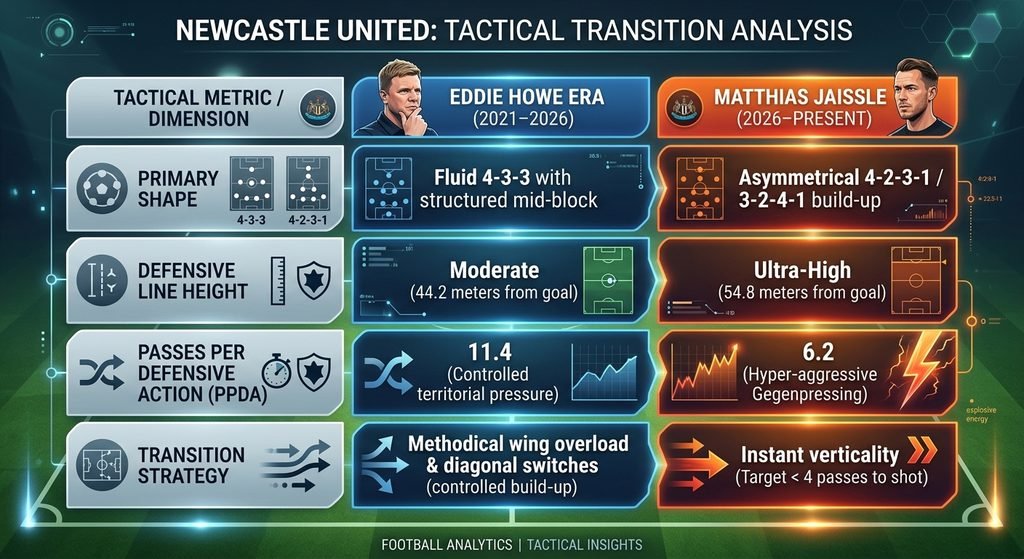
    Jaissle pushes his center-back pairing of Malick Thiaw and Sven Botman almost to the halfway line, compressing the field into a claustrophobic 30-yard rectangle. Rather than recycling possession back through goalkeeper Lukáš Horníček, Newcastle’s double-pivot is instructed to break lines vertically at the first opportunity, taking maximum numerical risk to force chaotic scrambles inside the opponent’s defensive third.

    The Bad: Naïveté, Fatigue, and Stoppage-Time Scrambles

    Yet, for all the adrenaline-fueled dominance that saw substitute Joe Willock restore Newcastle’s lead in the 57th minute, Jaissle’s high-wire act exposes glaring vulnerabilities that top-tier European sides will ruthlessly exploit. Executing a full Red Bull press demands pristine physical conditioning, and as neuromuscular fatigue inevitably set in after the 75th minute, Newcastle’s compact block fractured.

    With Dedić and Lewis Hall trapped deep in Liverpool’s half, the massive spaces behind Newcastle’s full-backs became hunting grounds for Liverpool’s wingers. When the initial wave of pressing failed to win the ball, Newcastle lacked the structural safety net that Howe so painstakingly engineered. The resulting chaos led to five yellow cards and an increasingly frantic back-line retreat, culminating in the 95th-minute penalty conceded when the defense were caught scrambling in stoppage time, allowing Dominik Szoboszlai to steal a point.

    Adapting Red Bull Ideology to Premier League Rigours

    If Jaissle is to turn breathless displays into sustained victories, he must adapt his tactical zeal to the unique demands of the Premier League. Figures familiar with PIF’s sporting directive acknowledge that full-pitch hyper-pressing for 90 minutes is physically impossible across a grueling 38-game campaign.
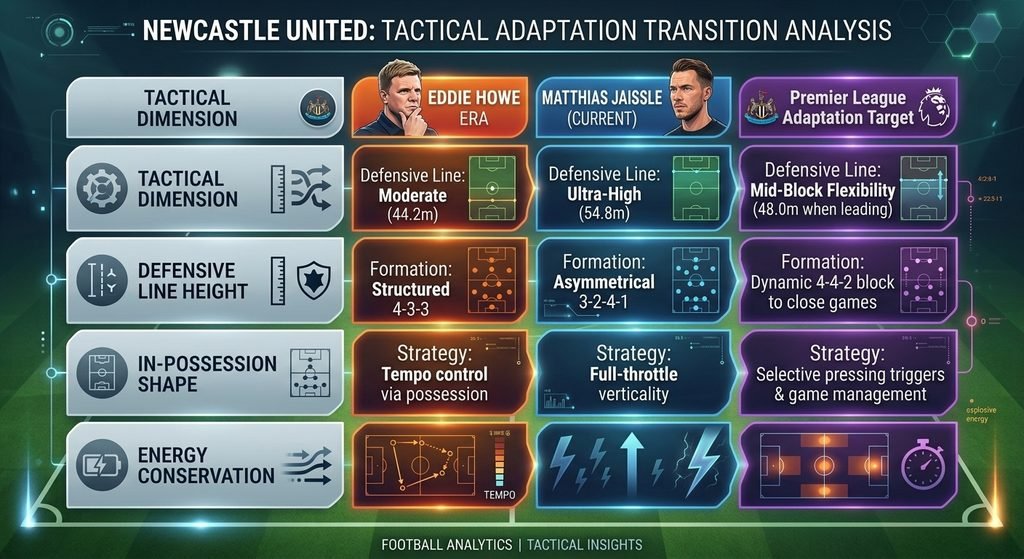
    To bridge the gap, Jaissle must incorporate tactical gear-shifting. When holding a second-half lead, Newcastle cannot remain pinned to the halfway line; they must learn to drop into a compact, Howe-esque 4-5-1 mid-block to starve opponents of space in behind. Furthermore, Jaissle must optimize his substitution timing—utilizing his bench far earlier to protect full-backs from late physical degradation—and instruct his team to slow restarts when momentum swings against them. Blending his exhilarating vertical chaos with pragmatic game management will determine whether this new era delivers European qualification or continuous late-game heartbreak.

    What do you think? Is Jaissle a breath of tactical fresh air? Will he be able to adapt and bring us long term success in the Premier League? Join the conversation on X @mytoonarmy #NUFC
  • Beyond the Pitch: How Newcastle’s Blue-Chip Boardroom Blitz is Funding a £190m Future

    There was a time, not so deep in the annals of Newcastle United’s history, when the club’s commercial strategy amounted to plastering the Gallowgate End in the primary colors of a discount sportswear retailer. St James’ Park was a billboard for a stagnant regime; the club’s balance sheet a testament to managed decline.

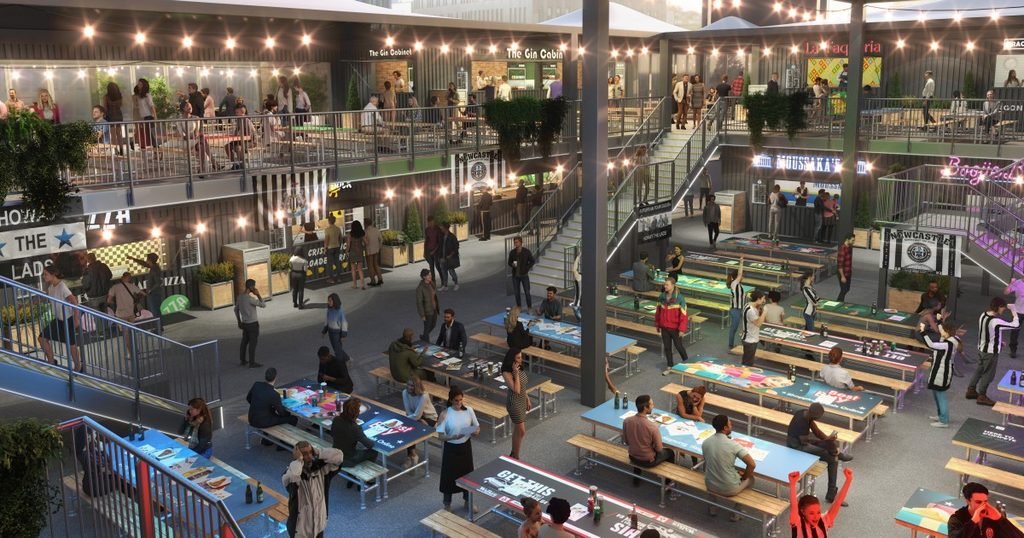
    Today, the landscape in the shadow of the Milburn Stand is unrecognizable. The recent announcements of a £15 million training kit partnership with European fintech giant SumUp, alongside a lucrative alignment with global behemoth Coca-Cola for the STACK fan zone, are not just press release fodder. They are the roaring engines of a commercial vehicle designed to crash the Premier League’s established elite.

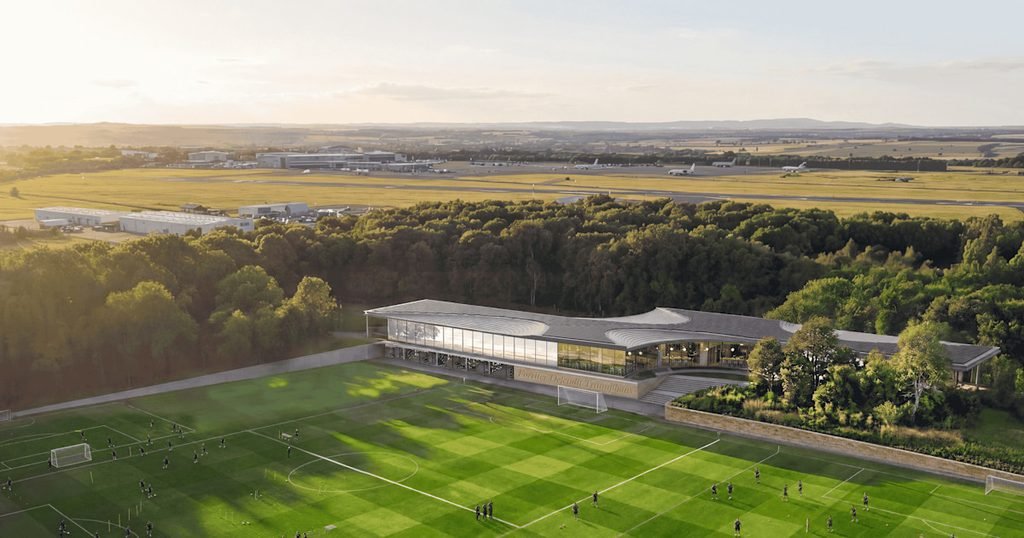
    Coupled with the staggering £190 million blueprint for a state-of-the-art training complex at Woolsington Hall, these boardroom victories dictate everything that happens on the grass. In the modern era, where financial “fair play” rules choke ambition, commercial revenue is the only true currency of progression.

    Here is what this corporate acceleration means for the club, the recruitment team, and the Geordie faithful in both the immediate and distant future.

    The Short-Term: The PSR Pressure Valve

    In the immediate term, Newcastle’s commercial pivot is about one thing: headroom.

    Every time Chief Revenue Officer David Hopkinson inks a new deal, he buys the recruitment department breathing space. The SumUp agreement—worth £5 million a season over three years—might seem like a drop in the ocean of modern football finance. But in the ruthless mathematics of player amortization, a new £5 million-a-year revenue stream equates to the annual accounting cost of a £25 million player signed on a five-year contract.

    Furthermore, these specific deals signal a vital tactical shift. In the early days of the PIF-led takeover, Newcastle relied heavily on Saudi-affiliated businesses—Sela, Noon, Saudia—to rapidly inflate their commercial baseline. While entirely legal and cleared by the Premier League, this approach drew intense scrutiny and triggered the tightening of Associated Party Transaction (APT) regulations.

    By pivoting to undisputed, blue-chip western brands like Coca-Cola and SumUp, Newcastle bypasses the bureaucratic quagmire of APT fair-market-value checks. The money flows faster, the optic is undeniably global, and the Premier League’s regulatory red tape is rendered irrelevant.

    The Coca-Cola alignment, deeply integrated into the wildly successful STACK fan zone outside St James’ Park, also immediately monetizes the matchday experience. It is a highly visible, instantly recognizable stamp of global credibility that signals to the market: Newcastle United is open for premium business.

    The Long-Term: Laying the Foundations at Woolsington Hall

    If the short-term impact of these deals is about greasing the wheels of the transfer market, the long-term reality is entirely about infrastructure.

    The current Benton training base, despite being retrofitted and polished to an impressive standard by the current ownership, remains a ceiling on the club’s potential. To consistently recruit elite, Champions League-caliber talent, a club must offer elite, Champions League-caliber facilities.

    Enter the £190 million Woolsington Hall project.

    You do not fund a nearly £200 million infrastructure project—one that promises to be among the most advanced athletic, medical, and recovery facilities in Europe—without a self-sustaining commercial ecosystem. The SumUp deal, crucially, extends across the men’s, women’s, and academy teams. It is a holistic partnership that, alongside Coca-Cola’s global backing, proves Newcastle can leverage its brand across all demographics and tiers of the club.

    In the next three to ten years, this commercial blueprint aims to close the staggering revenue gap between Newcastle and the “Big Six.” Internal club targets have long whispered about adding an additional £200 million per year to the commercial coffers by the turn of the decade. Diversifying the portfolio with fintech innovators and international beverage conglomerates proves that the club is not relying solely on the broadcast money or Champions League qualification windfalls to balance the books.

    The Verdict

    For decades, Newcastle United was a sleeping giant, anesthetized by a lack of vision. Now, it is awake, and it is hungry.

    The SumUp and Coca-Cola deals are the absolute antithesis of the Ashley era. They represent a club operating with forensic precision in the corporate sphere, utilizing global partnerships to fund local infrastructure like Woolsington Hall and the STACK.

    On Tyneside, fans rightly obsess over the number 9 shirt, the defensive high line, and the weekend’s points tally. But the brutal reality of modern football is that the trophies of tomorrow are financed by the commercial partnerships of today. Newcastle United isn’t just trying to buy a seat at the top table anymore; they are methodically building their own.

    What do you think of these developments? How will the new training ground supercharge our future? Continue the conversation on X @mytoonarmy #NUFC

  • Inside Newcastle’s Summer Reset: Financial Sanity, A Dressing Room Vacuum, and Matthias Jaissle’s New Order

    Bruno, Tonali, and Gordon are gone. The old leadership spine has been dismantled. But behind the shock of a £230m fire sale lies a calculated, ruthless attempt to rebuild Tyneside from the balance sheet up.

    Walk down Strawberry Place this summer and the mood isn’t one of panic, but a grim, pragmatic acceptance. The fast-track dream of linear, frictionless progress from takeover to European royalty was always going to hit a wall of financial regulation eventually. That wall arrived in July 2026.

    Eddie Howe’s emotional departure after nearly five years—a tenure that brought the historic 2025 EFL Cup trophy to the Gallowgate end—marked the end of Newcastle’s first post-takeover chapter. In his place steps 38-year-old German manager Matthias Jaissle, armed with a Red Bull-honed tactical clipboard and a squad that looks radically different from the one that dragged this club back into Europe.

    Make no mistake: 2026/27 is a reset year, the start of a new era. The summer sale of Bruno Guimarães to Arsenal (£75m), Sandro Tonali to Tottenham (£92.5m), and Anthony Gordon to Barcelona (£69.3m) sent shockwaves through the fan base. But if you talk to senior figures inside the club, this wasn’t a fire sale born of weakness—it was a cold, mathematical necessity to keep the club compliant and liquid.

    The Balance Sheet Reality: Why the Fire Sale Happened

    For two years, Newcastle lived on a financial tightrope. Having pushed Profitability and Sustainability Rules (PSR) to the absolute margin during the initial squad build, the club entered UEFA’s formal settlement monitoring window. UEFA’s Squad Cost Ratio (SCR)—which caps player wages, agent fees, and transfer amortization at 70% of total revenue—left Chief Executive David Hopkinson and Sporting Director Ross Wilson with zero margin for error.

    Newcastle’s SCR had spiked near an uncomfortable 76%. Retaining elite stars on mega-wages while continuing to pay off massive amortized transfer installments was mathematically unsustainable without European prize money. Cashing in on Bruno, Tonali, and Gordon generated over £230m in gross sales, injecting over £100m in pure net trading gain. That single window slashed squad cost ratios back to a healthy 68.5% and saved Newcastle from severe UEFA squad-registration sanctions.

    An Empty Leadership Corridor at Darsley Park

    Balance sheets don’t step out onto the pitch at 3:00 PM on a Saturday. The real worry inside the training ground isn’t just about lost goals or progressive passes—it’s the sudden, dramatic gutting of Newcastle’s dressing room culture.

    Kieran Trippier was the standards-setter of the post-takeover era. Bruno Guimarães was the emotional beating heart. With both gone, alongside Tonali and Gordon, Newcastle have effectively stripped away their entire leadership group in the space of a few months.

    Look down the spine of the squad now, and the changing of the guard is stark:

    • The Goalkeeping Situation: Long-time number one Nick Pope finds himself on shaky ground. The arrivals of Czech international Lukáš Horníček (£25.7m) and French starlet Ewen Jaouen (£18.5m) signal a change towards a modern, proactive sweeper-keeper. Pope, a traditional shot-stopper, is no longer first choice and could even leave before deadline day.
    • Fabian Schär’s Role: Schär’s passing ability remains elite, but in Jaissle’s ultra-aggressive, high-line defense, his lack of recovery pace has pushed him out of the guaranteed starting XI in favor of Malick Thiaw and Sven Botman.
    • Midfield Hierarchy: The engine room of the team has been completely revamped with younger, more tactical profile fits for Jaissle’s pressing engine.

    When games turn chaotic or away trips become hostile, who calms the waters? Expecting 20-year-old Aladji Bamba or 18-year-old Sean Steur to manage Premier League game states under intense pressure is a major gamble.

    The Pre-Season Spark: Touré, Bamba, Steur & Dedić

    Yet, if you watched Newcastle during pre-season, it was impossible not to feel a surge of intrigue. The new recruitment model—focusing exclusively on sub-25 players with high ceiling potential—has introduced raw, exciting talent into Jaissle’s setup.

    Bazoumana Touré (£42.8m, Hoffenheim): The Ivorian winger was a revelation on the left flank during summer friendlies. Possessing terrifying acceleration and a willingness to commit full-backs 1v1, Touré showed glimpses that he can replicate Anthony Gordon’s direct counter-attacking threat. But pre-season space is very different from facing a packed Premier League low block on a wet rainy afternoon in November.

    Aladji Bamba (£30m, Monaco): A human wrecking ball in midfield. Bamba dominated central physical duels in pre-season, displaying incredible stamina, ball recovery metrics, and press-resistance under tight pressure. The big question: how quickly will he adjust to Premier League refereeing standards and the sheer speed of English transitions?

    Sean Steur (£19.6m, Ajax): At just 18, Steur plays with a calm poise that belies his age. Operating in central pockets, his body shape and progressive passing brought grace to Newcastle’s build-up play. But he will need time to adjust to the physical demands of English midfield battles.

    Amar Dedić (£30m+, Benfica): The newly signed Bosnian full-back gives Jaissle an instant tactical anchor. Having worked in similar pressing systems, Dedić’s ability to invert into midfield or overlap down the right adds tactical versatility Newcastle desperately lacked last term.

    The Tactical Chalkboard: Jaissle’s Likely XI

    Jaissle favors a vertical 4-2-2-2 / 4-2-3-1 hybrid that relies on intense counter-pressing and immediate forward passing. Based on pre-season dynamics, this is Newcastle’s projected best XI for Matchweek 1:

    Projected Best XI (4-2-3-1):

    Horníček (GK); Dedić (RB), Thiaw (CB), Burn (CB), Hall (LB); Bamba (DM), Steur (CM), Ramsey (CM); Elanga (RW), Wissa (ST), Touré (LW).

    The Top-8 Battle: Who Are We Fighting?

    Forget West Ham—they were relegated last season and are out of the picture. Newcastle’s real battle in 2026/27 is a dogfight for 6th to 10th position against a fiercely competitive mid-pack:

    • Nottingham Forest: Now under Oliver Glasner—fresh off leading Crystal Palace to European silverware—Forest look dangerous. Glasner has installed his well-drilled 3-4-2-1 system and added marquee defender Ousmane Diomande. They will be a major rival for European places.
    • Aston Villa: Unai Emery’s side maintained squad stability, strengthened their midfield depth with an impressive youngster of their own, Johan Manzambi, and remain a direct rival for the top six.
    • Brighton & Hove Albion: Brighton’s recruitment machine keeps churning out high-grade talent. Their pre-season results suggest another strong European push.
    • Spurs & Fulham: Spurs (armed with Sandro Tonali) are aiming higher, while Marco Silva’s Fulham remain a tough, tactically disciplined opponent.
    • Sunderland: Local rivals who beat us home and away last season. There are many who would be content for revenge this season. With an unchanged squad and a talented young manager, Régis Le Bris, they may once again push the Top 10.

    The Verdict: Playing the Long Game

    This will not be a season of seamless, beautiful victories every weekend. There will be frustrating stumbles, defensive miscommunications, and quiet afternoons as Jaissle’s young squad adapts to the brutal rhythm of the Premier League.

    A 6th to 10th place finish, European qualification, and a deep cup run would represent a successful year one of Newcastle 2.0. The big-name departures hurt, but for the first time in years, the club’s financial structure and sporting vision are finally working in harmony.

    Continue the conversation on X @mytoonarmy #NUFC