Data Driven Insights. Fearless Opinions.

Preview

  • Nine and Not Out: The Bournemouth Hoodoo Survives, But Newcastle’s Soft Centre Doesn’t

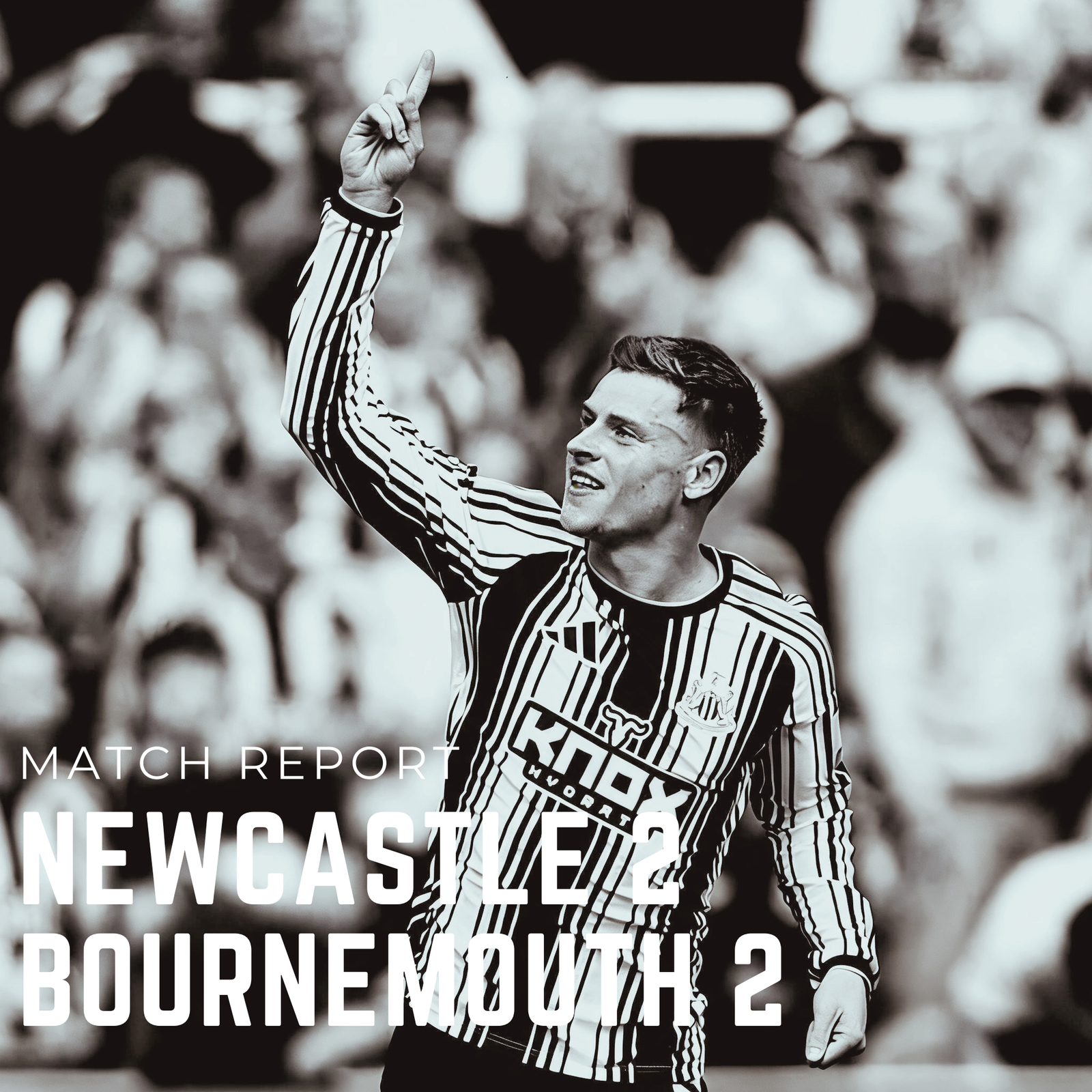
    Newcastle 2 Bournemouth 2

    Twelve yards out, eighty-eighth minute, Jacob Ramsey took one touch to settle a half-cleared ball and side-footed it low past Djordje Petrovic. St James’ Park did not so much roar as exhale — fifty-two thousand people releasing eighty-eight minutes of accumulated grievance in one go.

    It was Newcastle’s second shot on target all afternoon. Their second. Against a side who had managed five.

    That single statistic tells you almost everything about the shape of Saturday lunchtime, and almost nothing about what actually mattered. Because the question posed in this column on Friday was never whether Newcastle would out-pass or out-create Bournemouth. It was whether this team, carrying the sudden and uncomfortable weight of expectation, could handle a fixture they were supposed to win against opposition they cannot beat. The answer arrived in two parts, and the second part was more revealing than the first.

    The First Half That Proved the Warning and Missed the Point

    Friday’s preview flagged the number that should have frightened everyone: no side in the Premier League had faced more shots than Newcastle across the opening two rounds. Jaissle’s system creates through aggression and concedes through it, and Bournemouth — pacey, direct, built to punish an open midfield — looked like precisely the wrong opponent to test it against.

    Forty-five minutes later that warning looked prophetic. Thirteen Bournemouth shots to Newcastle’s three. An expected goals reading of 1.29 to 0.14. Marco Rose’s side did not merely start brightly; they arrived at St James’ Park with the clarity of a team who had watched the Liverpool and Tottenham tapes and decided that Newcastle’s high line was an invitation.

    But the mechanism was not the one predicted. Both goals traced back to the same right boot, and it belonged to Newcastle’s own right-back.

    The ninth minute: Alex Scott’s shot deflected off a Newcastle body and spun loose at the back post, and Amar Dedić stood watching it as though the phase of play had ended when the shot was struck. Marcus Tavernier did not stand watching. He arrived, and he finished, and Newcastle’s players surrounded referee Rob Jones insisting Anthony Elanga had been fouled in the build-up. VAR looked. VAR declined. Former PGMOL chief Keith Hackett has since backed the non-intervention as a legitimate refereeing judgement, and on the replays it is hard to argue otherwise — but the mood of the afternoon was set in that opening exchange, and it never fully recovered.

    The thirty-fifth was worse, and it was worse because it was structural rather than accidental. Dedić lost the ball high up the pitch, in the advanced position his attacking instincts keep dragging him towards. Tavernier skipped past Nico González in the space that Dedić had vacated. Justin Kluivert’s shot smashed against the post and rebounded off Lukáš Horníček’s back; Scott collected the loose ball on a desperately tight angle and clipped a low cross that ricocheted off Malick Thiaw and looped over his own goalkeeper.

    Call it misfortune if you like. The scoresheet does — Thiaw’s name sits there with the letters OG beside it, and he will not enjoy seeing them. But the dominoes fell in a very particular order, and the first one was pushed by a twenty-four-year-old full-back who has been outstanding going forward and repeatedly caught out coming back.
    Here is the complication, and it is the reason this is a character study rather than a hanging. Dedić’s delivery into the box is what led to the equaliser. He also curled a late free-kick high over the crossbar chasing a winner. Three of the four goals in this match had his fingerprints on them, in both directions. Ross Wilson signed a right-back whose attacking threat and defensive naivety are not two separate traits but the same trait, pointed in opposite directions. That is a coaching problem, not a recruitment error — but it is a problem, and Leeds away is not the place you want it unresolved.

    The Boy Newcastle Let Go

    There is a small, sour piece of poetry buried in the identity of Bournemouth’s scorer.
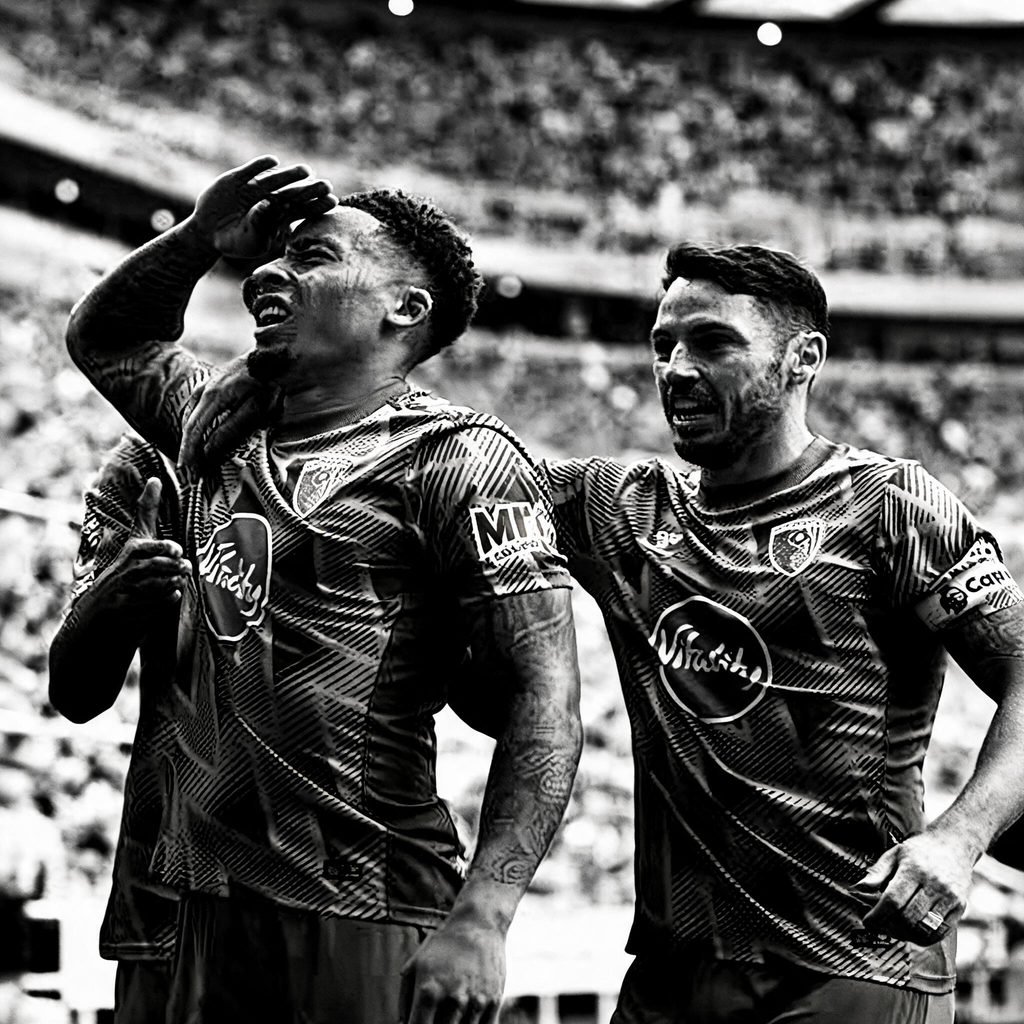
    Marcus Tavernier grew up in Newcastle’s academy. He was released as a boy, picked up by Middlesbrough at under-14 level a fortnight later, and has spent the years since building a career that keeps intersecting with the club that decided he was not good enough. Saturday’s opener was, by the Press Association’s count, his fourth goal in five appearances against Newcastle United.

    Which brings us to the harder question this column promised to answer: why can’t we beat them?

    The lazy explanation is that Bournemouth are a bogey side and bogey sides defy analysis. The better explanation is that the Cherries possess a specific structural weapon that has now survived a complete change of managerial philosophy. Andoni Iraola built a team around fast, direct wide players who attack space behind a committed defensive line. Marco Rose — Leipzig, Dortmund, Mönchengladbach — coaches a different game in most respects, but he inherited Kluivert, Tavernier and Rayan, and he did not have to be taught what they were for.

    Nine Premier League matches without a Newcastle win, stretching back to July 2020. Two Bournemouth managers, four Newcastle ones. The dugouts keep changing. The puzzle piece that unlocks us does not.

    What Bournemouth Actually Are

    And here we should be honest about the opposition, because “mid-table side Newcastle should beat” undersells them badly.

    The summer of 2026 was, on paper, the summer Bournemouth were supposed to be dismantled. Alex Scott — twenty-three, England-capped, refusing a new contract — was chased by Manchester United, Chelsea, Arsenal and Liverpool, with a late Chelsea bid rejected outright. Rayan, the Brazilian teenager they paid Vasco da Gama £30m for in January, drew Real Madrid’s attention. Eli Junior Kroupi, thirteen Premier League goals in his first full season, was watched by Arsenal and Paris Saint-Germain.

    None of them left.

    For a finance-literate readership this is the detail worth sitting with. Bournemouth did not merely wish their players would stay; they had built the contractual architecture to make refusal credible — long deals, release clauses set at levels (£87m for Rayan, roughly £86.5m for Kroupi) that price out opportunism rather than invite it. They sold Marcos Senesi, a defender approaching the end of his deal, and reinvested. António Silva, the man who replaced him, won nine duels on Saturday and eight of eleven in the air, more than any player on the pitch in either shirt.

    That is not a plucky small club. That is a properly run one, refusing to accept the role of feeder club that the league’s economics keep pressing on everybody outside the top six. Newcastle, of all clubs, should recognise the achievement — we spent the summer watching Bruno Guimarães and Sandro Tonali walk out of the door.

    Twenty Yards, Two Minutes, One Moment

    Newcastle were drowning. And then Harvey Barnes decided they weren’t.
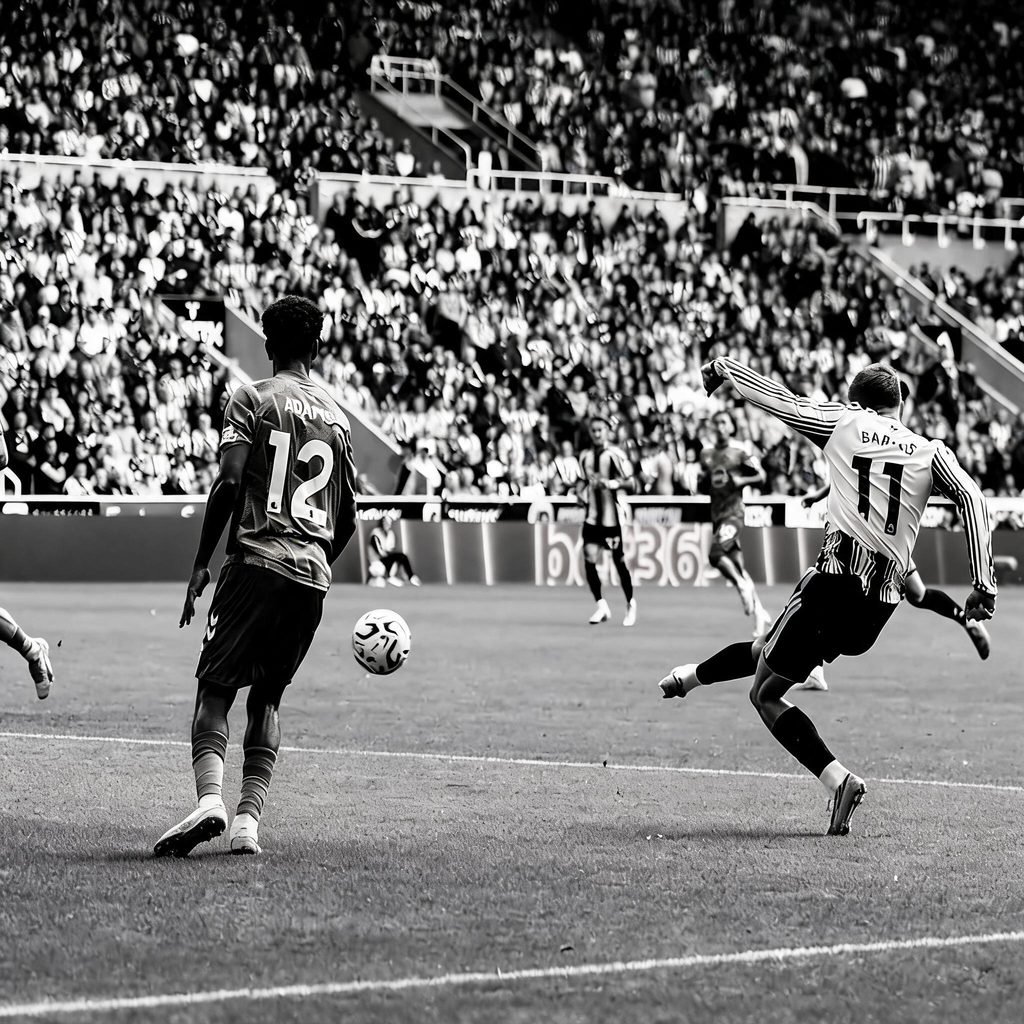
    Less than two minutes after Thiaw’s own goal, Lewis Hall slid the ball down the left channel, Barnes collected it, cut inside onto his right foot and curled a shot into the far top corner from the edge of the box. The underlying numbers rate the chance at 0.11 expected goals. The execution rated 0.83 on target. In plain English: nobody scores that shot, and he scored it.

    Football is not usually decided by moments of individual defiance. It just is often enough that teams keep believing in them. Had that ball gone two feet wider, Newcastle go in three down or two down and dead, Jaissle’s substitutions become damage limitation rather than intervention, and this article is about a very different afternoon.

    The Referee, and a Problem the League Has Not Solved

    The second half is where the argument starts.

    Newcastle came out quicker, sharper and with a settled idea of where the game was to be won. They did not get the chance to build any rhythm — and that was by design, though not solely Bournemouth’s.

    Thirty-five fouls were awarded across ninety minutes. Rob Jones’s own season average coming into this fixture ran at 22.7 fouls per game, itself flagged as above the Premier League norm. This match ran hotter and choppier than his usual, and it ran that way at exactly the moment Newcastle needed continuity. Bournemouth’s players, comfortably ahead, discovered a succession of ailments requiring attention. Physios came on in rotation. Every restart took a beat longer than it needed to.

    One passage captures it precisely. Shortly after coming on, Matias Fernandez-Pardo won a free-kick thirty-four yards from goal — the sort of set-piece that keeps a siege alive. The whistle went again for something else, and the moment evaporated. Jaissle, whose reading of the situation was entirely correct, collected the first booking of his Premier League managerial career in the seventy-first minute for saying so. Six minutes were added at the end.

    Let us be precise about the complaint, because it is not the tired one. Bournemouth were entitled to manage the game; every side ahead in the eighty-second minute does the same, and Newcastle would have done it too. The issue is that the Premier League spent years introducing stopwatch timekeeping specifically to make this behaviour unprofitable — precise added time for treatment, substitutions, celebrations, delay. Howard Webb promised the clampdown was not a matter of “days and weeks.” Three seasons on, a visiting side slowed a match to a crawl at St James’ Park and it worked, right up until it didn’t.

    The pre-season assessment of the 2026-27 officiating pool framed the coming year’s real test not as new technology or fresh guidance, but as whether the same foul, the same holding offence, the same threshold for stopping play is judged identically in August and in May. Saturday was a data point. It will not be the last, and it will not only ever fall against us.

    Jaissle’s Hour

    Now the part that should genuinely encourage you.

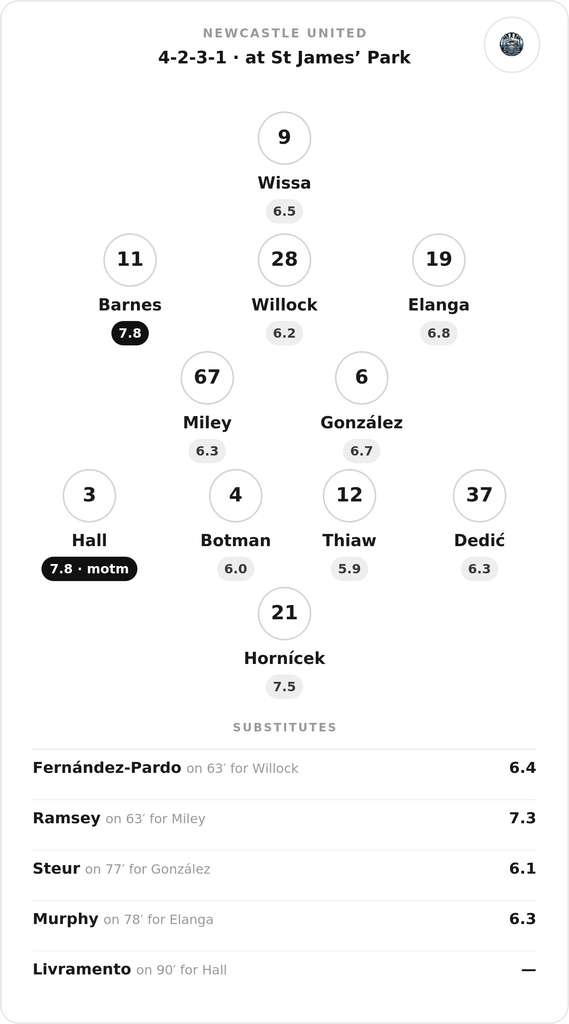
    At sixty-three minutes, still 1-2 down, still creating little, Jaissle removed Joe Willock and Lewis Miley and sent on Fernandez-Pardo and Ramsey together. Not a late throw of the dice — a considered intervention with nearly half an hour left, from a manager who had watched the first half and concluded that the problem was not effort but structure.

    The numbers either side of that change are stark. Bournemouth outshot Newcastle 13-3 before the break; after it, Newcastle edged the shot count 5-4 and the expected goals 0.57 to 0.08. The Cherries, who looked genuinely unplayable for half an hour, simply stopped being able to reach Newcastle’s box. Possession shifted, but more importantly the shape of possession shifted — quicker, straighter, forward.

    Twenty-five minutes after arriving, Ramsey scored.
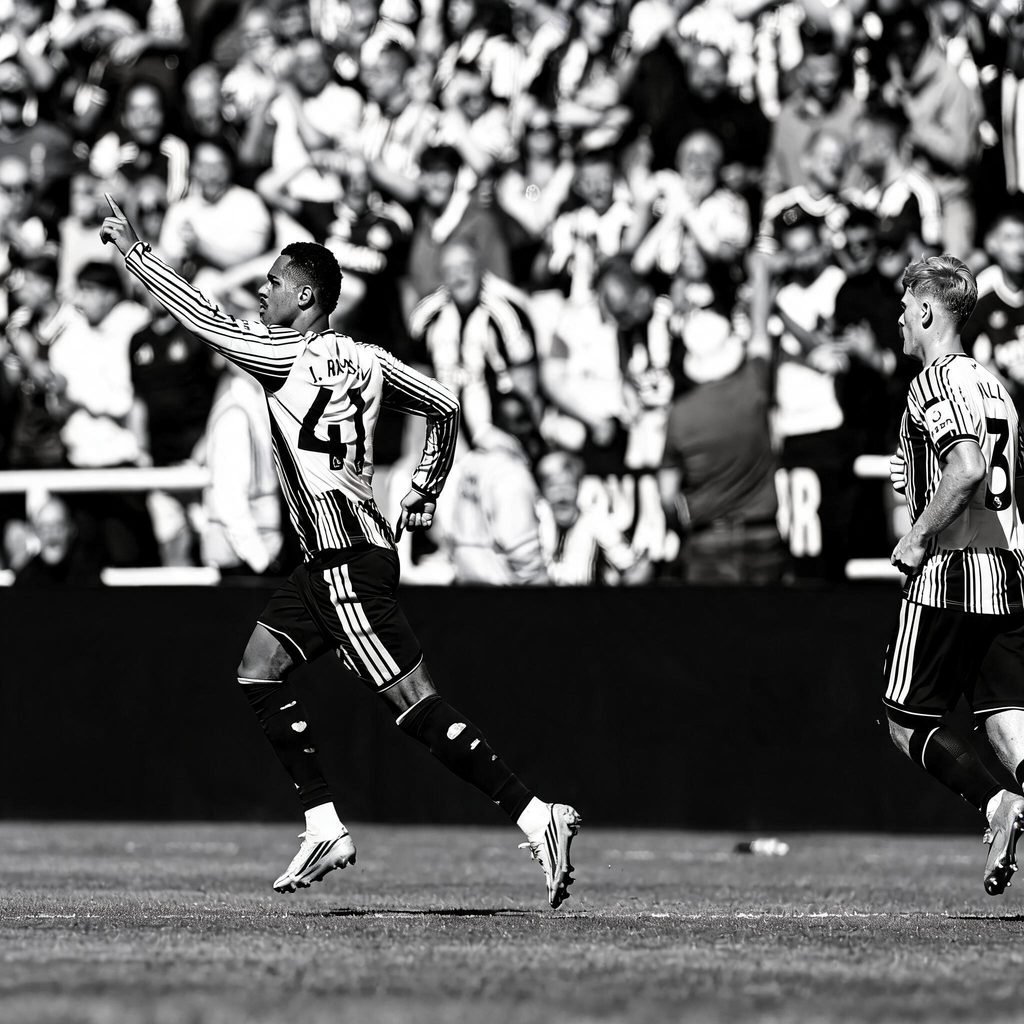
    And the crowd, it must be said, did as much of the work as the tactics board. Fifty-two thousand six hundred and forty-three inside a full house, and by the closing quarter they had turned St James’ Park into something Bournemouth visibly did not want to be standing in. Speaking to Match of the Day afterwards, Jaissle said: “I have mixed feelings. But after that start, you should be happy. But if we could have performed at the best level over 90 minutes, we could have had all three points. We couldn’t match Bournemouth’s intensity in the first half and conceded twice.”

    That is the correct read. This was not a good performance. It was, however, evidence of a thing this club has conspicuously lacked. Last season Newcastle led the division in points thrown away from winning positions. On Saturday they were the ones doing the clawing.

    The Best Player Was Not the One Who Scored

    Harvey Barnes produced the moment. Lewis Hall produced the performance.

    Both were rated 7.8, but the composition differs entirely. Hall supplied the assist for Barnes’s goal, made thirteen ball recoveries — more than any player on the pitch, in either shirt — completed 87 per cent of his passes and played nine line-breaking passes from left-back. When Newcastle were being overrun, he was the one repeatedly winning the ball back and pointing it forward. When they were chasing, he was the platform underneath the chase.

    Yoane Wissa ran ten kilometres and hit 33.7 km/h without registering a single shot, which is its own kind of thankless. Nico González played more line-breaking passes than anyone on the pitch — twelve — while also conceding six fouls and being dribbled past three times, a rookie’s afternoon in an English midfield.

    But Hall is the answer. Barnes won the highlights reel; Hall won the hour.

    Twenty-Seven Minutes of a £51m Question

    Friday’s preview predicted Jaissle would introduce Fernandez-Pardo gradually, from the bench, rather than disturb a functioning front line. That is precisely what happened, and the Belgian’s afternoon lasted twenty-seven minutes.

    He did not score, did not assist, and was thoroughly upstaged by the man who came on alongside him. What he did do was cover 875 metres at running pace and register nine sprints in under half an hour, take three touches inside the Bournemouth box, and beat his man the one time he tried. He also won the free-kick that the referee’s whistle promptly buried.

    Flashes, then. Nothing more, and nothing to worry about. Jaissle called it “a lot of quality” and stressed the need to manage a young player carefully. Judgement deferred, which is exactly where it should sit.


    What’s Next

    Newcastle travel to Millwall on Tuesday for a Carabao Cup third-round tie that will hand minutes to the players who did not get them here — and Tino Livramento, who Friday’s preview said would not be risked, has already returned for a stoppage-time cameo. Then Leeds away on Monday the fourteenth, and Hull City at St James’ Park the following Saturday. Five points from three games with a trip to Elland Road next is a perfectly respectable platform; it is also a schedule with no more free passes in it.

    Bournemouth host Lincoln City on Tuesday and Brentford next Saturday, and Rose’s problem is now a matter of public record. His side became the first team in Premier League history to score first in each of their opening three fixtures and win none of them. They have dropped seven points from winning positions already this season and twenty-nine since the start of the last — a figure they share, with some irony, with Newcastle. Four of the five goals they have conceded this term arrived after the eightieth minute. “If we can’t finish the games,” Rose said afterwards, “we need to defend our goal like it’s the last game of our lives.”

    The hoodoo stands at nine. We still cannot beat them.

    But for the first time in a long while, the story on the way back down Barrack Road was not about what Newcastle let slip. It was about what they refused to. Friday’s column asked whether this team could handle the sudden, uncomfortable presence of expectation. They failed the first half of that examination badly, and then they answered it in the only currency that has ever mattered on Tyneside.

    They did not give in.

    What do you think about the fightback from 2 goals down? Shall Pardo start the next league game against Leeds? Join the conversation on X @mytoonarmy #NUFC

  • The Real Test: Why Bournemouth, Not Liverpool or Spurs, Will Define Jaissle’s Newcastle

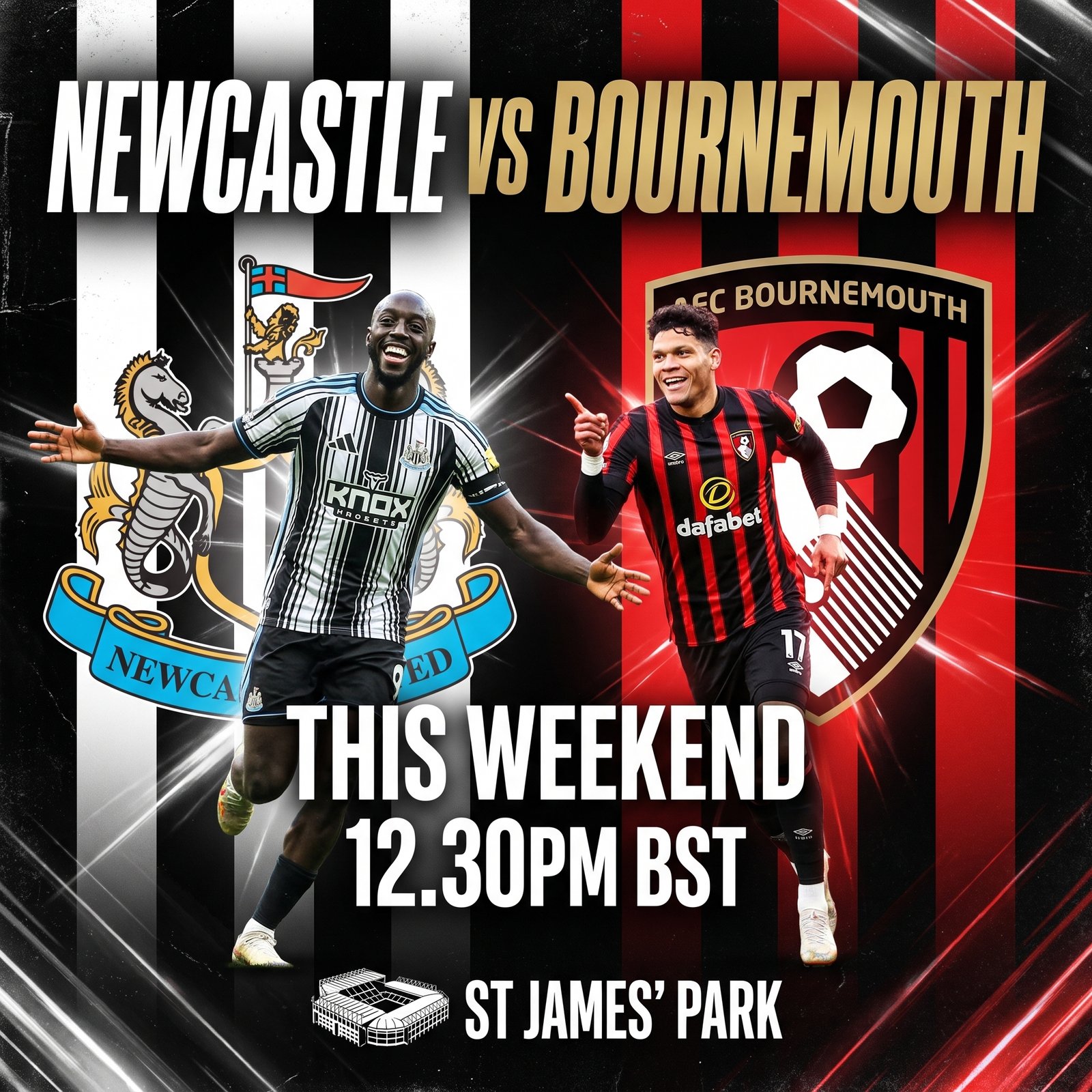
    Newcastle v Bournemouth, 5 Sept

    Twelve-thirty on Saturday, low September light slanting across the Gallowgate End, and Newcastle United are about to face the fixture that actually matters. Not Anfield, where a point arrived against Liverpool with nobody demanding more. Not Tottenham Hotspur Stadium, where a 2-0 win away from home was pure bonus, the kind of result that earns a head coach goodwill rather than scrutiny. Bournemouth at St James’ Park is different in kind, not degree. This is the game Newcastle are supposed to win, against the one mid-table side that has spent five years making a mockery of that supposition.

    That is what makes it the most revealing fixture of Matthias Jaissle’s young reign so far. Liverpool and Spurs told us Newcastle could compete with superior opposition when written off in advance. Bournemouth will tell us whether this team can convert raised expectations into three points against a side they traditionally cannot beat — whether the German’s vertical, high-intensity system holds up not against talent gaps that flatter it, but against the low-block, ambush-counter version of Premier League football that has undone Newcastle again and again on Tyneside.

    The Hoodoo

    Eight matches. Three defeats, five draws, not a single win. That is Newcastle’s Premier League record against Bournemouth since a 4-1 victory in July 2020, back when the visitors were managed by a young Eddie Howe — the same Eddie Howe who would go on to spend four years in the home dugout and now, following his summer departure, manages neither club in this fixture. Howe shares the record for the most Premier League games a manager has gone without beating a former employer, and the currency of that statistic has not devalued since he left St James’ Park.

    The most recent instalment offered no relief. April this year, St James’ Park, and Newcastle were 85 minutes from ending the run when Adrien Truffert found space at the back post and buried a winner that sent Bournemouth back down the A1 with all three points. It capped a run in which the Cherries have won their last two top-flight visits to Tyneside and now average 1.75 points per game at St James’ Park across eight visits — a return bettered, among grounds where they have played at least five times, only at Wolverhampton’s Molineux. Newcastle have spent parts of two decades building a fortress on Barrack Road. Bournemouth, unaccountably, hold a key.

    Jaissle’s Opening Statement, Interrupted

    Three games into the German’s competitive life in English football, the shape of his intentions is already legible. Newcastle pressed Liverpool into a stalemate they were unfortunate not to win outright, then travelled to north London and beat Tottenham 2-0 with goals from Anthony Elanga and Yoane Wissa, a result Jaissle afterwards called a “step in the right direction,” insisting that his squad’s underlying “DNA” is a “good fit” for the vertical, front-footed approach he has installed. There is substance behind the framing: Newcastle have won three of their last six league matches, a marked upturn on the one victory managed in the thirteen fixtures before that.

    But the same two matches expose the cost of the method. No side in the Premier League this season has faced more shots than Newcastle’s 44 — a startling reversal for a team that allowed only eight shots across its opening two league fixtures twelve months ago, itself the fewest they had conceded to open a campaign since 2003-04. Jaissle’s Newcastle create through aggression and concede through it too, inviting transition moments by committing bodies forward and pressing high up the pitch. Against Liverpool’s individual quality and Tottenham’s toothless finishing, that trade-off paid for itself. Bournemouth, built by Marco Rose around precisely the kind of direct, transitional football that punishes an open midfield, represent a sterner examination of whether the approach can survive contact with a side that knows how to exploit it.

    A Midfield Rebuilt From the Ground Up

    Context matters here, and it runs deeper than results. Newcastle lost both first-choice central midfielders this summer — Bruno Guimarães to Arsenal, Sandro Tonali to Tottenham — a departure of authority and control that would have derailed most rebuilding projects launched simultaneously with a managerial change. Sporting director Ross Wilson’s response was Nico González, a £50 million-plus deal struck with Manchester City for a 24-year-old La Masia graduate who had already won a Carabao Cup and an FA Cup at the Etihad. González made his debut at Tottenham and looked entirely unbothered by the occasion, screening the back four and dictating tempo in a manner Newcastle have missed since Guimarães departed. He is expected to retain his place alongside Lewis Miley, the academy graduate whose passing range increasingly resembles a player several seasons his senior.

    The rebuild is not finished. Matias Fernandez-Pardo, a deadline-day, £51 million arrival from Lille, is available for selection but Jaissle has signalled he intends to introduce the Belgian gradually, most likely from the bench, rather than throw him into a settled front line. That patience says something about the head coach’s confidence in what he already has: Elanga, Wissa and Harvey Barnes have combined for the goals that have carried Newcastle’s start, and none of the three appears likely to make way this weekend.

    Bournemouth’s Own Reinvention

    The visitors arrive mid-transition themselves. Andoni Iraola’s departure to Liverpool this summer — the same Liverpool who held Newcastle to a draw on the opening weekend — left Bournemouth needing a fresh identity, and the club turned to Marco Rose, formerly of RB Leipzig, Borussia Dortmund and Borussia Mönchengladbach, to provide it. Two German head coaches now face each other in a fixture that a decade ago would have been unthinkable in south coast and north-east dugouts alike.

    Rose’s start has been shakier than his opposite number’s. Bournemouth are one of eight Premier League clubs yet to register a win, having conceded twice in the closing ten minutes of a 2-1 defeat at Manchester City before James Tarkowski’s stoppage-time header rescued a point for Everton at Dean Court. The underlying pattern is troubling for the Cherries: they have surrendered 28 points from winning positions since the start of last season, a fragility that suggests a team capable of matching anyone for an hour but not yet equipped to see games out. Rose, for his part, has been at pains to stress the value of continuity, expressing satisfaction that the club retained Alex Scott, Rayan and Junior Kroupi through the window rather than cashing in — “we need these type of players,” he said this week, framing squad stability as deliberate strategy rather than accident.

    That continuity brings genuine menace in behind Newcastle’s high line. Justin Kluivert, Marcus Tavernier and the increasingly influential Rayan give Bournemouth pace and directness in the transition exactly where Jaissle’s system is most exposed, with Evanilson leading the line to occupy Newcastle’s centre-backs and create the space in which the front three like to operate. It is not difficult to see how Saturday could unfold as a version of last season’s collapse: control for long spells, chances created, and then a sting in a game Newcastle should have already put to bed.

    Team News

    Jaissle’s selection headache is more about absence than doubt. Captain Dan Burn remains sidelined with an ankle injury and, along with William Osula’s foot problem, is not expected back until October. Joelinton (thigh) and Tino Livramento (calf) are both closing on returns but will not be risked this weekend, meaning Lewis Hall continues at left-back and the midfield engine room stays as it has been. Bournemouth, by contrast, report no fresh fitness concerns, giving Rose a full complement to choose from.

    Predicted Line-ups

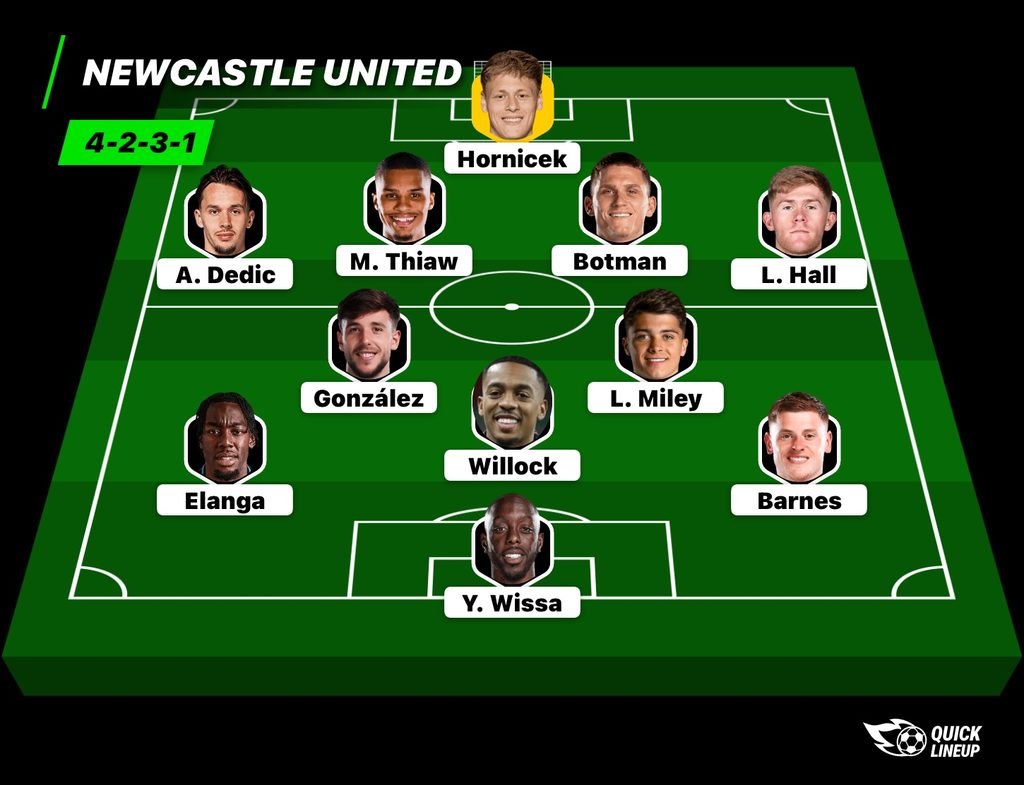
    Newcastle United (4-2-3-1): Horníček; Dedić, Thiaw, Botman, Hall; Miley, González; Elanga, Willock, Barnes; Wissa

    AFC Bournemouth (4-2-3-1): Petrović; Smith, Silva, Hill, Truffert; Cook, Scott; Kluivert, Rayan, Tavernier; Evanilson

    The Verdict Awaiting

    Nobody at St James’ Park expected much from the trips to Anfield and Tottenham, which is precisely why both results felt like pure gain. Saturday offers no such shelter. This is a fixture Newcastle are favoured to win, against opposition they have not beaten in the league for half a decade, with a system that has already shown both its teeth and its soft underbelly across two matches. How Jaissle’s team handles that pressure — not the absence of expectation but its sudden, uncomfortable presence — will say more about the direction of this project than anything Liverpool or Spurs could offer. The Gallowgate End will find out by half past two.

    Score Prediction: 2-1 victory to Newcastle.

    What’s your score prediction? Will Pardo start? Join the conversation on X @mytoonarmy #NUFC
  • North London Awaits: Newcastle Carry Tyneside’s Faith Into a Ground Where They Rarely Lose

    #TOTNEW

    Seventeen thousand miles of pre-season goodwill count for nothing once Matthias Jaissle’s players step down the tunnel at Tottenham Hotspur Stadium on Saturday. Kick-off is 17:30 BST, and for a Newcastle side still finding its shape under a manager who has now taken precisely one competitive match in English football, this is the fixture that tells you something real.

    It arrives with history leaning heavily black-and-white. Newcastle have won seven of their last nine competitive meetings with Spurs, scoring at a rate of 3.78 goals per game across that sequence, and no ground in the country has been kinder to Newcastle away from home than N17 — thirteen away league wins there is more than they have managed at any other opponent’s stadium. Last February, Archie Gray cancelled out Malick Thiaw’s opener before Jacob Ramsey struck the winner in a 2-1 away victory that continued a run of taking maximum points on three of the last four visits. Tottenham’s fans know this fixture’s recent taste, and it is bitter.

    Two clubs mid-rebuild, both still finding the join

    What makes this early-season meeting so combustible is that neither manager has had time to stamp real authority on his squad. Roberto De Zerbi arrived at Spurs in April, inheriting a relegation fight, and has since been backed with signings — Savio arriving from Manchester City, Omar Marmoush finalised in the days before this game — while simultaneously trying to coax an attacking identity out of a group he inherited mid-crisis. His side were humbled 3-0 at Brentford on the opening weekend, Keane Lewis-Potter and Vitaly Janelt punishing early defensive slackness before Michael Kayode added gloss to the scoreline after the break. The response came in the Carabao Cup, a 5-1 dismantling of Charlton Athletic in which Savio scored off the bench on his introduction to English football and Mikey Moore, Dominic Solanke, Kevin Danso and Ben Davies all found the net. It settled nerves. It did not answer the question Saturday will ask.

    Jaissle’s rebuild is more radical still. Newcastle enter this game having said goodbye to Bruno Guimarães, Sandro Tonali, Anthony Gordon and Alexander Isak inside a single transfer window — a hollowing-out of the spine that would unsettle any dressing room, let alone one adjusting simultaneously to a head coach steeped in Red Bull pressing principles rather than Eddie Howe’s mid-block patience.

    The opening evidence was encouraging in patches and alarming in others. Anthony Elanga’s fifth-minute strike and a second-half Joe Willock finish had St James’ Park dreaming of a routine opening win over Liverpool, only for Lewis Hall’s foul on Victor Muñoz to gift Dominik Szoboszlai a 99th-minute penalty and turn three points into one. It extended an uncomfortable trend: since the start of last season, no Premier League club has surrendered more points from winning positions than Newcastle, twenty-nine and counting. Jaissle’s first task, by his own admission, is not tactical philosophy — it is concentration.

    What the managers have said

    Jaissle, speaking to the media at the club’s Darsley Park training base, did not disguise the scale of the task awaiting his side in north London.

    “We’re doing our best and have a clear picture of what to expect,” he said, “but we also need to be honest. We are facing a top, top team that will fight for the top places in the table for sure with these signings. But it’s a good challenge.”

    Facing Sandro Tonali in Spurs colours for the first time added a personal edge to his preparation.

    “It’s always nice when you face old team-mates,” Jaissle said. “There should be a special motivation. I think it worked against Isak already, so hopefully it will also work on Saturday” — a pointed reference to Newcastle’s summer victory over their own former striker in a pre-season fixture, and a reminder of just how much turnover this squad has absorbed.

    On his new £50 million signing Nico González, unveiled at St James’ Park in midweek following his move from Manchester City, Jaissle was unambiguous: “He trained with us, and he looks sharp. He’s an option. He is a smart player. He has huge potential and already brings so much quality to the squad, so I think he will adapt fast into our system, into our way of playing, and then we can enjoy.”

    De Zerbi, for his part, has spent the week talking less about Newcastle specifically and more about the identity he is trying to graft onto his squad after the Brentford chastening.

    “We are building, I think, a new project,” he told Spurs’ media at Hotspur Way. “The first two targets we have very clear in ourselves — to find the soul of the team, and to improve our organisation of football. With the ball, without the ball, our style has to be the key of our season, like our soul.”

    It is the language of a coach who knows his side’s talent has never been the issue at Tottenham — their capacity to defend a lead has been. Since the start of the 2023-24 season only three clubs have lost more Premier League matches by three goals or more than Spurs’ eleven, a statistic that will not have escaped Jaissle’s notice as he plots his away-day approach.

    The key men

    For Newcastle, Elanga is the name catching everyone’s eye early. He has already scored more league goals this season — one, from two shots — than he managed across the entirety of last term, when seventeen shots yielded nothing. His directness against a Tottenham back line still shaking off the rust — Pedro Porro only just back from the fitness issue that kept him out at Brentford — could be the difference between a frustrating afternoon and a productive one.

    Behind him, Joe Willock’s timing in the box has already been proven against Liverpool, while Nico González, sharp in training according to his manager, offers Jaissle a genuine option to freshen a midfield stripped of its two most influential passers over the summer. Malick Thiaw, scorer in February’s win at this very stadium, will need to be alert against a Tottenham front line sharpened by new arrivals.

    For Tottenham, the returns of Micky van de Ven and Pedro Porro from the bench against Charlton offer De Zerbi genuine defensive reinforcement after their absence at Brentford exposed exactly the kind of gaps Newcastle’s front three will look to exploit.

    Dominic Solanke’s movement and finishing gave Spurs bite in the cup, and Savio’s introduction hints at a wide threat that troubled Charlton and could trouble a Newcastle back line still finding its feet under a new head coach. James Maddison’s shoulder fracture is a blow to Spurs’ craft in the final third, ruling him out for a fortnight, while Pape Matar Sarr remains a doubt with a minor foot issue — leaving De Zerbi’s midfield options thinner than he would like against a Newcastle side built to press and counter at pace.

    Prediction

    The underlying numbers point one way, the earliest-season form points another, and the truth likely sits somewhere between the two. Newcastle’s away record at this stadium, their pressing intent shown in flashes against Liverpool, and Tottenham’s alarming susceptibility to heavy defeats all suggest the visitors travel with a genuine chance. But De Zerbi’s side, wounded by Brentford and freshly reinforced, will not want to suffer back-to-back league defeats to open the De Zerbi era at Tottenham Hotspur Stadium, and home advantage in a raucous, expectant N17 counts for something against a Newcastle side still learning its new manager’s demands under pressure.

    Expect goals, expect nerves, and expect Newcastle’s away record at this ground to hold up — just.

    Tottenham Hotspur 2-3 Newcastle United

    What’s your score prediction? Will Wissa score his first goal of the season? Join the conversation on X @mytoonarmy #NUFC

  • Carabao Cup: Why West Bromwich Albion Pose a Methodical Trap for Jaissle’s Reshuffled Newcastle

    #NEWWBA Carabao Cup

    Barely three days after the thunderclap of Sunday’s contentious brawl with Liverpool echoed down Gallowgate, St James’ Park bracingly turns its gaze toward the unglamorous, high-stakes choreography of domestic cup survival.

    There is a treacherous romance to evenings like this on Tyneside. Midweek fixture congestion under the floodlights has historically tested the depth, nerve, and structural coherence of Newcastle United squads. As Matthias Jaissle prepares his side for the visit of West Bromwich Albion in the second round of the League Cup, the German head coach finds himself walking a tightrope between squad preservation and competitive ruthlessness. Coming off an emotionally draining afternoon against Arne Slot’s side—where high-intensity pressing and physical attrition left several key starters visually depleted—Jaissle must rotate. Yet, to dismiss their Black Country visitors as mere Championship fodder would be to misread the analytical reality of Albion’s early-season resurrection.

    The Anatomy of the Albion Threat: Momentum, Verticality, and Dead-Ball Precision

    To understand the peril West Bromwich Albion bring up the A1, one must look past the league division marker and analyze their tactical blueprint. Albion arrive in the North East carrying the momentum of an unbeaten opening month, characterized by a lethal blend of structural compactness and rapid vertical execution. Far from a passive mid-block, Albion’s tactical identity under their current setup is designed precisely to punish elite sides in moments of transition.

    According to Opta’s underlying metrics, West Brom rank among the top three sides in the Football League for direct speed—measuring how quickly a team moves the ball upfield per second of open-play possession. They average 13.8 progressive passes and 3.1 high turnovers per 90 minutes that lead directly to a shot, demonstrating a frightening efficiency at converting mid-pitch turnovers into immediate penalty-box chaos. Their goal-scoring sprees against Shrewsbury and Bromley were not flukes; they were the product of a side that relentlessly attacks the space behind over-extended full-backs.

    Equally concerning for Newcastle’s coaching staff is Albion’s dead-ball output. Boasting an expected goals figure of xG = 1.42 from set pieces per match, West Brom feature an array of towering aerial targets and intricate short-corner routines designed to exploit second-phase defensive lapses. If Newcastle’s rotated backline shows even a fraction of a physical or emotional hangover from Sunday’s league fixture, Albion possess both the structural balance and physical profile to turn an uncomfortable evening into an outright crisis.

    Jaissle’s Rotational Blueprint: The 4-2-3-1 and Newcastle’s New Horizon

    Figures familiar with strategy at Benton indicate that Jaissle views this fixture as an essential litmus test for Newcastle’s squad architecture. Under strict SCR frameworks, the club’s recent transfer windows were calculated not just to strengthen the starting XI, but to build a dynamic second unit capable of executing Jaissle’s high-tempo 4-2-3-1 system without a catastrophic drop in performance.

    After the tremendous weekend effort against Liverpool, the German coach will give key starters like Lewis Hall and Malick Thiaw a necessary rest, handing opportunities to eager squad options and academy prospects.

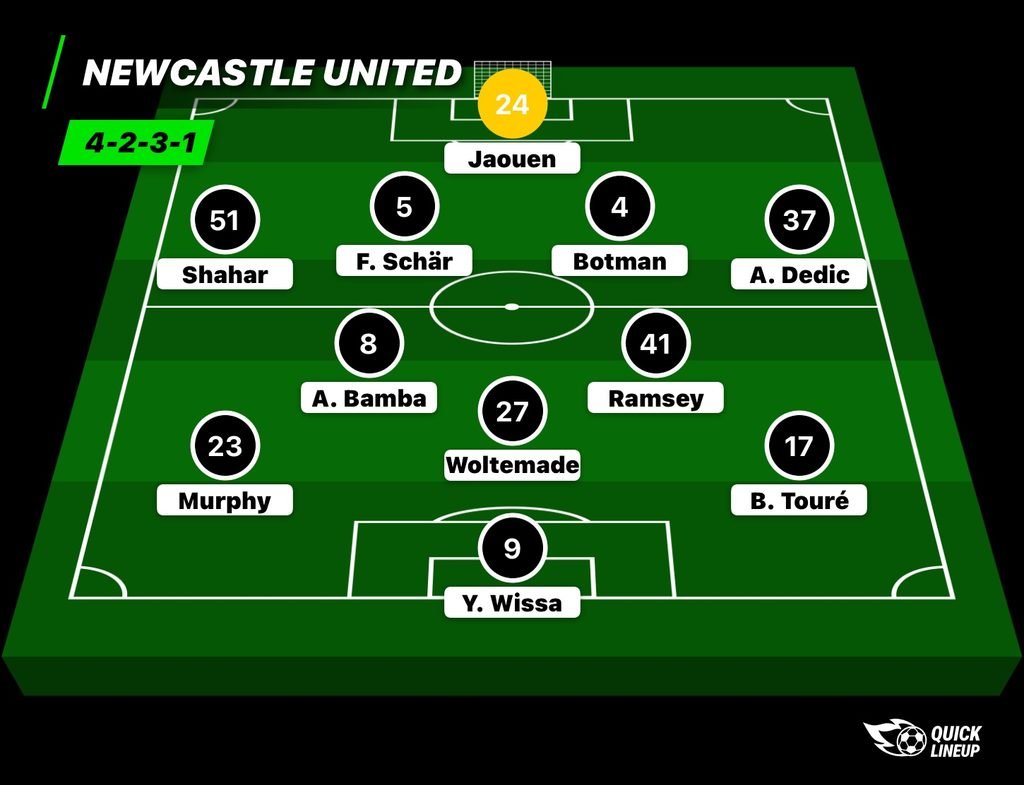
    In goal, 20-year-old French prospect Ewen Jaouen is set for his full competitive debut. Standing at an imposing 197cm, Jaouen steps in to give Lukáš Horníček a well-earned rest. Jaouen will be shielded by a reconfigured central defense pairing of veteran leader Fabian Schär and Sven Botman. Schär’s elite composure, long-range diagonal distribution, and veteran reading of the game provide a calming counterbalance to Botman’s aerial dominance and line-breaking physical presence.

    On the flanks, 19-year-old academy right-back Leo Shahar is expected to make his senior full debut. To accommodate resting Lewis Hall on the left, Bosnia international Amar Dedić—who possesses extensive experience operating on either flank from his tenure at Red Bull Salzburg—shifts across to left-back. Dedić’s comfortable two-footedness allows him to invert smoothly into midfield corridors when building out from the back, granting Shahar room to overlap on the right. Although he played on Sunday, the feeling will be to give the new recruit as much game time as possible as quickly as possible to rapidly acclimatise him to his new team mates.

    In the double pivot, 20-year-old French recruit Aladji Bamba is expected to make his full home debut alongside Jacob Ramsey. Bamba’s underlying FBref data from pre-season painted a picture of a rare defensive anchor—averaging 8.1 ball recoveries and a 72% duel success rate per 90 minutes. Partnering him with Ramsey’s dynamic guile gives Newcastle an engine room capable of breaking Albion’s initial press.

    The attacking triumvirate behind single striker Yoane Wissa will spark immense curiosity among the Gallowgate faithful. Standing at 6’6″, German playmaker Nick Woltemade is slated to operate as the central number ten, bringing a unique blend of technical finesse, hold-up play, and half-space creativity. Flanking Woltemade will be the experienced Jacob Murphy on the right—whose cross-delivery remains among the most consistent in the squad—and £42m Ivorian winger Bazoumana Touré on the left. Touré’s electric 1v1 ability promises to be the primary engine of disruption against West Brom’s narrow defensive block.

    Tactical Keys: How Newcastle Control and Conclude the Tie

    For Newcastle to avoid an embarrassing early exit and book their passage into the third round, Jaissle’s side must master three key tactical themes.

    1. Neutralizing Second-Phase Transitions at the Source

    West Brom’s primary route to goal will come from intercepting Newcastle’s build-up play in central areas and instantly launching long, linear passes behind Shahar and Dedić. The central pairing of Bamba and Ramsey must exercise rigorous positional discipline. Bamba’s primary duty will be to act as a defensive screen, cutting off central passing lanes before Albion can release their wide sprinters, while Ramsey must track the second balls that drop on the edge of the defensive third.

    2. Isolating Bazoumana Touré and Overloading the Right

    West Brom are expected to set up in a low-block 5-4-1 structure, funneling play out wide and dropping their wing-backs deep. To puncture this low block, Newcastle must speed up their ball circulation from Schär through to the flanks. Bazoumana Touré, who averaged 6.2 dribble attempts per 90 minutes during his breakthrough campaign, must be fed early in isolated 1v1 scenarios against Albion’s right wing-back. Simultaneously, Shahar’s overlapping runs alongside Murphy on the right will force Albion’s backline to stretch horizontally, creating pocket spaces for Woltemade to operate between the lines.

    3. Utilizing Woltemade as the Link-Man for Wissa

    Wissa’s pace and direct running are potent, but he requires service into feet rather than persistent aerial duels against Albion’s tall center-backs. Nick Woltemade’s role in the half-space will be crucial; by dropping deep to draw out a West Brom defender, the German playmaker can turn and slide incisive balls into the path of Wissa’s diagonal runs. If Woltemade can establish dominance in the central zone, Newcastle will consistently breach Albion’s low block and put the tie beyond reach before the final quarter-hour.

    The Verdict & Score Prediction

    Given the extent of Jaissle’s planned structural rotation and the raw friction that inevitably accompanies a newly assembled backline, Newcastle should expect an uncomfortable opening half-hour. Albion’s aerial prowess from set pieces and direct vertical breaks will inevitably test young Ewen Jaouen and Leo Shahar under early pressure.

    However, over ninety minutes, Newcastle’s superior depth and technical quality in the final third ought to tell. The creative interplay between Woltemade and Touré will eventually pry open West Brom’s low block, while the insurance of bench firepower—including Harvey Barnes and Anthony Elanga—gives Jaissle late options if the tie remains tight. Expect a competitive, full-throated cup tie where Newcastle’s individual quality ultimate seals passage to the third round.

    Score Prediction: Newcastle United 3–1 West Bromwich Albion

    Will Nick Woltemade start this game? Does he fit into Jaissle’s long term plans? Join the conversation on X @mytoonarmy #NUFC
  • Match Preview: Newcastle United v Liverpool — Isak’s Return, Iraola-Ball, and the Tactical Crucible Facing Newcastle 2.0

    Mohamed Salah is history at Anfield, replaced by a £125m former Gallowgate idol leading the line. As Andoni Iraola brings high-velocity gegenpressing to Tyneside, Matthias Jaissle’s rebuilt U-25 squad faces its ultimate opening-day stress test.

    The Scene: Atmospheric Opening at St. James’ Park

    If the Premier League fixture computer wanted to subject Newcastle United’s summer overhaul to an immediate, unforgiving stress test, it couldn’t have scripted a more dramatic opening scene. Recent seasons have seen this fixture to be quite explosive and almost always, very dramatic.

    When the team buses pull up outside the Milburn Stand this Sunday afternoon, the atmosphere along Strawberry Place will carry a sharp edge of intrigue mixed with raw anticipation. Just seven weeks after liquidating over £230m worth of international talent—bidding an emotional farewell to Eddie Howe and clearing out the established dressing-room leadership spine—38-year-old German tactician Matthias Jaissle takes his place in the home dugout for his first competitive English fixture.

    The summer of financial recalibration is officially over. The spreadsheets have been closed, the UEFA compliance forms submitted, and now the football takes center stage under the St. James’ Park lights. For a fan base that spent June and July watching iconic names depart, Sunday at 4:30 PM offers the first tangible look at “Newcastle 2.0″—a team rebuilt from the balance sheet up.

    The Emotional Crucible: Alexander Isak Returns to Tyneside

    Forget tactical chalkboards for a second—the emotional centerpiece of Sunday afternoon sits squarely on the shoulders of Liverpool’s number nine. Alexander Isak leads the line for the visiting Reds against his former club.

    Having departed St. James’ Park in a record-breaking £125 million transfer to Anfield, Isak arrives looking to anchor a brand-new era on Merseyside. With Mohamed Salah having called time on his legendary Liverpool career, Isak is now the undisputed focal point of a redesigned Liverpool attack.

    How the Gallowgate End greets their former talisman will set the atmospheric temperature early. Isak was idolized on Tyneside, and watching him line up in opposition red will cut deep for many in the stands. But inside the home dressing room, sentimentality won’t feature on the pre-match whiteboards. For Newcastle’s central defensive pairing of Dan Burn and Malick Thiaw, stopping Isak’s elite channel movement and explosive second-phase acceleration is priority number one.

    The Balance Sheet Subtext: Commercial Scale vs. Rebuilt SCR Agility

    From an executive suite perspective, Sunday’s clash isn’t merely a fight for three opening-day points—it is a head-on collision between two fundamentally different financial operating models in top-flight European football.

    Liverpool represent the benchmark for mature, global commercial scale. Operating with commercial revenues in the hundreds of millions of pounds more than Newcastle’s and an international fan monetization footprint cultivated over decades, Liverpool generate huge organic cash flows. This allows Fenway Sports Group to absorb heavy wage bills and premium amortized transfer fees while remaining comfortably within UEFA’s 70% Squad Cost Ratio (SCR) framework.

    Newcastle, by contrast, are executing a high-wire structural pivot. Operating under strict Premier League SCR rolling parameters and active UEFA settlement monitoring after recent fines, Chief Executive David Hopkinson and Sporting Director Ross Wilson made the cold, analytical decision to trade peak-value assets. Cashing in on Bruno Guimarães, Sandro Tonali, and Anthony Gordon reset squad cost ratios down to a healthy 68.5%.

    Newcastle’s new blueprint relies entirely on recruitment agility—buying sub-25 profiles like Bazoumana Touré (£42.8m), Aladji Bamba (£30m), Sean Steur (£19.6m), and Amar Dedić (£30m+) on managed salary tiers. Defeating Liverpool on Sunday wouldn’t just validate Jaissle’s pressing system; it would prove that sharp, agile asset building can disrupt established commercial heavyweights.

    Tactical Battlegrounds: Iraola-Ball vs. Jaissle’s High Press

    Following Andoni Iraola’s arrival to take the reins at Anfield after leaving Bournemouth, Liverpool have pivoted sharply away from controlled possession toward pure, high-velocity “gegenpressing” disruption. Iraola demands relentless physical output, rapid vertical progression, and immediate counter-pressing upon turnover. With Jaissle deploying an equally aggressive Red Bull pressing framework, Sunday promises an explosive, transition-heavy battle.

    The Central Engine Room: Bamba & Steur vs. MacAllister & Szoboszlai

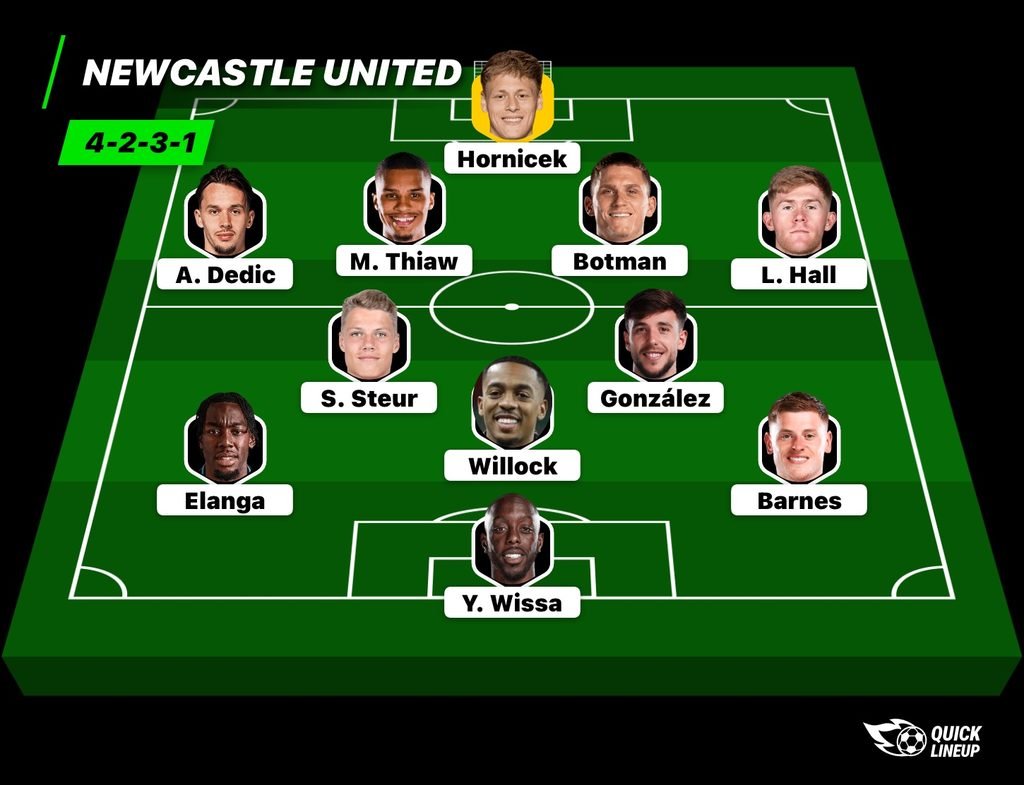
    With Iraola demanding rapid ball progression to the front line the moment possession is won, 20-year-old Aladji Bamba will be crucial as Newcastle’s central enforcer. Forced early into action due to a mysterious injury to the impressive Joelinton, the former Monaco man dominated physical duels during pre-season, but facing Alexis MacAllister and Dominik Szoboszlai represents a significant step up in match cadence. Beside him, 18-year-old Sean Steur must maintain technical composure under Liverpool’s wave of central pressure. If Bamba and Steur can bypass Liverpool’s initial press, Newcastle can break into dangerous space behind their mid-block.

    Flank Overloads: Touré & Hall vs. Kerkez & Frimpong

    Iraola relies on ultra-attacking full-backs—Jeremie Frimpong and former Bournemouth star Milos Kerkez—to push high up the pitch. This leaves massive space in the wide channels during turnovers. Bazoumana Touré’s terrifying acceleration down Newcastle’s left flank, supported by Lewis Hall’s overlapping runs, will be Newcastle’s primary weapon to exploit Liverpool’s high defensive line.

    C. Sweeper-Keeper Under Pressure: Lukáš Horníček’s Debut

    Czech stopper Lukáš Horníček (£25.7m) makes his Premier League debut in goal. Jaissle’s system demands that the keeper play 20 yards off his line to sweep up balls played over Newcastle’s high defensive line. One misjudged charge or mistimed clearance against Isak’s sharp off-the-ball runs could prove fatal.

    Tactical Chalkboard & Projected XI

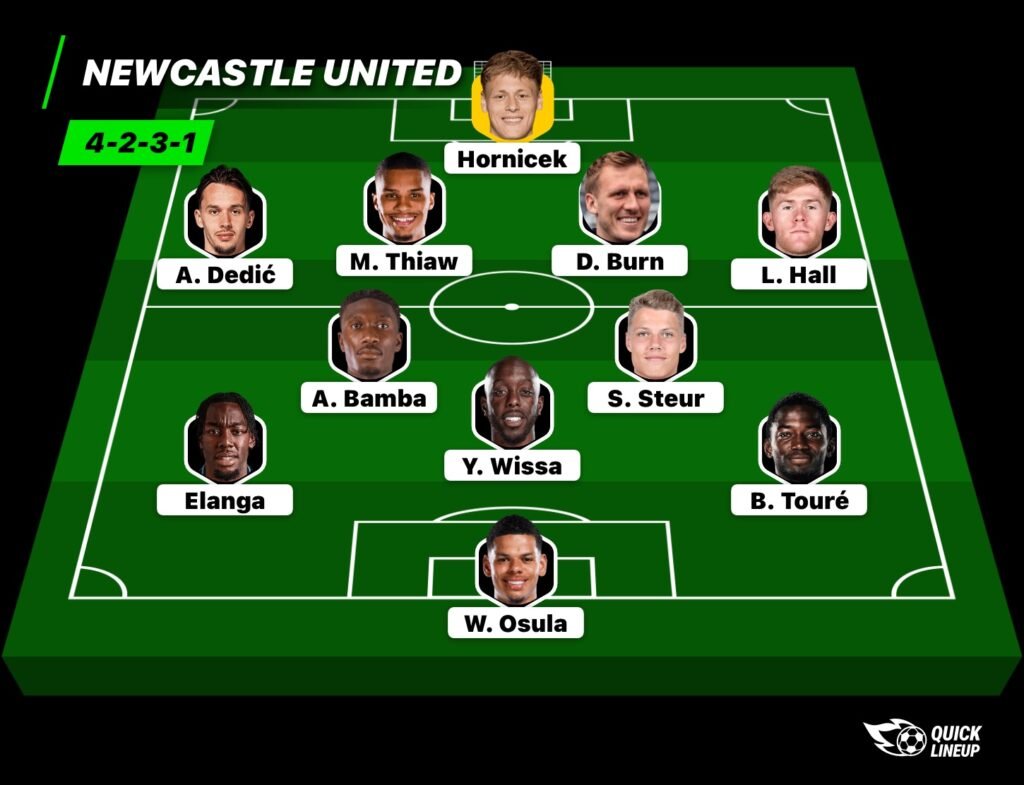
    Jaissle is expected to hand competitive debuts to four summer arrivals—Horníček, Dedić, Bamba, and Touré—while Iraola unleashes his new-look 4-2-3-1 setup featuring Florian Wirtz and Alexander Isak as the main thrusts of his team.

    Strategic Verdict & Looking Forward

    Opening-day fixtures are notoriously difficult to predict, doubly so when both clubs are stepping into new managerial paradigms. Iraola’s arrival guarantees a frantic, basketball-like transition game. While Liverpool possess formidable firepower through Isak and Wirtz, their high-risk defensive line will offer space to Newcastle’s fresh wingers.

    Under the St. James’ Park lights, Jaissle’s pressing machine can catch Liverpool before Iraola’s tactical automation fully settles. Expect noise, chaos, and a dramatic start to Newcastle 2.0.

    MTA Score Prediction: Score draw, Newcastle United 2–2 Liverpool.

    What are your tactical predictions for opening day at St. James’ Park? How do you think the Gallowgate should react to Isak’s return? Continue the conversation on X @mytoonarmy #NUFC